




TL;DR:
- Falls are the leading cause of injury death among adults 65 and older, with serious health consequences.
- Modern fall alarms use advanced sensors and AI to detect falls and alert caregivers quickly.
- A comprehensive safety approach combines alarms with exercises, home modifications, and regular health reviews.
Every 11 seconds, an older adult in the United States is treated in an emergency room for a fall-related injury. Falls are the leading cause of injury death among adults 65 and older, with over 38,000 deaths recorded in 2021 alone and rates continuing to climb. Yet for many families, the biggest fear is not just the fall itself. It is the thought of a loved one lying on the floor, unable to call for help, waiting hours until someone notices something is wrong. Fall alarms are designed to close that gap and give both seniors and their families something genuinely valuable: time.
Table of Contents
- The true impact of falls on independent seniors
- How fall alarms work: Technology explained
- Types of fall alarms: Which is right for your family?
- Limitations and safety: What families should know
- Why fall alarms alone are not enough—and what actually works
- Find the right fall alarm for your loved one
- Frequently asked questions
Key Takeaways
| Point | Details |
|---|---|
| Falls are widespread | 1 in 4 seniors falls each year, making rapid detection and response essential. |
| Alarms enable fast help | Fall alarms shorten response times and can lower complications from long lie falls. |
| Tech has limits | Alarms can have false positives and missed detections, so rely on them as part of a broader safety strategy. |
| Choosing the right alarm | Select alarms based on your loved one’s lifestyle, mobility, and living situation for best results. |
| Prevention is still key | Combine fall alarms with exercise, medication review, and home modifications for full protection. |
The true impact of falls on independent seniors
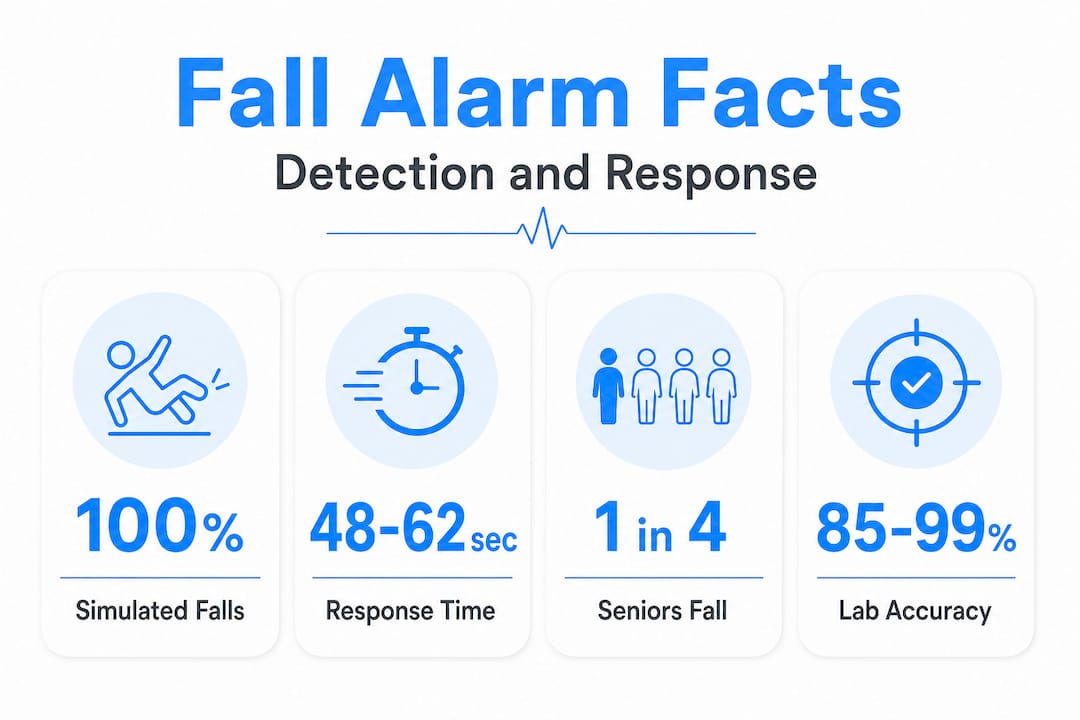
Falls are not rare accidents. They affect 1 in 4 adults aged 65 and older each year, and a large portion of those falls happen when no one else is home. Seniors who live independently are particularly vulnerable because they may spend long hours alone, especially during early mornings, nights, or weekends.
The consequences of a fall go far beyond bruises or a broken wrist. Many seniors experience:
- Serious fractures, including hip fractures that often require surgery and months of rehabilitation
- Traumatic brain injuries from head impacts during a fall
- Permanent loss of mobility that can end independent living
- Fear of falling again, which causes reduced activity and faster physical decline
One of the most underappreciated dangers is what researchers call a “long lie.” This refers to situations where a person remains on the floor for more than an hour after a fall. According to NCOA research, long lies cause pressure injuries, significant mobility loss, and severe psychological distress. The longer someone stays on the ground, the worse their medical outcomes tend to be. Rapid response is not just helpful. It can be the difference between full recovery and permanent disability.
Specific high-risk moments include nighttime bathroom trips, sudden episodes of dizziness or fainting, and situations involving alarms in dementia care where wandering seniors may fall in unfamiliar or low-light areas. In all of these scenarios, a fall alarm can alert a family member or caregiver within seconds rather than hours.
“Prompt response after a fall is not a luxury. For older adults living alone, it is a medical necessity that directly influences survival and recovery quality.”
Understanding this context makes the value of fall alarms very clear. They are not optional extras for cautious families. They are practical safety tools that help seniors stay independent longer and give families confidence that help will come fast.

How fall alarms work: Technology explained
Modern fall alarms are more sophisticated than many people expect. Most wearable fall alarms, whether worn as a pendant, wristwatch, or clip-on device, use a combination of accelerometers and gyroscopes to monitor movement continuously. An accelerometer measures speed and force of movement, while a gyroscope tracks body orientation and rotation.
When a fall occurs, the device detects a rapid acceleration greater than 2G (twice the force of gravity) combined with a sudden change in body orientation. These two signals together are the signature pattern of a fall. You can learn more about how fall detection works and the physics behind it.
But detecting a fall is harder than it sounds. The device must also recognize ordinary daily movements, sitting down quickly, bending over, reaching for something, and avoid triggering a false alarm. This is where machine learning (ML) comes in. Modern wearable fall detection uses advanced ML algorithms, such as CNN-LSTM models (a type of AI that learns patterns over time), trained on thousands of real movement samples to distinguish a genuine fall from normal activity with high reliability.
Here is how top systems compare in lab-based testing:
| System | Fall detection rate | Response time | Key limitation |
|---|---|---|---|
| Bay Alarm Medical | 100% (simulated) | 48 seconds | Slower on soft surface falls |
| Medical Guardian | 100% (simulated) | 52 seconds | Sensor position sensitivity |
| Average wearable | 85 to 99% (lab) | 48 to 62 seconds | Real-world accuracy is lower |
According to NCOA testing data, tested systems can detect 100% of simulated falls with response times between 48 and 62 seconds. However, lab conditions differ from real life. Slow slides to the floor, unusual fall angles, or wearing the device in a non-standard position can all reduce accuracy. You can read a detailed breakdown of senior alarm with fall detection technology to understand which features matter most.
Pro Tip: Always check the stated response time of any fall alarm before purchasing. A difference of 10 to 15 seconds may seem small but can be significant in a real emergency. Also ask whether the device alerts you by app, phone call, or SMS, since this affects how quickly you can respond.
Key features that make a fall alarm reliable in practice include:
- Automatic detection without requiring the senior to press a button
- Two-way communication so the senior can speak directly through the device
- GPS tracking so caregivers know exactly where to send help
- Long battery life to ensure the device is always active
- Water resistance 💧 so it can be safely worn during bathing, a high-risk activity
Types of fall alarms: Which is right for your family?
Not all fall alarms work the same way or fit every situation equally well. The two main categories are wearable alarms and bed alarms, and each serves a different purpose.
Wearable alarms (watches, pendants, and clips) are worn on the body throughout the day. They provide all-location coverage, meaning they work whether the senior is at home, in the garden, or out walking. For independent seniors, these provide the broadest protection with fast response from a monitoring center or family app.
Bed alarms use pressure pads or motion sensors placed under a mattress or on the bed frame. They detect when a person gets out of bed, providing a 10 to 15 second lead time warning before a potential fall can happen. This is useful for families where a caregiver is sleeping nearby. However, bed alarms are prone to false alarms when a person rolls over or shifts during sleep, which can lead to alarm fatigue, meaning caregivers start ignoring alerts.
Choosing the right type requires thinking carefully about your loved one’s specific situation. Here is a step-by-step approach to help you decide:
- Assess living situation. Does the senior live alone or with a caregiver? Wearables are better for independent living. Bed alarms need someone nearby to respond.
- Consider activity level. Active seniors who go outdoors need GPS-enabled wearables. Bed alarms offer no outdoor protection.
- Check cognitive ability. Seniors with memory difficulties may forget to press a manual SOS button. Automatic fall detection is then essential.
- Evaluate device comfort. A device that feels uncomfortable will not be worn consistently. Lightweight watches and discreet pendants tend to have better compliance.
- Review notification method. Who needs to be alerted? Some systems contact a 24/7 call center. Others send a direct alert to family members via an app.
You can compare options in detail by reviewing a personal alarm device comparison guide. For families choosing between watch-style devices, the alarm watch interfaces guide explains which display styles and button layouts work best for seniors with limited vision or dexterity.
Pro Tip: Before committing to a device, have the senior wear a trial unit for at least a week. Pay attention to battery life in real use, not just the manufacturer’s claim. Also confirm that app notifications arrive reliably on your specific phone model.
Limitations and safety: What families should know
It is important to have realistic expectations. Fall alarms are highly effective tools, but they are not perfect, and understanding their limits helps families use them more safely.
Current research identifies several important limitations of fall detection systems:
- False positives: Activities like sitting down hard, bending over suddenly, or dropping the device can trigger unnecessary alarms
- Missed slow falls: When someone slowly slides out of a chair rather than falling suddenly, many sensors fail to register it as a fall
- Limited real-world testing: Only around 7% of fall detection systems have been rigorously tested in real-world (non-lab) conditions
- Wearable compliance: A device that is not being worn or has a dead battery provides zero protection. This is one of the most common failure points in real use.
These are not reasons to avoid fall alarms. They are reasons to use them as part of a broader safety strategy. According to NCOA recommendations, alarms should be combined with regular exercise programs to improve balance and strength, medication reviews to identify drugs that cause dizziness, and home modifications like grab bars, better lighting, and non-slip flooring.
For families managing installation and setup, a step-by-step guide to installing alarms can simplify the process significantly.
“Even the best technology cannot replace active caregiver involvement. Alarms support safety. They do not replace the human connection that keeps seniors truly protected.”
A balanced safety plan includes regular check-in calls, scheduled home visits, and clear communication with the senior about when and why they should use their alarm. Technology enables safety, but people make it work.
Why fall alarms alone are not enough—and what actually works
Here is an opinion that may surprise you: the families who benefit most from fall alarms are not the ones who rely on them most heavily. They are the ones who treat alarms as one part of a wider, proactive safety system.
There is a common mistake in elder care planning where families purchase a fall alarm, feel reassured, and then reduce their other safety efforts. They skip the home safety assessment. They do not follow up on the doctor’s recommendation for balance training. They assume the technology is “handling it.” This creates a false sense of security that can be genuinely dangerous.
The most effective approach combines a reliable alarm with the CDC’s STEADI framework (Stopping Elderly Accidents, Deaths, and Injuries), which encourages regular balance testing, medication review, and targeted exercise programs. These proactive measures actually reduce the frequency of falls, while the alarm handles the situations where prevention was not enough.
Senior safety tips that work include setting up consistent daily routines where wearing the alarm becomes as automatic as putting on shoes. Families that build these habits report much higher device compliance and far fewer situations where the alarm was unavailable during an actual fall.
Pro Tip: The most successful caregiving families hold a brief monthly conversation with their senior loved one to review how the alarm is working, whether it is comfortable, and whether any new physical changes (new medications, balance issues, recent near-falls) should prompt a reassessment of their safety plan. This regular communication is more valuable than any single device.
Regular team conversations, including family members, medical caregivers, and the senior themselves, keep everyone ahead of risks. No technology can replace that active, ongoing involvement. Alarms are excellent tools. They work best in the hands of engaged, informed families.
Find the right fall alarm for your loved one
If you have read this far, you now understand why a quality fall alarm is such an important part of keeping a senior safe and independent. The right device gives your loved one the freedom to go about their daily life while giving you the confidence that help is always just seconds away.
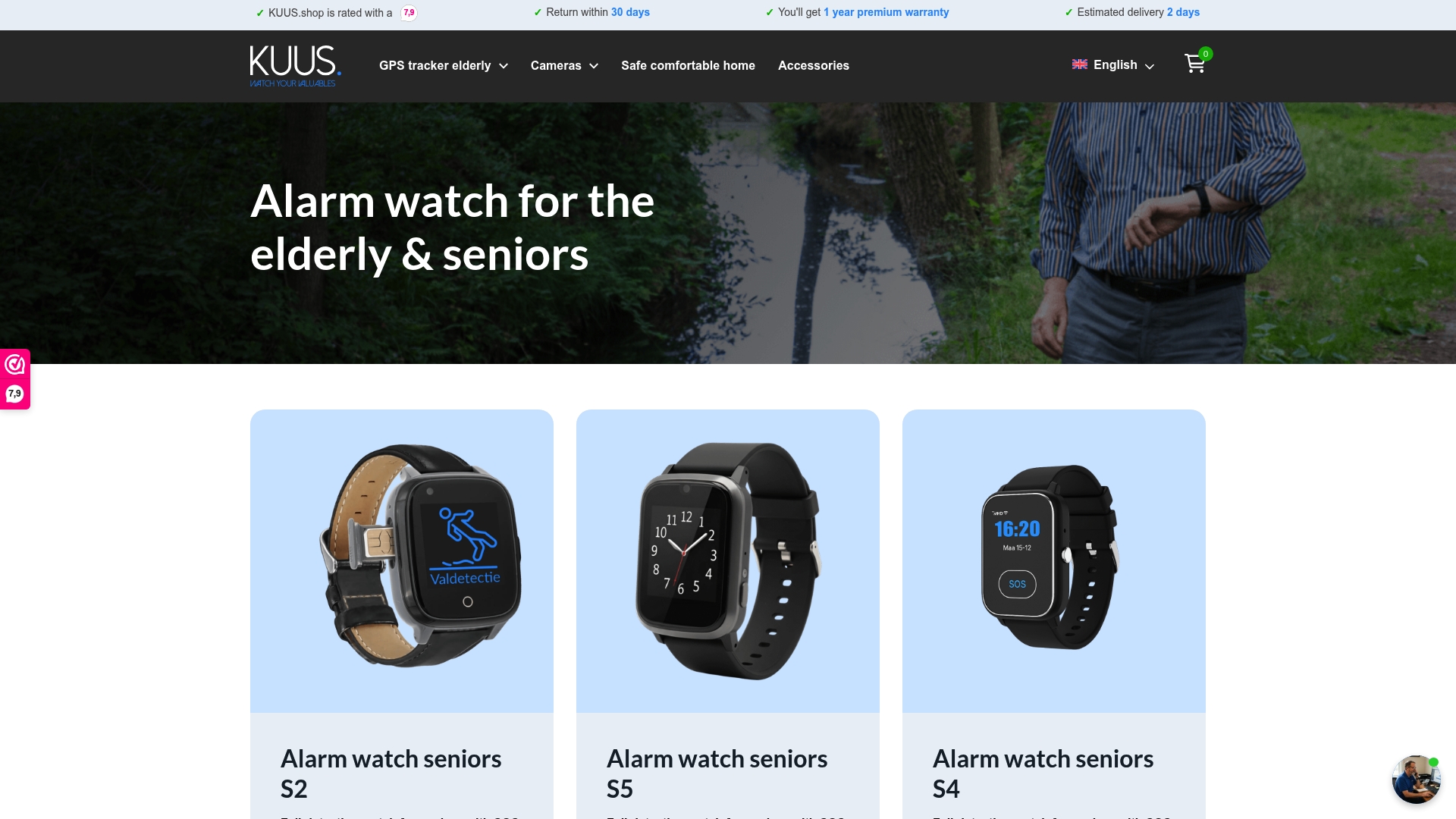
Choosing the right product does not have to be complicated. At Kuus, we offer a range of alarm watches for seniors designed specifically for older adults who want protection without complexity. Our devices feature automatic fall detection, GPS location sharing, an SOS button, and two-way calling, all without a monthly subscription. For seniors who want a more full-featured option, our GPS smartwatch for seniors combines safety technology with an easy-to-use interface built for daily wear. Take the next step today and give your family genuine peace of mind.
Frequently asked questions
Do fall alarms automatically contact emergency services?
Most modern fall alarms notify designated family contacts or a monitoring center first, and some can directly alert emergency services depending on how they are configured. Response times from tested systems typically range from 48 to 62 seconds after detection.
How accurate are wearable fall alarms in real-world conditions?
Lab tests show accuracy rates of 85 to 99%, but real-world accuracy is lower due to sensor placement and user behavior. Research also shows that false positives and missed slow falls remain challenges across most current systems.
Will fall alarms prevent falls from happening?
No. Fall alarms detect falls and trigger a fast response, but they do not prevent falls from occurring. According to NCOA guidance, preventing falls requires exercises, medication reviews, and home modifications alongside alarm use.
Are bed alarms a good fit for seniors living alone?
Bed alarms provide useful early warning for nighttime exits but require a caregiver nearby to respond quickly. For seniors living alone, a wearable alarm with automatic fall detection is a more practical and reliable choice.
What else can families do besides alarms to reduce fall risks?
Combine alarms with balance-strengthening exercises, a review of medications that cause dizziness, and home modifications like grab bars and better lighting. The CDC recommends using a structured screening approach such as STEADI to identify and address each individual senior’s specific fall risk factors.