




TL;DR:
- Essential alarm watch features include fall detection, SOS buttons, GPS, and health monitoring.
- Fall detection is helpful but has limitations, detecting about 55% of soft falls.
- Simplicity, battery life, waterproofing, and ease of use are critical for reliable senior safety.
Choosing an alarm watch for an older loved one feels straightforward until you actually start looking. There are dozens of devices on the market in 2026, each promising the best fall detection, the clearest SOS button, or the most accurate GPS. The real challenge is separating what genuinely protects seniors from what is simply clever marketing. This guide walks you through the must-have features, explains the honest limits of today’s technology, and helps you make a confident decision for your family member or yourself.
Table of Contents
- How to evaluate an alarm watch: What matters most in 2026
- Automatic fall detection: Life-saving innovation and its real limits
- SOS alerts, two-way calling, and professional monitoring
- Location tracking, geofencing, and specialized dementia safety features
- Health monitoring, waterproofing, and battery life: Hidden essentials for reliability
- Our take: What really matters when choosing a 2026 alarm watch
- Find the best alarm watch for your loved one
- Frequently asked questions
Key Takeaways
| Point | Details |
|---|---|
| Fall detection matters | Automatic fall alerts save lives, but even the best systems miss some incidents—understand their real limits. |
| Professional monitoring is best | Watches with 24/7 professional response provide extra security, especially for seniors at high risk or cognitive decline. |
| Geofencing prevents wandering | Smart GPS features with safe zones keep loved ones with dementia from getting lost. |
| Battery and waterproofing | Choose a model with strong battery life and waterproof design for everyday dependability. |
How to evaluate an alarm watch: What matters most in 2026
Not every feature on a spec sheet carries equal weight. When you are choosing an alarm watch for a senior who lives alone or has a health condition, some features are truly essential and others are simply nice to have.
Key features in 2026 alarm watches for seniors include automatic fall detection using accelerometers and gyroscopes, one-touch SOS buttons, two-way calling via built-in speakers, real-time GPS tracking with geofencing, and health monitoring like heart rate and SpO2. That is a wide range of capabilities, and not all of them matter equally for every user.
For frail seniors or those with early dementia, the priority list looks like this:
- Emergency response speed: How fast does the device alert a caregiver or monitoring center?
- Interface simplicity: Can the wearer use it without confusion, even on a difficult day?
- Battery reliability: Will it still be charged when it is needed most?
- Fall detection accuracy: Does it catch real falls without flooding caregivers with false alarms?
For more active, tech-comfortable seniors, health tracking and app integration may add genuine value. But for the most vulnerable users, reliability and ease of use always come first. A good alarm watch interfaces guide can help you understand what truly makes a device usable for older adults.
Pro Tip: Don’t be swayed by flashy extras. A watch with twelve health sensors means nothing if the SOS button is hard to find or the battery dies by afternoon.
Automatic fall detection: Life-saving innovation and its real limits
After understanding the feature framework, take a closer look at one of the most critical technologies for senior safety: automatic fall detection.
Fall detection works by combining sensors inside the watch. An accelerometer measures movement speed and direction. A gyroscope tracks rotation. Some advanced models also use AI algorithms that learn the wearer’s normal movement patterns over time. When the device senses a sudden drop followed by stillness, it triggers an alert.
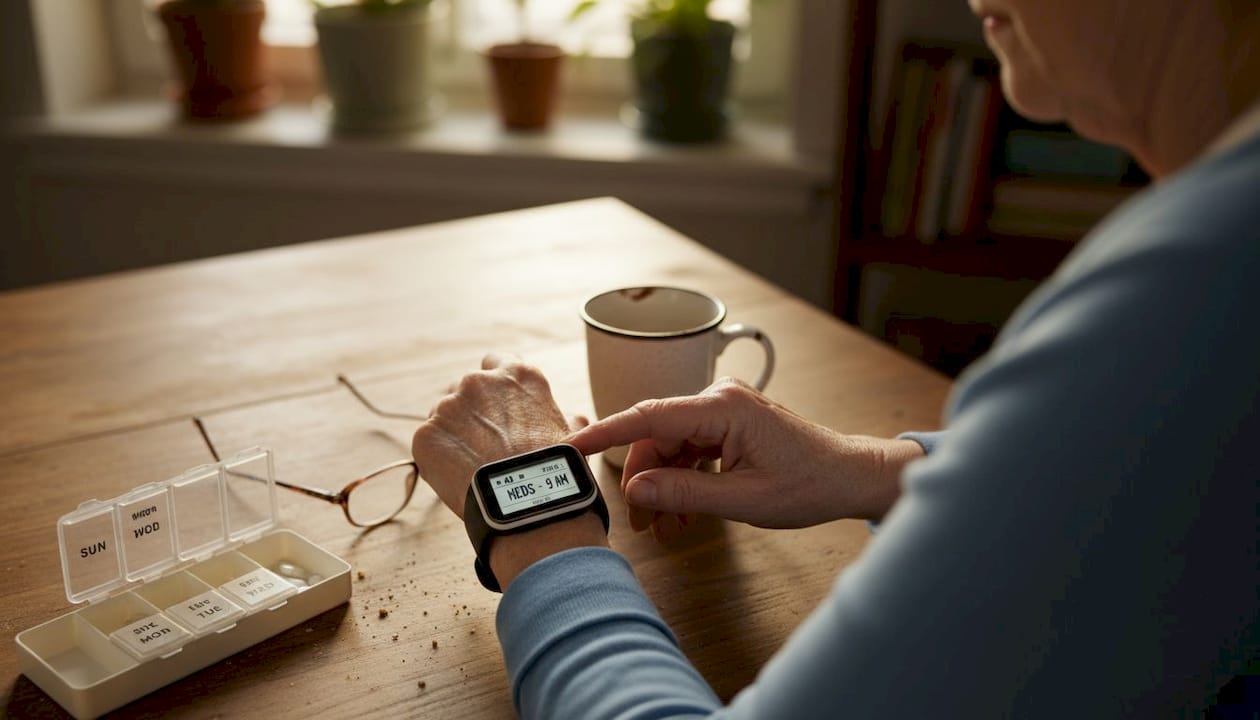
But here is what the research actually shows. Pooled sensitivity for fall detection sits at around 55%, meaning nearly half of real falls, especially soft or slow-motion ones common in frail seniors, go undetected. Specificity is better at 89%, so false alarms are relatively rare. The AUC for fall prediction is 0.85, which is promising but not perfect.
| Metric | Result | What it means |
|---|---|---|
| Sensitivity | 55% | Misses nearly half of soft falls |
| Specificity | 89% | Few false alarms triggered |
| AUC | 0.85 | Good overall prediction ability |
There is another important caveat. Most fall detection testing has been done in lab settings on younger, healthier subjects. Real-world performance for frail seniors is often lower. Wrist-worn devices perform better for hard, sudden falls than for low-impact slips.
The benefit of fall alarm watches is still significant, especially for hard falls, but families should understand the limits. Learn more about what fall detection actually does before relying on it as the only safety measure.
Pro Tip: Look for watches with ongoing AI software updates. Devices that learn individual movement patterns over time reduce false alarms and improve detection accuracy for that specific user.
SOS alerts, two-way calling, and professional monitoring
Beyond automated fall alerts, immediate communication features can be the difference between prompt help and unnecessary worry.
A one-touch SOS button is the single most important feature on any senior alarm watch. It needs to be large, clearly marked, and impossible to press by accident. When pressed, the best devices follow a clear sequence:
- The watch sends an immediate alert to pre-set contacts or a monitoring center.
- The device automatically dials the caregiver or emergency responder.
- Two-way audio activates so the senior can speak and be heard through the watch.
- GPS location is shared in real time so help can be directed accurately.
- If the user does not respond, the monitoring center escalates to emergency services.
“Dedicated medical alert watches are preferred over consumer smartwatches for seniors at fall or dementia risk. Professional monitoring ensures triage before 911, and the simpler interface is better suited for low-tech users.”
Dedicated medical alert watches like the Medical Guardian MGMove or Bay Alarm SOS provide professional triage, meaning a trained operator assesses the situation before calling 911. This reduces unnecessary emergency dispatches and gives families real peace of mind.
Consumer smartwatches like the Apple Watch do offer SOS features, but they are designed for tech-savvy users who can navigate menus and manage apps. You can compare SOS watch choices side by side to see which type fits your situation. It is also worth understanding how GPS smartwatches compare to phones for senior safety.
Location tracking, geofencing, and specialized dementia safety features
In addition to emergency communication, location tracking and specialized dementia features add another crucial layer of safety.
GPS tracking shows caregivers exactly where a senior is at any given moment, viewable through a smartphone app. But the real value for families dealing with dementia is geofencing. A geofence is a virtual boundary you set around a safe area, such as the home or a familiar neighborhood. If the wearer steps outside that boundary, the caregiver receives an instant alert.
This matters enormously. Wandering is one of the most dangerous behaviors associated with dementia, and geofencing features help prevent it by alerting family members before a loved one gets lost or injured.
For seniors with cognitive decline, look for these specialized features:
- Geofencing and safe zones that trigger instant caregiver alerts
- Proximity beacons that detect when a person moves into or out of a specific room
- Auto-answer calls so caregivers can check in without the senior needing to press anything
- Medication reminders displayed directly on the watch screen
- Locking straps that prevent the wearer from removing the device unintentionally
Pro Tip: Set up multiple geofence zones, not just one around the home. Adding a zone for a favorite park or community center gives seniors more freedom while keeping caregivers informed. Learn more about GPS tracking for dementia and how it works in practice.
Health monitoring, waterproofing, and battery life: Hidden essentials for reliability
Lastly, a look at reliability factors and bonus features can help families avoid common pitfalls and upgrade daily safety.
Health monitoring is one of the most marketed aspects of modern alarm watches. Heart rate, blood pressure, SpO2, activity tracking, and even glucose monitoring appear on many spec sheets. These features are genuinely useful for active seniors managing chronic conditions. But for frail or cognitively impaired users, they can add complexity without adding safety.
“Battery life is critical. Devices range from 24 hours to 5 days on a single charge. Daily charging is a real risk for seniors who may forget, and a dead watch offers zero protection.”
Battery life and waterproofing are two features that directly affect whether the device actually works when it is needed. A watch that needs charging every night may be left on the nightstand during a morning fall. Waterproofing rated at IP67 or higher means the device survives splashes, hand washing, and even brief submersion, which matters in bathrooms where falls are most common.
Here is a practical reliability checklist:
- Battery life: Aim for at least 48 hours between charges
- Waterproofing: IP67 or better for bathroom and outdoor use 💧
- Comfort and fit: A watch that feels uncomfortable will not be worn consistently
- Strap security: Should stay on during daily activity but not be so tight it causes irritation
A good mobile alarm feature guide can help you check all the boxes before buying.
Pro Tip: Focus on everyday challenges first. A watch that is comfortable, waterproof, and always charged will protect your loved one far better than a device loaded with features that never gets worn.
Our take: What really matters when choosing a 2026 alarm watch
Having reviewed all the critical features, here is an honest perspective on what actually makes a difference.
The industry loves to compete on health sensors and app features. But for seniors who are frail, prone to falls, or showing signs of dementia, none of that matters if the device is confusing to use or runs out of battery. A personal alarm device comparison consistently shows that dedicated medical alert watches outperform consumer smartwatches for the most vulnerable users, not because of superior technology, but because of superior focus.
Simplicity is a feature. A large SOS button, a clear screen, and a 24/7 human on the other end of the line saves lives. Fancy health dashboards do not.
Our strongest recommendation: test drive any watch before committing. Comfort and ease of use matter as much as the spec sheet. If your loved one refuses to wear it, even the best device offers no protection at all. The right alarm watch is the one that actually stays on the wrist.
Find the best alarm watch for your loved one
If you’re ready to narrow your choices, discover reliable options that tick all the key boxes for independent senior safety.
We offer a range of alarm watches designed specifically for seniors who live independently. Each device combines a clear SOS button, real-time GPS tracking, fall detection, and two-way calling, with no monthly subscription costs. Whether you need a best GPS tracker for seniors or want to browse all available SOS alarm watch options, you will find straightforward devices built for real peace of mind. Simple to set up, reliable to wear, and ready when it matters most.
Frequently asked questions
How accurate is fall detection in 2026 alarm watches?
Fall detection sensitivity sits at around 55%, meaning many soft or slow falls are still missed. No current system is 100% reliable, so fall detection should be one layer of safety, not the only one.
What makes dedicated medical alert watches safer than smartwatches for seniors?
Dedicated medical alerts offer 24/7 professional monitoring, simpler interfaces, and longer battery life, making them far better suited for seniors who are not comfortable with technology or who face fall and dementia risks.
Can alarm watches help prevent wandering in people with dementia?
Yes. Geofencing and safe zones send instant alerts to caregivers when the wearer leaves a defined area, giving families a critical head start in locating a loved one who has wandered.
How important is battery life and waterproofing for alarm watches?
Battery life and IP67 waterproofing are essential for day-to-day reliability. A watch that is dead or left off the wrist during a fall provides no protection at all.