




Choosing a personal alarm device for yourself or an aging parent can feel overwhelming. With dozens of brands advertising fall detection, GPS tracking, and emergency response, how do you know which device truly delivers on safety? Seniors at risk of falls and their families need dependable alarms that combine accuracy, ease of use, and responsive monitoring. This article compares top personal alarm devices and explains the essential criteria to simplify your selection, so you can find a solution that protects independence without adding stress.
Table of Contents
- Key takeaways
- How to choose personal alarm devices for seniors
- Top personal alarm devices for seniors
- Comparing personal alarm devices: features and performance
- Which personal alarm device is best for seniors with dementia or fall risk?
- Explore top personal alarm devices at KUUS
- FAQ
Key Takeaways
| Point | Details |
|---|---|
| Device accuracy varies | Top devices differ in detection accuracy, response times, and false alarm rates, influencing overall safety. |
| Wearable placement matters | Pendants worn on the trunk near the center of mass generally detect falls more accurately than wrist worn devices, which can generate more false alarms. |
| Ambient sensor caveat | Ambient radar and floor mat sensors can aid seniors who avoid wearing devices but must be professionally installed and work only in specific rooms. |
| Monitoring and cost | Monitored systems enable 24/7 professional response but cost more, while unmonitored devices rely on designated contacts and may have slower or less reliable support. |
| Battery life matters | Longer multi day battery life reduces protection gaps, and alerting features help caregivers stay informed during charging cycles. |
How to choose personal alarm devices for seniors
Selecting the right personal alarm device requires understanding several technical and practical factors. Detection technology forms the foundation of any effective system. Most devices use accelerometers to measure sudden changes in movement, gyroscopes to track orientation, and barometers to detect rapid altitude drops. These sensors work together to distinguish actual falls from normal activities like sitting down quickly or bending over.
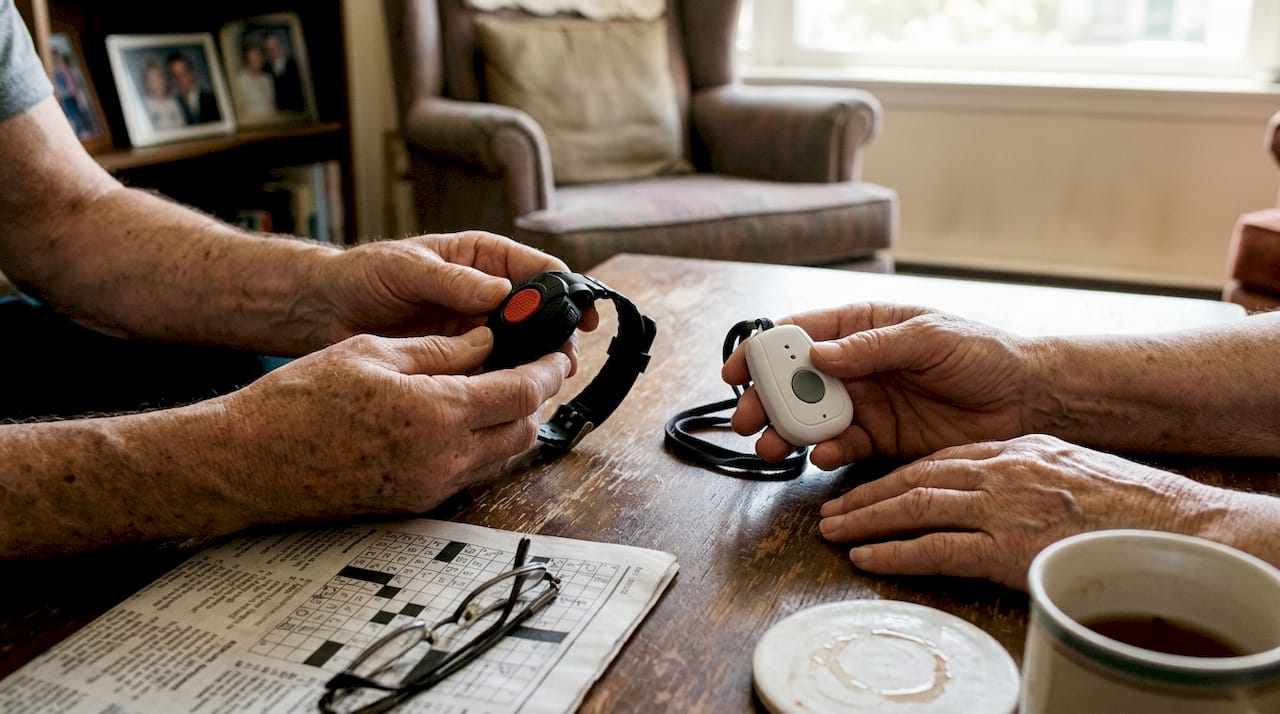
Wearability significantly impacts both accuracy and user compliance. Trunk-worn pendants achieve higher detection accuracy than wrist devices because they sit closer to the body’s center of mass, where fall motion is most pronounced. Wrist-worn devices offer convenience but generate more false alarms when users make sudden hand movements. For seniors who dislike wearing devices, ambient sensors using radar or floor mats provide an alternative, though they require professional installation and work only within specific rooms.
Monitoring options determine how quickly help arrives after a fall. Monitored systems automatically connect to professional emergency centers staffed 24/7, while unmonitored devices only notify family members or friends you designate. Monitored services typically cost more but deliver faster response times, especially critical if you live alone. Some systems offer hybrid options where professional monitoring kicks in if designated contacts don’t respond within a set timeframe.
Battery life creates a daily trade-off between protection and convenience. Devices with multi-day battery life reduce the risk of being unprotected due to a dead device, but you must remember to charge them regularly. Daily charging routines work well for some seniors but become burdensome for others with memory issues. Look for devices with low battery alerts sent to both the wearer and caregivers.
Cost structures vary widely across providers. Monthly fees typically range from $20 to $50, with fall detection technology adding $10 or more per month. Some companies require annual contracts while others offer month-to-month flexibility. Equipment costs may be included or charged separately, sometimes reaching $200 or more upfront. Compare total first-year costs including all fees and equipment to understand true expense.
Pro Tip: Consider a GPS alarm watch for seniors that combines location tracking with fall detection, giving caregivers peace of mind whether you’re at home or out running errands.
Top personal alarm devices for seniors
Several personal alarm systems have earned strong reputations through independent testing and user reviews. Medical Guardian stands out with lab-tested detection accuracy between 85-99% and response times of 48-62 seconds. Their devices use multiple sensors to reduce false alarms while maintaining high sensitivity to actual falls. Monthly costs start around $20, with fall detection adding approximately $10. The system offers both home-based and mobile options, allowing seniors to maintain protection whether they’re in the house or out in the community.
Bay Alarm Medical provides reliable detection with particularly strong marks for ease of use. Their pendant design sits comfortably against the chest, maximizing detection accuracy while minimizing false positives. Battery life extends several days between charges, and the system includes automatic low-battery alerts to caregivers. Setup requires minimal technical knowledge, making it ideal for seniors who feel intimidated by complex technology.
MobileHelp delivers affordable monitoring with strong customer support. Their fall detection accuracy matches competitors while keeping monthly fees at the lower end of the market range. The system includes GPS tracking on mobile units, allowing family members to locate their loved one if they wander or fail to return home as expected. Two-way voice communication through the device enables direct conversation with monitoring center staff after a fall.
LifeFone has built a solid reputation over decades in the medical alert industry. Their fall detection technology uses proven algorithms refined through years of real-world data. The company offers flexible contract terms including month-to-month options, reducing financial commitment for families uncertain about long-term needs. Caregiver apps provide real-time notifications and location updates, keeping family members informed without requiring constant check-in calls.
Wearable comfort varies significantly between devices. Some seniors prefer lightweight wrist designs despite slightly higher false alarm rates, while others find pendant necklaces more comfortable for all-day wear. Waterproof ratings matter for seniors who want protection in the shower, where many falls occur. Test wearing any device for a trial period before committing to ensure it fits your daily routine without causing irritation or inconvenience. Explore options like a GPS alarm watch for seniors that balances detection capability with everyday wearability.
Comparing personal alarm devices: features and performance
Understanding how devices stack up against each other helps clarify which features matter most for your situation. Detection accuracy in controlled lab settings often exceeds 95%, but real-world performance shows more variation due to factors like user compliance, false alarm handling, and environmental conditions.
| Device | Detection Accuracy | Response Time | Monthly Cost | Battery Life | Key Strengths |
|---|---|---|---|---|---|
| Medical Guardian | 85-99% | 48-62 seconds | $30+ | 3-5 days | Highest accuracy, fast response |
| Bay Alarm Medical | 85-95% | 50-65 seconds | $25+ | 4-7 days | Easy setup, comfortable wear |
| MobileHelp | 85-95% | 50-70 seconds | $20+ | 3-4 days | Affordable, GPS tracking |
| LifeFone | 85-95% | 48-60 seconds | $25+ | 3-5 days | Flexible contracts, caregiver app |
Monitoring options significantly impact both cost and response quality. Professional monitoring centers employ trained staff who can assess fall severity, contact emergency services, and notify family members simultaneously. Unmonitored systems save money but place responsibility on designated contacts who may not always be available or know how to respond appropriately.
False alarm rates create frustration for both seniors and caregivers. Wrist-worn devices trigger false positives more frequently because hand movements during cooking, gardening, or exercising can mimic fall patterns. Trunk pendants reduce this issue but some seniors find them less convenient. Adjustable sensitivity settings help balance detection capability against false alarm frequency, though finding the right setting may require trial and error.
Ambient sensors offer an alternative for seniors who resist wearing devices. Radar-based systems detect falls anywhere in a room without requiring the senior to wear anything. Floor mat sensors trigger when someone falls and remains on the ground for a set period. These technologies work well for seniors with dementia who forget to wear devices, but they require professional installation and only protect within equipped rooms.
Real-world efficacy depends on consistent use and proper response protocols. Studies show high lab accuracy doesn’t always prevent falls or improve health outcomes because seniors may not wear devices consistently, false alarms may lead to ignoring alerts, or help may not arrive quickly enough to prevent injury. The fall detection meta-analysis reveals these gaps between laboratory performance and practical benefit.
Pro Tip: Combine a wearable device for daily protection with ambient sensors in high-risk areas like the bathroom to create layered safety coverage that doesn’t rely solely on remembering to wear a device. Consider a GPS alarm watch for seniors as your primary wearable solution.
Which personal alarm device is best for seniors with dementia or fall risk?
Seniors with dementia face unique challenges with personal alarm devices. Memory issues often mean forgetting to wear devices, charge them, or press the emergency button after a fall. Ambient sensors reduce these compliance problems by eliminating the need to wear anything. Radar systems mounted on walls or ceilings detect falls throughout a room using motion patterns. Floor mat sensors trigger when pressure patterns indicate someone has fallen and not gotten up.
Airbag belts represent an innovative approach for seniors at extremely high fall risk. These wearable belts detect falls through built-in sensors and rapidly inflate airbags around the hips before impact. Research shows airbag belts reduce hip fractures by 91% in high-risk populations. The technology costs more than standard alarm devices but may prevent injuries that lead to hospitalization, loss of independence, or even death.
Combination strategies often work best for dementia patients. A wearable device provides protection when the senior leaves home or moves between rooms, while ambient sensors cover high-risk areas like bathrooms where falls frequently occur. Caregiver alerts become especially critical for dementia patients who may not understand how to respond to voice prompts from monitoring centers or may not remember to press an emergency button.
Installation requirements vary by technology. Wearable devices require only charging and basic setup, while ambient sensors need professional installation with careful placement to ensure coverage without gaps. Consider whether you rent or own your home, as some landlords restrict modifications. Balance the benefits of comprehensive coverage against installation costs and complexity.
Key considerations for dementia and high fall risk seniors:
- Ambient sensors eliminate wear compliance issues but only work in equipped rooms
- Airbag belts prevent hip injuries but require consistent wearing and regular maintenance
- GPS tracking helps locate seniors who wander away from home
- Automatic fall detection removes reliance on the senior pressing a button
- Caregiver apps with real-time alerts enable faster response from family members
- Two-way voice communication helps assess situation severity after a fall
Explore top personal alarm devices at KUUS
After comparing features and understanding what matters most for senior safety, finding a reliable source for quality devices becomes your next step. KUUS specializes in personal alarm watches that combine GPS location tracking with emergency alert features, designed specifically for seniors living independently. Their devices require no monthly subscription fees, eliminating ongoing costs while providing essential fall detection and SOS capabilities.
KUUS alarm watches feature large, easy-to-press SOS buttons that connect directly to family members or caregivers. GPS tracking shares your exact location when you need help, whether you’re at home or out in the community. Two-way voice communication through the watch enables conversation without needing to reach a phone. Explore senior safety devices at KUUS to find waterproof, user-friendly options that support independent living without complicated technology or recurring subscription fees.
FAQ
What is the difference between monitored and unmonitored personal alarm systems?
Monitored systems automatically connect to professional emergency centers staffed 24/7 when a fall is detected or the SOS button is pressed. These centers can dispatch emergency services, contact family members, and provide immediate assistance. Unmonitored systems only send alerts to family members or friends you designate, meaning response speed depends on their availability. Monitored services cost more but typically deliver faster emergency response, especially important for seniors living alone.
Are wrist-worn personal alarms less accurate for fall detection?
Yes, wrist-worn devices generate more false alarms than trunk-worn pendants because hand movements during daily activities can mimic fall patterns. Trunk pendants sit near the body’s center of mass where fall motion is most distinct from normal movement. However, wrist devices offer greater convenience and some seniors wear them more consistently than pendants. Consider your priorities: maximum accuracy favors trunk pendants, while everyday wearability may favor wrist devices despite slightly higher false positive rates.
Can ambient sensors replace wearable alarms for seniors with dementia?
Ambient sensors help where device adherence is low but work best as a complement rather than complete replacement for wearables. They only detect falls within equipped rooms, leaving seniors unprotected when they move to other areas or leave home. Installation costs and limited coverage area make them impractical as the sole solution. Combining ambient sensors in high-risk rooms like bathrooms with a wearable device for general protection creates the most comprehensive safety coverage for dementia patients.
How important is battery life in personal alarm devices?
Battery life critically impacts protection reliability because a dead battery means no protection during emergencies. Devices requiring daily charging increase the risk of being unprotected if you forget to charge overnight. Multi-day battery life reduces this risk but still requires establishing consistent charging routines. Look for devices with low battery alerts sent to both you and caregivers, and consider your ability to remember regular charging when selecting a device. Some seniors benefit from devices with longer battery life even if they’re slightly bulkier, while others prefer compact daily-charge models.