



TL;DR:
- Choosing the right care alert system depends on individual living situations, dependency levels, and specific risks.
- Layering multiple systems, such as wearables, sensors, and GPS devices, provides comprehensive safety coverage and reduces missed emergencies.
Choosing the right care alert system for an older adult feels overwhelming. Buttons, pendants, GPS watches, bed alarms, smartwatches — the options multiply every year, and each one claims to be the safest choice. For caregivers watching a parent recover from a fall, or families worried about a loved one with dementia wandering at night, getting this decision wrong has real consequences. This guide cuts through the noise by comparing every major system type, explaining what the technology actually does in real homes, and helping you match the right solution to your loved one’s specific situation and risks.
Table of Contents
- How to choose the right care alert system
- In-home and mobile wearables: Buttons, pendants, and GPS
- Smartwatches and sensor-based alert systems
- Bed alarms, motion sensors and comprehensive dementia coverage
- Care alert system comparison: Choose by scenario
- What most guides miss: Layering and real-world testing for peace of mind
- Find the best fit: Explore care alert solutions for seniors
- Frequently asked questions
Key Takeaways
| Point | Details |
|---|---|
| Layer for safety | Combining wearables and sensor-based systems maximizes protection for falls and dementia. |
| Check device reliability | GPS and cellular alert devices vary in indoor coverage and accuracy; always test before relying. |
| Mobile systems for independence | Active seniors benefit most from GPS-enabled and cellular alert systems for outdoor safety. |
| Fall detection limits | Wearable fall detection devices are imperfect; combine them with manual alert buttons for best results. |
| Choose for scenario | The best system depends on your loved one’s risks: falls, dementia wandering, or daily activity levels. |
How to choose the right care alert system
Before looking at any specific device, it helps to build a clear picture of the situation you are solving for. The right alert system for a physically active 75-year-old living alone is very different from the right system for someone in the early stages of dementia who tends to leave the house at night.
Start by thinking through these key factors:
- Living situation: Does your loved one live at home, in a senior community, or split time between locations? A home-based system with a base station works well for someone who rarely leaves, while a mobile system is essential for anyone who goes outdoors regularly.
- Dependency level: Can the person press a button reliably during a fall or medical event, or do they need automatic detection that requires no action from them?
- Key risk factors: Fall history, dementia diagnosis, heart conditions, and restricted mobility all point to different feature priorities.
- Alert type: The three main categories are wearable devices (buttons, watches, pendants), sensor-based systems (bed/chair alarms, motion detectors), and GPS/tracker devices for location monitoring.
- Monitoring type: Some systems connect to a professional monitoring center staffed around the clock. Others send automatic alerts to family members or caregivers. Human-monitored centers add reliability, especially when the user cannot speak.
- Device reliability: Cellular-based systems outperform landline systems for reliability, and there are edge cases worth knowing about: indoor GPS can fail in basements, smartwatches need daily charging, and quick movements sometimes trigger false alarms.
Consulting a solid alarm watch selection guide before purchasing helps clarify interface needs. It also helps to work through a structured alarm system checklist to make sure you are not missing a critical feature.
Pro Tip: Do not choose a system based on a single feature. A GPS watch that requires daily charging and fails during a bathroom fall is only half a solution. Look at the full picture of your loved one’s daily routine before committing.
Layering systems, combining a wearable with a sensor-based device, gives families the most comprehensive coverage and dramatically reduces the chance of a missed emergency going undetected.
In-home and mobile wearables: Buttons, pendants, and GPS
With your criteria clear, the next step is understanding the most common wearable alert options, how they work, and which situations they serve best.
Medical alert systems fall into three primary categories: in-home systems that pair a base station with a wearable button via landline or cellular connection, mobile GPS systems with cellular coverage and location tracking built into the wearable device itself, and smartwatch-style systems that add fitness tracking and discreet design to the core safety features.
In-home systems are typically the most affordable starting point. They work well for seniors who spend most of their time at home and need a simple, reliable button to press in a crisis. Range is a limitation — the wearable must stay within signal distance of the base station, which usually covers a standard home but not the yard or beyond.
Mobile GPS systems are essential for anyone who values independence outside the home or for families managing wandering behavior in dementia. These devices connect through cellular networks and include GPS location sharing so family members can check in real time.
Here is a straightforward comparison:
| Feature | In-home system | Mobile GPS system |
|---|---|---|
| Range | Within home/base station | Nationwide cellular coverage |
| GPS location | No | Yes |
| Monthly cost | $19 to $35/month | $30 to $50/month |
| Best for | Homebased seniors | Active or wandering seniors |
| Connection type | Landline or cellular | Cellular only |
| Two-way voice | Via base station | Via wearable device |
Wearable pendant-style devices are lightweight and easy to wear around the neck, which many older adults find less intrusive. Watch-style devices are more visible and offer more features but may feel unfamiliar to seniors not used to wearing a watch. Button-only devices are the simplest and most reliable for people with cognitive challenges or limited dexterity.
Our mobile alarm guide covers the nuances of mobile devices in detail. For families specifically focused on location safety, exploring GPS tracker options without monthly subscription costs is a strong place to start.
Pro Tip: Always prioritize cellular over landline connections for mobile systems. Landline-dependent systems become unreliable the moment the user leaves the house, and many homes no longer have traditional landlines at all.
Smartwatches and sensor-based alert systems
Once you move beyond traditional wearables, a new category opens up: smartwatches and sensor-based monitoring systems. These options appeal to tech-comfortable seniors and offer meaningful advantages for dementia care and fall detection.
Smartwatch systems are designed to look like regular watches while delivering real safety features. As noted in a comparison of system types, smartwatch systems offer alerts, fitness tracking, and discreet design in one package. The best models include large icons, SOS buttons, two-way calling, and GPS location sharing. They work well for seniors who would resist wearing a medical alert device but accept a watch as a normal part of their wardrobe.
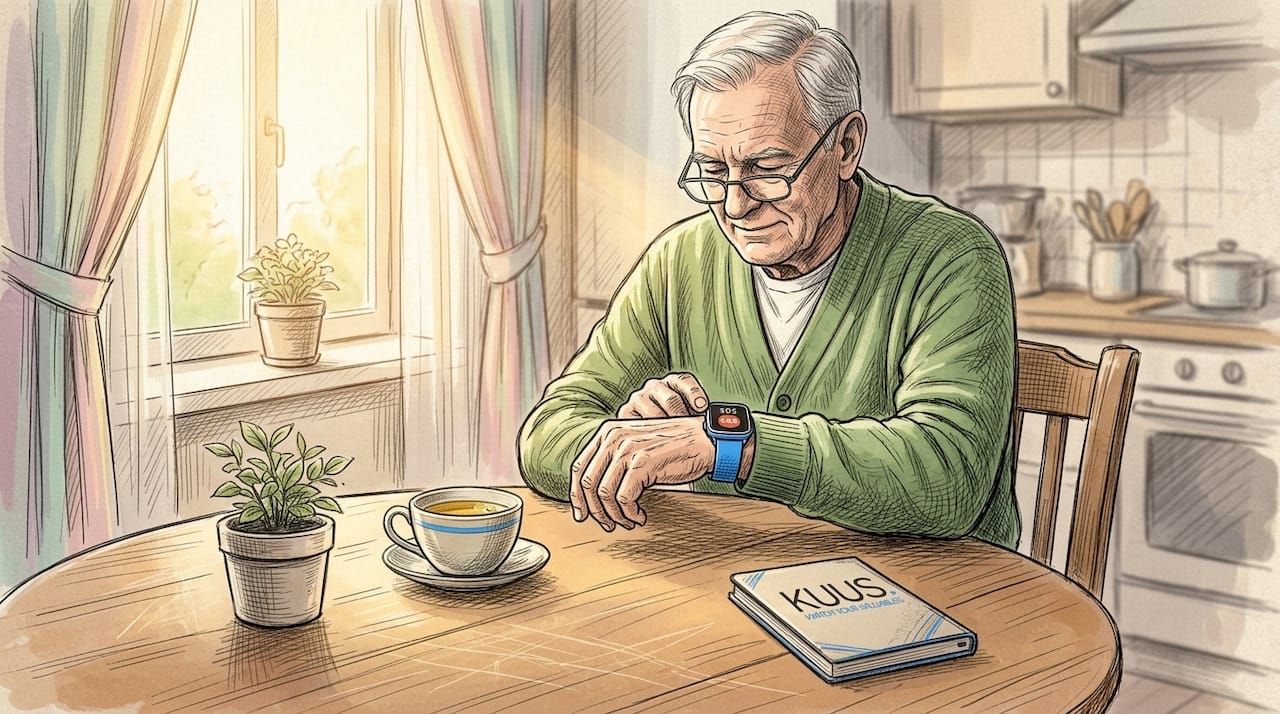
Sensor-based fall detection is a different approach entirely. Rather than relying on the wearer to press a button, these systems use accelerometers and gyroscopes (motion sensors built into the device) to detect sudden changes in movement that suggest a fall has occurred.
Here is what the research shows:
| Detection method | Accuracy range | Limitations |
|---|---|---|
| Wearable sensors | 50 to 80% real-world | Misses soft falls, slow collapses |
| Deep learning AI models | 93 to 94% accuracy | Requires more processing power |
| Camera/radar sensors | Higher in lab settings | Privacy concerns at home |
| Apple Watch | Below average | Poor performance in testing |
“Wearable fall detection is most effective for hard falls involving sudden impact, but it frequently misses soft falls where someone slowly slides to the floor or remains down for an extended period without triggering the sensor threshold.” — NCOA product testing findings
Real-world performance is consistently lower than lab testing suggests. A detection rate of 50 to 80% means that between 20 and 50 out of every 100 falls may go undetected by the wearable alone. That is a significant gap, and it is why relying entirely on automatic fall detection creates a false sense of security.
Combining automatic detection with a manual SOS button gives users both options. If the fall detection misses an event, the person can still press the button. And if the fall leaves someone unable to press anything, the automatic system provides a backup.
Explore smartwatch systems designed specifically for older adults and learn more about the fall alarm benefits they offer in daily care situations.
Bed alarms, motion sensors and comprehensive dementia coverage
For families caring for someone with dementia, wearable devices alone are rarely sufficient. The challenge is not just detecting a fall — it is preventing dangerous situations before they escalate. This is where sensor-based systems that require no active participation from the user become critical.
Bed alarms designed for fall prevention include several distinct types:
- Pressure pad alarms: A pad placed under the mattress or on a chair detects when the person’s weight is removed, triggering an alert. These work well for seniors who tend to get up at night unassisted.
- Motion sensor alarms: Mounted near the bed or in hallways, these detect movement and send alerts before the person has left a safe zone.
- Floor mat alarms: Placed beside the bed, these alert when someone steps onto the mat, signaling that they are getting up.
- Wireless pager and smart monitoring systems: These send alerts directly to a smartphone app, allowing caregivers to respond immediately from another room or location.
For dementia-specific coverage, the most effective approach combines multiple monitoring tools: GPS trackers with geofencing, door sensors that alert when exterior doors open, bed and chair alarms for exit detection, and personal emergency response systems (PERS) with two-way communication.
Here is a step-by-step approach to setting up layered dementia coverage:
- Install a bed pressure pad alarm to detect nighttime risings.
- Add door sensors to all exterior exits and alert immediately if opened.
- Set up geofencing on a GPS device so caregivers receive a notification if the person leaves a defined safe area.
- Place motion sensors in key areas: hallways, bathrooms, kitchen.
- Ensure the person wears a GPS watch or pendant with two-way calling during the day.
- Test every component weekly to confirm alerts are reaching the right phones.
Minimizing false alarms matters. Position sensors carefully to avoid detecting pets or normal movement patterns. Adjust sensitivity settings when possible, and always label alerts clearly so caregivers can distinguish between a true exit attempt and a routine trip to the kitchen.
Compare options using a detailed alarm device comparison and review important safety features to prioritize for 2026.
Care alert system comparison: Choose by scenario
With all the major system types covered, it becomes easier to match a recommendation to the actual caregiving situation. Here is a visual summary:
| Scenario | Best system type | Key features needed | Detection accuracy |
|---|---|---|---|
| Fall-prone senior at home | Wearable + bed alarm | SOS button, fall detection, two-way call | 50 to 80% wearable |
| Dementia, wandering risk | GPS + door/bed sensors | Geofencing, door alerts, bed alarm | Near-total with layering |
| Active, independent senior | Mobile GPS watch | GPS tracking, cellular, SOS button | Depends on device |
| Senior with limited mobility | In-home base station | Pendant button, human monitoring | Manual alert |
| High fall risk, cognitive decline | Full layered system | All sensor types + GPS + PERS | Best with redundancy |
A critical insight for families: fall detection should function as a backup, not the primary safety mechanism. Real-world accuracy in the 50 to 80% range means that automatic fall detection alone cannot be trusted to catch every event. Always combine it with a manual SOS button option.
Key recommendations based on scenario:
- For fall-prone seniors: Prioritize a wearable with both manual SOS and automatic fall detection, paired with a bed alarm for overnight protection.
- For dementia and wandering: Layer GPS geofencing, door sensors, and bed alarms for 24-hour coverage. No single device provides sufficient protection.
- For active, independent seniors: A mobile GPS watch with cellular coverage and SOS functionality gives safety without restricting freedom.
For additional guidance on protecting location privacy while maximizing safety, review these GPS security tips for seniors and caregivers.
What most guides miss: Layering and real-world testing for peace of mind
Most care alert guides focus on comparing devices as standalone solutions. Buy this watch. Choose this pendant. Subscribe to this monitoring service. What they miss is the most important principle in elder safety technology: no single device covers every situation reliably, and the families who feel genuinely at ease are the ones who built a layered system and then actually tested it.
The idea of layering is straightforward. A GPS watch covers location. A bed alarm covers nighttime movement. A door sensor covers exit behavior. Each device handles a specific risk, and together they create a safety net with far fewer gaps than any single product can provide.
In our experience, two problems repeatedly affect families who bought the right devices but still felt anxious. First, they never tested the system in their actual home. GPS dead zones in basements, poor cellular coverage in rural areas, and base station signal loss in thick-walled homes are all real issues that only show up during testing, not in product descriptions. Testing coverage thoroughly indoors and outdoors, in every room of the home, should happen before you rely on any device in a real emergency.
Second, many families underestimate false alarms. A system that generates frequent false alerts gets ignored, disabled, or causes caregiver fatigue. That defeats the purpose entirely. Sensor placement, sensitivity calibration, and regular weekly checks all reduce false alarm rates significantly.
Layering bed alarms, GPS trackers, and door sensors for dementia cases is widely supported as the most comprehensive approach available. The key is not spending more money — it is making sure the systems you choose communicate clearly with the people responsible for responding. A loud alarm that wakes the household is only useful if someone is home to hear it. A smartphone alert is only useful if the caregiver has their phone with them.
Build redundancy into your system, test it thoroughly, and revisit the setup every few months as your loved one’s needs change.
Find the best fit: Explore care alert solutions for seniors
If you are ready to move from research to action, exploring purpose-built devices designed specifically for older adults is the natural next step. Understanding the GPS horloge benefits helps clarify exactly how GPS-enabled watches support both safety and independence in daily life.
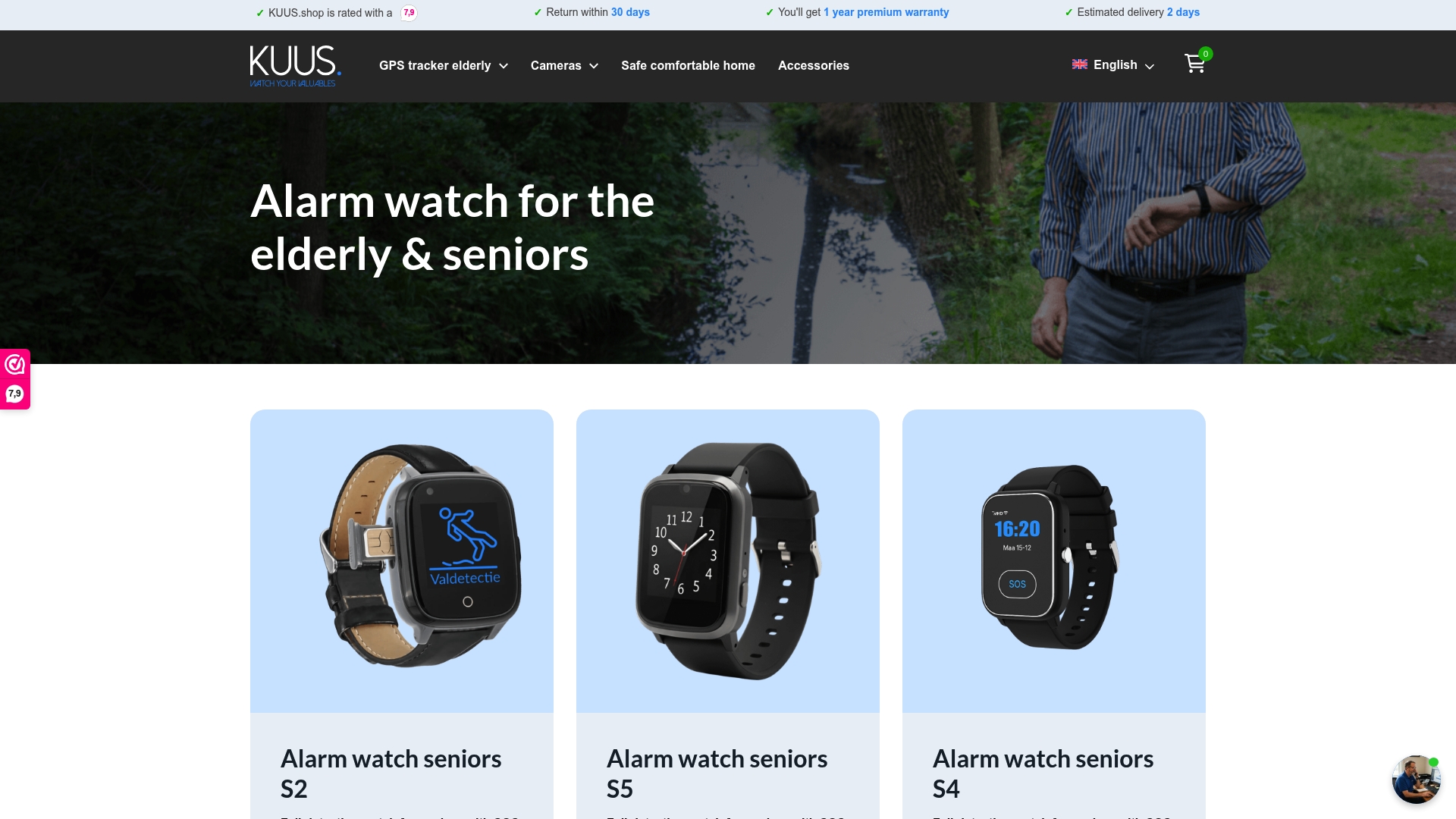
For families comparing alarm watches with SOS buttons and fall detection built in, browsing the full range of alarm watch options gives a clear view of what is available without monthly subscription costs. Every device is designed with simple interfaces, large icons, and waterproof construction suited to daily wear. If you want to explore the full selection of easy-to-use devices for older adults, the complete range of senior watch solutions covers every major scenario from independent living to high-risk dementia care.
Frequently asked questions
What is the most reliable care alert system for seniors with dementia?
A layered system combining GPS tracking with geofencing, door sensors, and bed or chair alarms provides the highest level of protection for someone with dementia, since it covers location, nighttime movement, and exit behavior simultaneously.
How accurate are wearable fall detection devices?
Real-world wearable fall detection catches between 50 and 80 percent of falls, while deep learning-based systems can reach up to 93 to 94 percent accuracy in testing — making manual SOS buttons an essential backup.
Can care alert systems work in basements or indoors?
GPS-based devices may lose signal in basement environments and other indoor dead zones, so it is important to test the device’s coverage in every area of the home before relying on it during an emergency.
Are sensor alarms better than wearables for fall prevention?
Sensor-based systems like bed and door alarms excel at detecting specific predictable movements, while wearable devices miss soft falls or slow collapses — which is why the best protection combines both types rather than choosing one over the other.
Should I choose cellular or landline for my alert system?
Cellular systems provide greater reliability and broader coverage than landline-dependent options, and they remain functional even when the user moves away from the base station, making them the better choice for most seniors in 2026.