




TL;DR:
- SOS watches are specialized wearable devices designed for immediate emergency response and fall detection.
- Regular use, proper setup, and caregiver involvement are essential for effective safety and monitoring.
- They are especially valuable for seniors with fall risks or dementia-related wandering behavior.
Many families assume a smartphone or a basic fitness tracker is enough to keep an elderly loved one safe at home. That assumption can be dangerous. Seniors who live alone face real risks every day, from unexpected falls to disorientation caused by early dementia, and standard consumer devices simply were not built to handle those emergencies. A purpose-built SOS watch is a completely different category of device. This guide explains exactly what an SOS watch is, how it works, what to look for, and why it matters so much for seniors who want to stay independent and safe.
Table of Contents
- What is an SOS watch? Key functions and features
- How SOS watches detect emergencies: Fall detection and more
- SOS watches and dementia: Special considerations
- Choosing the right SOS watch for you or your loved one
- The uncomfortable truth most buyers miss about SOS watches
- How to get started with a senior SOS watch
- Frequently asked questions
Key Takeaways
| Point | Details |
|---|---|
| SOS watch essentials | SOS watches combine emergency alerts, fall detection, and location tracking to support senior safety. |
| Accurate emergency response | Fall detection is reliable for hard falls but has limits for soft falls, so understanding device capabilities is crucial. |
| Added dementia support | Geofencing and monitoring features give added protection for seniors at risk of wandering or confusion. |
| Choose with care | Match SOS watch features to the wearer’s needs by considering monitoring, comfort, and daily usage. |
| No device is perfect | Education, testing, and regular routines ensure SOS watches provide maximum safety benefits. |
What is an SOS watch? Key functions and features
An SOS watch is a wearable safety device that looks similar to a wristwatch but is specifically designed to call for help in an emergency. Unlike a fitness tracker or a regular smartwatch, every feature on an SOS watch exists for one reason: to protect the person wearing it and to give family members and caregivers confidence that help is always within reach.
The core functions of a well-designed SOS watch include:
- One-press SOS button: A large, clearly marked button the wearer can press at any moment to send an immediate alert to family members or a monitoring center.
- Automatic fall detection: Built-in sensors recognize when the wearer has fallen and trigger an alert even if the person cannot press the button themselves.
- GPS location tracking: Real-time location is shared with designated contacts so family members always know where their loved one is.
- Two-way calling: The watch acts as a phone, allowing the wearer and their caregiver to speak directly through the device without needing to find a separate phone.
- Geofencing: Caregivers can set a safe zone on a map, and the watch sends an alert if the wearer leaves that area.
These features work together in a way that ordinary consumer smartwatches cannot replicate. According to expert guidance on medical alert watches, SOS watches promote independence for fall and dementia-risk elderly through discreet wearables, but monitored systems consistently outperform consumer smartwatches like Apple Watch for soft fall detection and professional emergency dispatch.
Understanding the essential alarm watch features that matter most helps families avoid paying for technology their loved one will never actually use. Simplicity, reliability, and comfort are just as important as a long feature list.
Pro Tip: Look for an SOS watch that offers 24/7 monitoring or direct connection to a professional response center. Family members cannot always answer their phones immediately, and a monitored system ensures someone is always available to respond.
How SOS watches detect emergencies: Fall detection and more
Understanding the fundamental features, it’s crucial to see how SOS watches respond during real emergencies, especially falls.
Falls are the leading cause of injury among older adults. What makes SOS watches so valuable is that they can detect a fall and send an alert automatically, without the wearer needing to do anything. This matters enormously when someone is unconscious, disoriented, or simply too injured to press a button.

How fall detection works:
SOS watches use a combination of accelerometers (motion sensors) and gyroscopes (sensors that measure rotation and orientation) to track the wearer’s movement patterns continuously. When the device detects a sudden drop in movement followed by an impact and then stillness, it recognizes this pattern as a likely fall. An algorithm processes the data within seconds and either triggers an alert immediately or prompts the wearer to confirm they are okay before alerting contacts.
The accuracy of fall detection varies depending on the type of fall and the device:
| Fall type | Watch accuracy | Pendant accuracy |
|---|---|---|
| Hard falls (sudden impact) | 75% to 95% | Higher due to chest placement |
| Soft falls or slumps | Lower accuracy | Moderate accuracy |
| Backward falls | Moderate | Moderate to high |
| Sitting to floor slowly | Low | Low |
As independent testing confirms, fall detection accuracy ranges from 75% to 95% for hard falls, with Bay Alarm Medical achieving around 70% in 10 controlled tests and Medical Guardian reaching approximately 90%. Pendants worn at chest level tend to be more accurate than wrist-worn watches because the chest is closer to the body’s center of gravity during a fall.
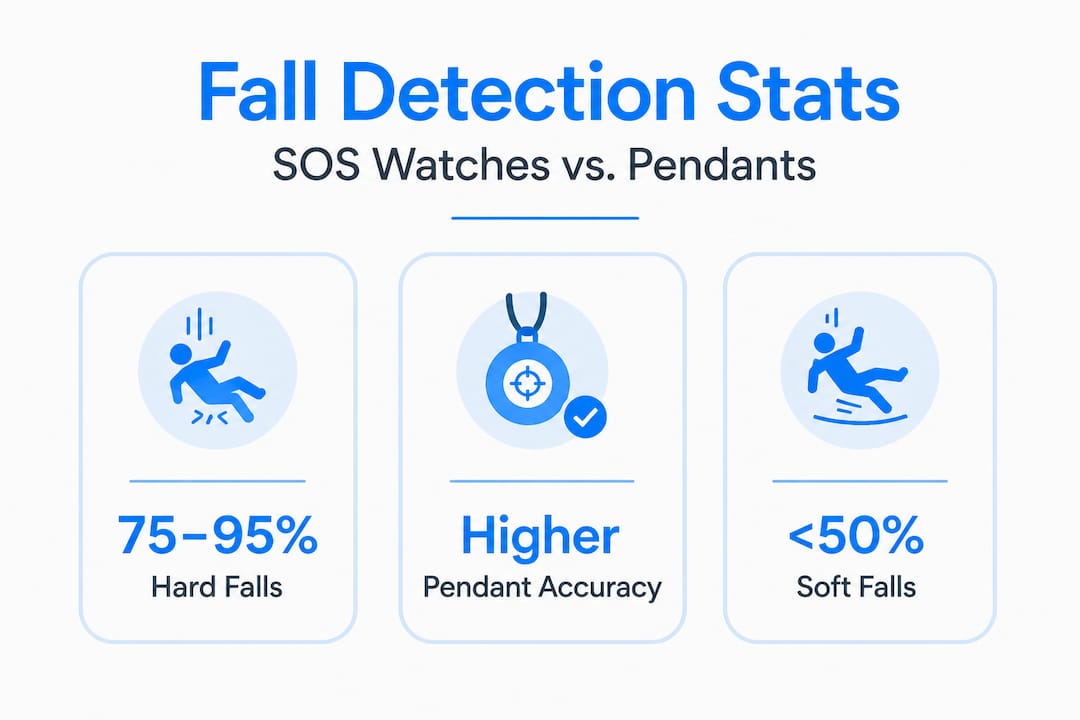
This is an important limitation to understand. Most real-world falls among seniors are soft falls or slow slumps, which are harder for any wearable to detect reliably. However, even with these limitations, SOS watch users gain a critical safety advantage because the device is always on and always ready.
For a detailed breakdown of how these devices perform in practice, the fall detection guide compares leading models side by side. You can also learn more about the benefit of fall alarm watches in everyday elder care settings.
Beyond fall detection, SOS watches also respond to:
- Manual SOS button presses for any emergency the wearer recognizes themselves.
- Geofence breaches when a person with dementia or memory loss wanders outside a designated safe area.
- Inactivity alerts when no movement is detected for an unusual period of time.
Pro Tip: Test the fall detection feature on your specific device regularly, and make sure you know how to cancel a false alarm. Accidental alerts can cause unnecessary panic, and knowing the cancel procedure keeps the system running smoothly.
SOS watches and dementia: Special considerations
Besides physical falls, SOS watches serve a crucial role for seniors experiencing memory loss or wandering associated with dementia.
Dementia affects millions of older adults, and one of the most distressing and dangerous symptoms is wandering. A person with dementia may leave home and become completely disoriented within minutes, unable to find their way back or communicate where they are. An SOS watch with GPS tracking and geofencing directly addresses this risk.
Benefits of SOS watches for dementia users:
- Real-time GPS location allows family members to find a wandering loved one quickly.
- Geofencing alerts notify caregivers the moment the person steps outside a safe zone.
- Activity monitoring can reveal changes in daily patterns that may signal a health concern.
- Two-way calling allows caregivers to speak calmly to the person and help guide them home.
- The SOS button gives the person a way to call for help even if they cannot remember phone numbers.
Limitations and challenges for dementia users:
- User adherence is a significant challenge. A person with dementia may forget to wear the watch, remove it, or refuse to put it on.
- Charging the device requires a routine that some users cannot maintain independently.
- Complex interfaces can confuse users with cognitive decline, making simplicity essential.
- Geofencing is a preventive tool, not a guarantee. It alerts caregivers after the person has already left the safe zone.
Research published on wearables in dementia care confirms that wearable devices add meaningful value through geofencing and activity monitoring for dementia patients, but adherence issues remain a real challenge. The same research notes that while some wearables show 86% to 99% fall detection accuracy in controlled studies, real-world validation is still needed before those numbers can be fully trusted in everyday settings.
“Wearable technology for dementia care shows strong promise in controlled conditions, but real-world performance depends heavily on consistent use, proper setup, and caregiver involvement. Technology alone is not a substitute for human oversight.”
For families exploring options, a smartwatch with SOS and GPS designed specifically for seniors offers a practical starting point, combining safety features with an interface that does not overwhelm the user.
The key takeaway for dementia care is this: the technology works best when caregivers are actively involved from day one. Setting up the device, establishing wearing routines, and regularly checking that the device is charged and functioning are all part of making the system work.
Choosing the right SOS watch for you or your loved one
Once the advantages and special concerns are clear, the next step is picking a device that fits individual needs.
Not every SOS watch is right for every person. A senior who lives alone and has a high fall risk has different needs than someone in the early stages of dementia who tends to wander. Matching the device to the specific situation makes all the difference.
Step-by-step guide to choosing an SOS watch:
- Identify the primary risk. Is the main concern falls, wandering, general emergencies, or a combination? This determines which features matter most.
- Check fall detection quality. Look for devices with tested accuracy ratings and understand whether hard fall or soft fall detection is included.
- Confirm GPS coverage. Make sure the device uses a reliable network that covers both the home and areas the person regularly visits.
- Evaluate two-way calling. Test whether the audio is clear and whether the person can actually use the feature comfortably.
- Assess battery life. A device that needs charging every 12 hours is a problem for someone who forgets routines. Look for at least 24 to 48 hours of battery life.
- Consider comfort and design. If the watch is uncomfortable or looks too medical, the person may refuse to wear it. Comfort drives consistent use.
- Review the monitoring setup. Decide whether a family-monitored system or a professional monitoring center is the right fit.
| Feature | Why it matters | What to look for |
|---|---|---|
| Fall detection | Automatic alerts without user action | Tested accuracy, hard and soft fall support |
| GPS tracking | Location visibility for family | Real-time updates, indoor and outdoor coverage |
| SOS button | Manual emergency alert | Large, clearly marked, easy to press |
| Two-way calling | Direct voice communication | Clear audio, simple activation |
| Battery life | Reliable daily use | Minimum 24 hours, easy charging |
| Geofencing | Wandering prevention | Customizable zones, instant alerts |
| Water resistance | 💧 Safe for daily wear | IPX4 or higher rating |
As research on medical alert systems consistently shows, purpose-built monitored systems outperform consumer smartwatches for seniors who need reliable emergency dispatch and soft fall coverage. The extra investment in a specialized device pays off in reliability when it matters most.
Learning how SOS watch emergency alerts reach family members helps set realistic expectations. And reviewing an alarm watch interface guide ensures you choose a device the senior will actually feel comfortable using every day.
The uncomfortable truth most buyers miss about SOS watches
Here is something most product guides will not tell you: buying the right SOS watch is only about 30% of the solution. The other 70% is everything that happens after the box is opened.
Families often spend hours comparing features, reading specs, and debating between models. Then the device arrives, gets set up once, and slowly stops being used because nobody established a daily routine around it. The watch sits on the nightstand uncharged. The wearer finds it uncomfortable and takes it off during the afternoon. The caregiver never tested the SOS button and does not actually know what happens when it is pressed.
This is the real failure mode for SOS watches, and it has nothing to do with technology.
The most reliable safety outcome comes from treating the device like a habit, not a gadget. That means charging it at the same time every day, wearing it consistently from morning to bedtime, and testing the alert system at least once a month so everyone knows it works. It also means involving caregivers from the very beginning, not as an afterthought.
Another truth worth saying plainly: no device is foolproof. Fall detection misses some falls. GPS signals can be delayed indoors. Batteries die. These are real limitations, and families who understand them in advance are better prepared to fill the gaps with human attention and communication.
The real-world value of fall alarm watches comes from consistent daily use combined with caregiver engagement, not from the device alone. The technology is a tool. The people using it are what make it work.
Pro Tip: Set a recurring weekly reminder to check that the watch is charged, the contacts are current, and the alerts are still working as expected. Five minutes a week can prevent a serious gap in safety.
How to get started with a senior SOS watch
With clarity on both the technology and the practical realities, the next step is finding the right device and putting a safety plan in place.
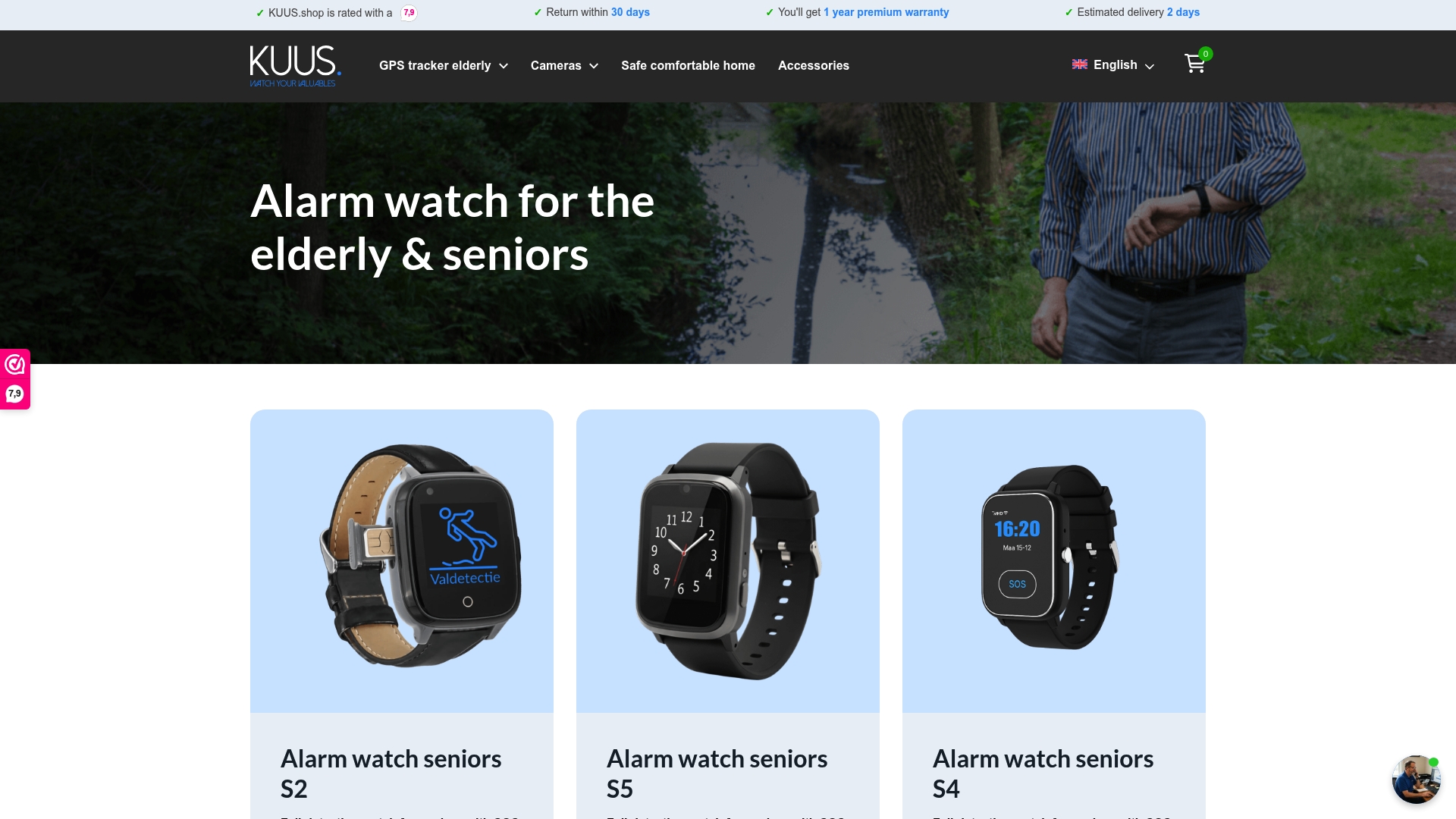
Exploring the value of a GPS watch for elderly independence is a great starting point for families new to this category. For those ready to compare specific models, the guide to best GPS trackers for seniors covers top-rated options without monthly subscription costs. If you are also considering a standalone device, reviewing the best alarm button uses for seniors can help you decide whether a watch, a button, or both is the right combination for your situation. The right solution is the one that gets worn every day.
Frequently asked questions
What happens when you press the SOS button on the watch?
Pressing the SOS button immediately sends an alert to assigned contacts, such as family members, caregivers, or a monitoring service, and shares the wearer’s current GPS location. Some models also open a two-way voice call so the wearer can speak directly with the person responding. As expert guidance confirms, monitored systems offer the fastest and most reliable response compared to consumer smartwatches.
Are SOS watches waterproof for everyday use?
💧 Many SOS watches are water-resistant enough for handwashing and light rain, but not all models are rated for showering or swimming. Always check the specific IP rating of the model you choose before exposing it to water.
Do SOS watches work if the wearer is unconscious?
If the watch includes fall detection, it can trigger an alert automatically after a hard fall even if the wearer cannot press the button. However, testing shows that accuracy ranges from 75% to 95% for hard falls, and soft falls or slumps may not be detected reliably.
How is an SOS watch different from a regular smartwatch?
An SOS watch is purpose-built for emergency alerts, monitored safety services, and senior-specific features like fall detection and geofencing. Regular smartwatches focus on fitness tracking and notifications and are not optimized for emergency dispatch or soft fall detection.
Can SOS watches prevent wandering in dementia patients?
SOS watches with geofencing send an alert to caregivers when the wearer leaves a designated safe zone, which helps manage wandering risk. However, research on wearables in dementia confirms that user adherence varies, and the technology works best when paired with consistent caregiver involvement.