




TL;DR:
- SOS alerts on watches follow different pathways, impacting response time and contact order.
- Medical alert systems involve trained agents, providing detailed coordination, while consumer watches alert first responders.
- Proper system setup, testing, and understanding false alarm procedures are critical for reliable safety and response.
Most caregivers assume that pressing an SOS button on a watch sends an instant notification to every family member at once. That assumption feels logical, but it is not always accurate. The way alerts actually travel from wrist to recipient depends on the watch type, the network available, and how contacts were set up beforehand. Some devices call 911 first and text family second. Others route alerts through a professional monitoring center before anyone in the family hears a word. Understanding these differences is not a technical exercise. It is a real safety issue for every older adult living independently and for every family counting on that small button to work.
Table of Contents
- What actually happens when an SOS is triggered?
- Comparing watch types: Direct smartwatches vs. medical alert systems
- False alarms, edge cases, and using SOS abroad
- Fall detection: How reliable is it for family alerts?
- A caregiver’s perspective: What actually matters when choosing an SOS watch
- Find the right SOS watch for your loved one
- Frequently asked questions
Key Takeaways
| Point | Details |
|---|---|
| Alert methods vary | Consumer and medical SOS watches use different processes for alerting family members and responders. |
| Response depends on setup | How quickly family is notified relies on device configuration and cellular connectivity. |
| Fall detection is not perfect | Detection can miss or falsely trigger alerts, so regular testing and family awareness are essential. |
| False alarms happen | Caregivers and wearers should know how to cancel false alerts and maintain communication. |
What actually happens when an SOS is triggered?
When someone presses the SOS button on a watch, the device does not simply fire off a text to mom or the kids. A sequence of steps begins, and that sequence looks different depending on the device. SOS watches use different alert channels: direct contacts, dispatcher centers, and GPS locators. Each channel has its own timing and its own failure points.
Here is what typically happens, step by step:
- Button press or fall detection activates the SOS sequence. The watch detects intentional input or a sudden impact and begins a short countdown, usually 5 to 30 seconds, giving the wearer a chance to cancel.
- The device contacts its primary channel. A consumer smartwatch like the Apple Watch calls 911 first, then sends automated texts with GPS location to preset emergency contacts.
- Family receives follow-up notifications. With the Apple Watch, texts go out after the 911 call is placed. The message includes the location, and follow-up updates may arrive if the location changes.
- Medical alert watches take a different path. Devices from brands like Bay Alarm connect directly to a professional monitoring center. Trained agents assess the situation, then contact family with real details about what happened and where.
- Family is updated via app or phone. Bay Alarm’s monitoring center dispatches help and provides caregivers with real-time updates through a connected app.
Bay Alarm Medical reports an average monitoring center response time of approximately 60 seconds, meaning a trained agent is on the line within one minute of activation.
The biggest takeaway here is the difference in who acts first. Consumer watches put emergency services first and family second. Medical alert systems put a human expert first, who then coordinates with both emergency services and family. Both approaches have merit, but neither one is the simple, universal alert that most caregivers picture. Location tracking in SOS watches is a key part of what makes these alerts useful, since knowing where a loved one is can be just as critical as knowing something went wrong.
Comparing watch types: Direct smartwatches vs. medical alert systems
Each device has its own way of alerting contacts. To choose what fits your needs, let’s see how the major types compare.
Consumer watches require phone setup and a cellular connection, alert family after 911, while medical alert watches use professionals and may add a slight communication delay but deliver more coordinated help.
| Feature | Consumer smartwatch | Medical alert watch |
|---|---|---|
| Who gets alerted first | 911, then family | Monitoring center, then family |
| Alert method | Automated text/call | Human agent calls family |
| Real-time GPS sharing | Yes, via text | Yes, via caregiver app |
| Follow-up communication | Limited | Ongoing until resolved |
| Setup required | Significant phone setup | Simpler, guided setup |
| Monthly cost | Device only | Often includes monitoring fee |
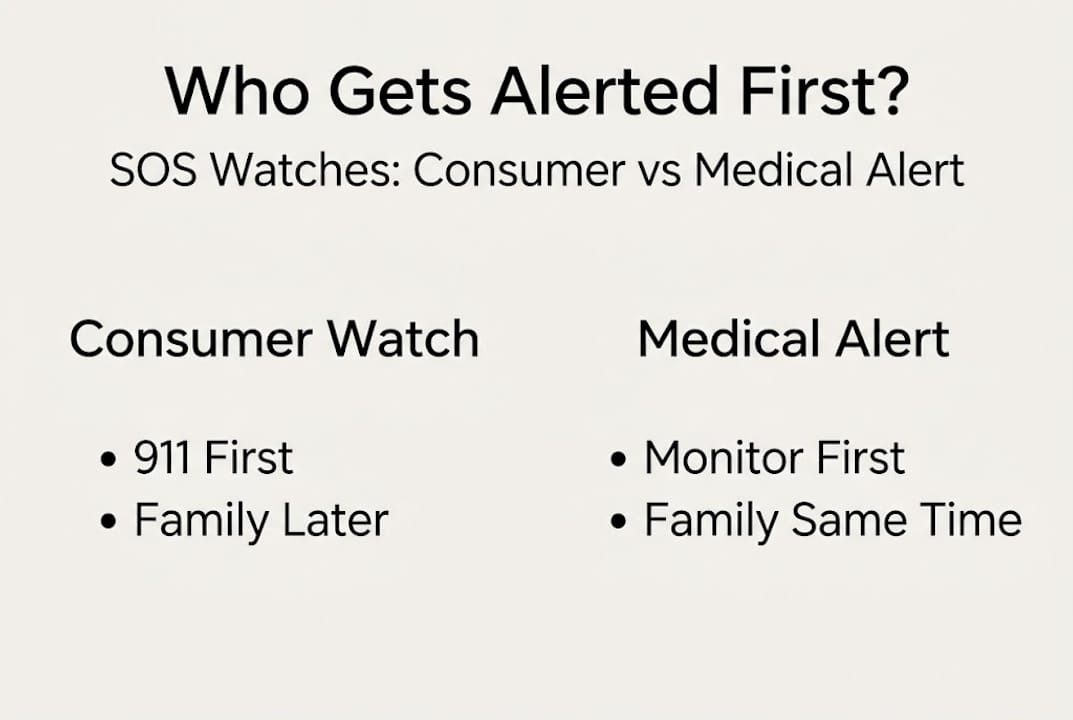
For families with tech-comfortable older adults who always have their phone nearby, a consumer smartwatch can work well. The alerts are fast and automatic. But there are real gaps. If the emergency contact list is outdated, if the phone is not connected, or if the wearer cannot speak, the family may receive a text but have no idea what actually happened.
Medical alert watches fill those gaps. A trained agent can assess the situation, speak with the wearer or bystanders, and give family members real context. The tradeoff is a slightly longer time before family is directly contacted.
- Consumer watches: fast but bare-bones information to family
- Medical alert watches: slightly slower but far more detailed and coordinated
- Both share GPS location, but app-based tracking is more reliable in dedicated systems
Pro Tip: If your loved one is not comfortable with technology or is likely to forget to update their phone contacts, a dedicated medical alert watch is a much more reliable choice for family notification.
For a detailed breakdown, comparing SOS watches for seniors side by side will help narrow your decision. You should also review top safety features to know exactly what to prioritize before buying.
False alarms, edge cases, and using SOS abroad
Even the best systems have real-world quirks. Here’s how to handle common SOS watch curveballs.
Accidental SOS activations happen more than most people expect. A sudden arm movement, bumping against a hard surface, or even a software glitch can trigger the countdown. False triggers are common and can be canceled within seconds, but overseas function is not guaranteed without cellular or WiFi coverage. This matters because caregivers can panic when they receive an alert that turns out to be nothing.
Common causes of false alarms:
- Quick downward arm movements (putting down a bag, gesturing)
- Mechanical shocks like dropping the watch or bumping a surface
- Tech glitches during software updates or low battery states
Most watches give the wearer a cancellation window. During that window, pressing a button or tapping the screen stops the alert before it reaches anyone. If the wearer does not cancel in time, responders are contacted. The wearer or a bystander can then explain it was an accident.
The situation becomes more complicated when traveling internationally. If the watch relies on a local SIM card or a specific carrier, it may not connect abroad. WiFi calling can sometimes fill that gap, but it requires the watch to be connected to a known network. SOS watch reliability abroad is a real concern for families whose elderly loved ones travel.
For older adults who travel frequently, a smartwatch GPS for seniors with international roaming support is worth the extra investment.
Pro Tip: Schedule a monthly battery check and run a test alert with all emergency contacts present. This confirms the full alert chain is working and prevents anyone from being caught off guard in a real emergency.
Fall detection: How reliable is it for family alerts?
Emergencies often happen when you least expect it. Fall detection is a major feature families count on, but does it deliver?
Fall detection uses a combination of gyroscopes (which measure rotation) and accelerometers (which measure movement speed and direction). Advanced devices layer in AI to distinguish a fall from a vigorous workout. When the sensor pattern matches a fall, the SOS countdown begins automatically, even if the wearer cannot press a button.
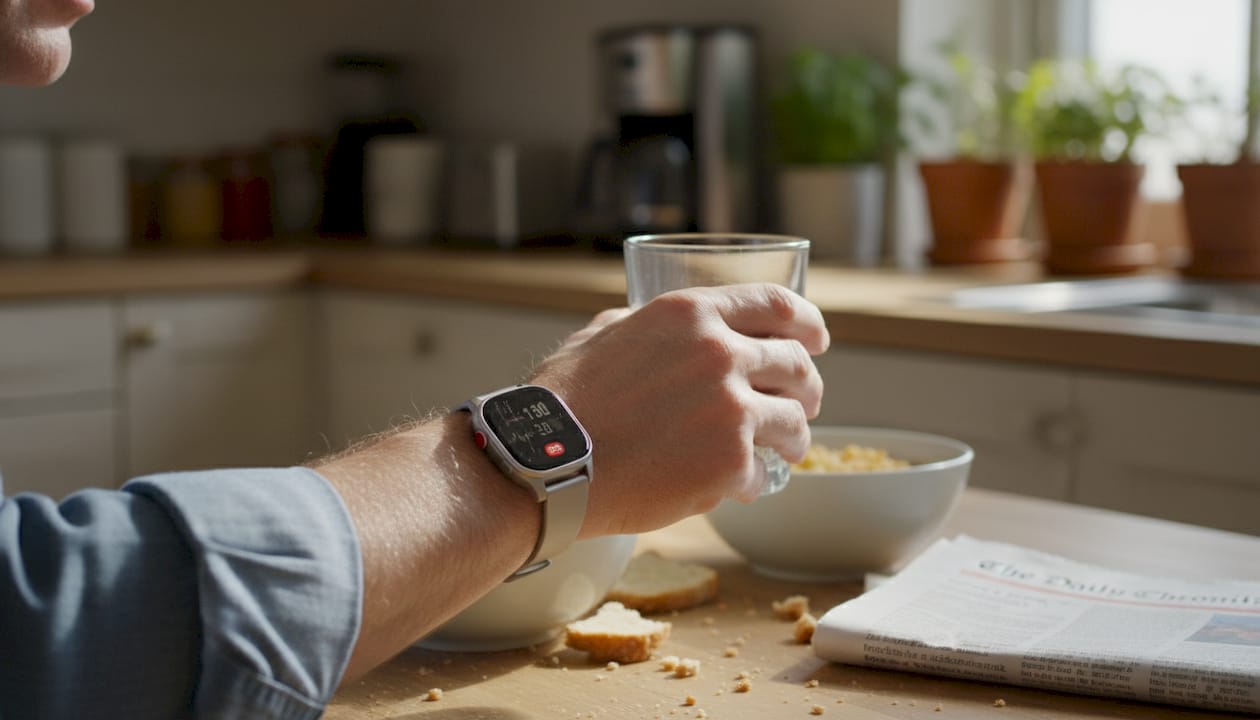
Falls are the leading cause of injuries for US seniors, and fall detection accuracy in top brands ranges from 75 to 90 percent. That range matters. It means that roughly one in four to one in ten falls may not trigger an automatic alert.
| Watch brand | Fall detection accuracy | Alert type |
|---|---|---|
| Medical Guardian | ~90% | Auto SOS to monitoring center |
| Bay Alarm Medical | ~75% | Auto SOS to monitoring center |
| Apple Watch | Variable | Auto SOS to 911, then contacts |
What families should realistically expect:
- Likely detected: Hard falls with impact, sudden drops to the floor
- May be missed: Slow slides to the ground, falls in seated positions, very gradual collapses
- Not a guarantee: No device catches every fall every time
The benefit of fall alarm watches is still significant even at 75 to 90 percent accuracy. Without any detection, a fall at home might go unnoticed for hours. Understanding how fall detection works technically also helps caregivers set realistic expectations, avoiding the false sense of total security that can come from trusting a single feature completely.
A caregiver’s perspective: What actually matters when choosing an SOS watch
You have seen how complex the technology really is. Now here is what should actually guide your decision, and it is probably not what most product comparison guides focus on.
Everyone looks at specs first: battery life, GPS accuracy, waterproofing. Those matter. But the single biggest predictor of whether an SOS watch actually helps in an emergency is whether the alert chain has been tested and everyone in it knows what to expect. We have spoken with caregivers who set up a device perfectly on paper, only to discover months later that a key contact had changed their phone number and was never receiving alerts.
Setup is harder than it looks. Walking through the full process with every emergency contact, not just the primary one, takes time. But it is the only way to verify the system actually works. This is not about distrust. It is about knowing that when a real emergency happens, no one is confused about what the alert means or what to do next.
The alarm watch comparison guide is a good starting point, but the most important step happens after the device arrives. Run a test. Then run another one three months later.
Pro Tip: Involve the wearer in the testing process. When older adults understand how the device works and feel confident using it, they are far more likely to wear it consistently, which is the only thing that actually matters in a real emergency.
Find the right SOS watch for your loved one
Now that you know what to look for, here’s where you can find proven SOS watch solutions built for real-world use.
At Kuus, we specialize in portable safety devices designed specifically for older adults living independently. Our selection includes GPS trackers for seniors with no monthly subscription, clear SOS buttons, two-way calling, and reliable fall detection. Every device is chosen with caregiver peace of mind in mind. You can compare top SOS watches side by side to find what fits your situation. Browse our full range of SOS watches for elderly and reach out if you need personalized advice on which device suits your loved one best.
Frequently asked questions
How quickly are families notified after an SOS is pressed?
In most cases, notifications reach family within seconds to a couple of minutes. Bay Alarm’s monitoring center connects in approximately 60 seconds and sends family updates immediately after assessing the situation.
Do all SOS watches notify family even if the wearer cancels the alert?
Not always. False alarms canceled in the countdown typically stop before notifications are sent, but if the process has already begun, some texts or calls may still go out to contacts.
Will SOS alerts work while traveling outside the country?
Reliability abroad depends on the device. Location and text alerts may fail without stable cellular or WiFi coverage, so international travelers should verify roaming support before departing.
What if the watch triggers a false alarm?
Most watches allow cancellation during a short countdown window. False alarms can be stopped by pressing the cancel button or by explaining the situation directly to monitoring center agents.