




TL;DR:
- GPS tracking protects all seniors by providing real-time location, fall detection, and emergency alerts.
- Devices should be comfortable, easy to use, and include features like SOS buttons and geo-fencing.
- Using GPS trackers empowers seniors with independence while offering families peace of mind.
Most families assume GPS tracking is only necessary when a loved one has advanced dementia. That assumption leaves a lot of seniors unprotected. Falls, disorientation, and medical emergencies can happen to any older adult living independently, regardless of their cognitive health. The reality is that GPS tracking has become a practical safety tool for a much wider group than most people realize. This guide explains who benefits most, how these devices work in everyday life, and what to look for when choosing the right solution for your family.
Table of Contents
- The growing need for senior GPS tracking
- How GPS tracking works for seniors
- Daily scenarios: How GPS helps seniors and families
- Choosing the right GPS tracker and safety features
- A practical perspective: Why GPS tracking is about empowerment, not just safety
- Find the best GPS solutions for seniors’ safety
- Frequently asked questions
Key Takeaways
| Point | Details |
|---|---|
| Enhanced safety | GPS trackers allow for quick responses to falls or emergencies, protecting independent seniors. |
| Freedom and reassurance | Seniors can maintain active lifestyles while families stay informed without constant worry. |
| Comprehensive features | Modern devices often include real-time tracking, fall detection, safe zones, and SOS buttons. |
| Personalized solutions | Selecting the right GPS tracker involves matching features to the senior’s needs and comfort. |
The growing need for senior GPS tracking
Living independently is something most seniors value deeply. It represents freedom, dignity, and a sense of control over their own lives. But independence also comes with real risks that families cannot ignore.
Falls are one of the most serious threats. A senior who falls at home or outdoors may be unable to call for help, especially if they are disoriented or injured. Memory lapses, even mild ones, can cause a person to lose track of where they are during a routine walk or errand. These situations do not require a diagnosis of severe dementia to be dangerous.
“Wandering is not a behavior reserved for those in late-stage dementia. It can happen to anyone experiencing early cognitive changes, stress, or confusion.”
Wandering occurs in up to 60% of people with dementia at some stage, but early-stage wandering is often overlooked until an incident occurs. Families frequently underestimate the risk until something goes wrong.
GPS tracking addresses these dangers directly. When a senior carries or wears a GPS device, their real-time location is available to family members or caregivers at any moment. If something goes wrong, help can be sent quickly and accurately.
Here is why GPS tracking matters for independent seniors:
- Immediate location data means responders know exactly where to go
- SOS alerts allow the senior to call for help with one press
- Fall detection can trigger an alarm automatically, even if the senior is unconscious
- Geo-fencing notifies family if the senior leaves a designated safe area
- Two-way calling lets the senior speak directly with a family member through the device
Families also benefit in a less obvious way. Constant worry leads to frequent check-in calls, which can feel intrusive to the senior. GPS tracking reduces that anxiety without requiring constant contact. The senior keeps their freedom. The family keeps their peace of mind. Exploring GPS tracking in dementia shows just how broad the benefits are, and reviewing the best GPS tracker seniors options helps families find the right fit.
With the risks in sharp focus, let’s clarify exactly what GPS tracking is and how these systems work for everyday use.
How GPS tracking works for seniors
GPS stands for Global Positioning System. It uses a network of satellites orbiting Earth to determine a precise location. A GPS device receives signals from multiple satellites and calculates where it is, often within a few meters. That location is then sent via a cellular network to an app on a family member’s phone.
For seniors, this technology is packaged into wearable devices that are easy to use and comfortable to wear every day. Modern GPS trackers can combine real-time location, fall detection, and emergency alerts in one wearable, making them far more practical than carrying a smartphone.
Common device types compared:
| Device type | Best for | Key advantage |
|---|---|---|
| GPS watch | Active seniors | Always on wrist, easy SOS access |
| Pendant/clip | Less mobile seniors | Discreet, lightweight |
| Smartphone app | Tech-comfortable seniors | Familiar interface |
Most seniors and families find that a GPS watch offers the best combination of comfort and functionality. It stays on the body, is hard to forget, and puts the SOS button within immediate reach.
Here is how these devices typically work in practice:
- The senior wears the device throughout the day
- The device connects to GPS satellites and a cellular network via a SIM card
- Location updates are sent to a companion app used by family members
- If the senior presses SOS or a fall is detected, an alert is sent immediately
- Family members can call the senior directly through the device
Key features to understand include real-time location tracking, safe zone alerts (called geo-fencing), automatic fall detection, and two-way voice calling. These fall detection alarms are particularly valuable because they work even when the senior cannot press a button.
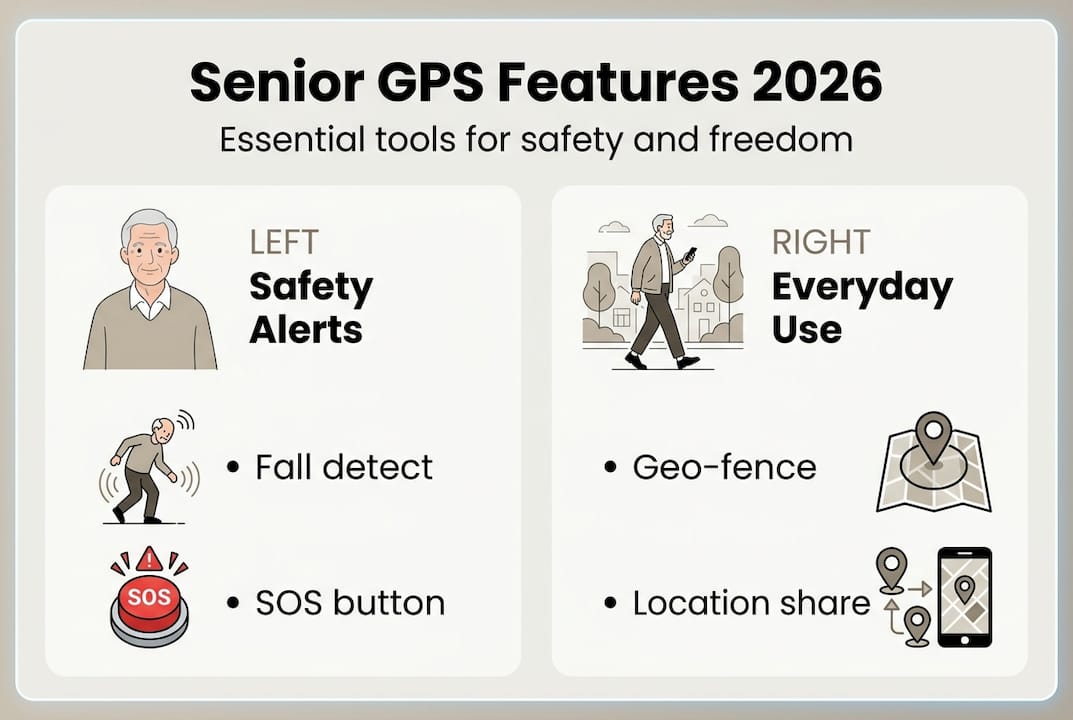
Pro Tip: Choose a device that uses a SIM card rather than relying on home Wi-Fi. A SIM card gives the device cellular coverage almost anywhere, so protection does not stop at the front door.
Understanding the technology is just the start. Now let’s see in which life situations GPS tracking makes the most difference.
Daily scenarios: How GPS helps seniors and families
Abstract safety features become meaningful when you picture real situations. GPS tracking is not just for worst-case emergencies. It supports daily life in ways that genuinely reduce stress for everyone involved.
Scenario overview: Where GPS tracking adds real value
| Situation | GPS benefit | Who it helps most |
|---|---|---|
| Fall at home or outdoors | Automatic alert sent to family | Seniors living alone |
| Getting lost during a walk | Real-time map location shared | Seniors with memory lapses |
| Medical episode | SOS pressed, location confirmed | Any senior |
| Wandering outside safe zone | Geo-fence alert sent to family | Early dementia seniors |
| Family anxiety between visits | Location visible anytime | Caregivers and family |
Caregivers report faster response times and peace of mind with GPS location alerts, and this benefit extends well beyond emergency situations.
Consider a senior who enjoys walking to the local park each morning. Their family worries but does not want to stop them. With a GPS watch, the family can see the route in real time. If the senior takes an unexpected turn or stops moving for too long, an alert prompts a check-in. The senior keeps their routine. The family stops worrying.
For seniors with early memory issues, geo-fencing is especially useful. You set a virtual boundary around the home or neighborhood. If the senior crosses that boundary unexpectedly, a notification goes to your phone immediately. You can respond before the situation becomes serious.
Key daily benefits include:
- Rapid response during falls, even if the senior cannot speak
- Location confirmation during medical emergencies
- Automatic alerts when a senior with memory issues leaves a safe area
- Quick reunification when a senior becomes disoriented in public
- Reduced frequency of intrusive check-in calls
Learning more about remote monitoring safety and mobile alarms for elderly helps families build a more complete safety plan around these tools.
With these benefits in mind, how can you decide if GPS tracking is right for your situation, and what features matter most?
Choosing the right GPS tracker and safety features
Not every GPS tracker is built the same. Not all GPS trackers offer the same safety features; fall detection, SOS, and coverage vary, so choosing carefully makes a real difference in how well the device protects your loved one.
Start by thinking about the senior’s specific needs and daily habits. A very active senior needs something durable and water-resistant. A senior who rarely leaves home may prioritize simplicity and a large SOS button over advanced GPS features.
Step-by-step selection process:
- Assess mobility: Does the senior go out alone regularly, or mostly stay home?
- Identify the main risk: Is it falls, wandering, or general emergencies?
- Choose the device type: Watch, pendant, or phone-based solution
- Check key features: Fall detection, SOS button, geo-fencing, two-way calling
- Evaluate battery life: A device that needs daily charging may be forgotten or avoided
- Consider ease of use: Large buttons, simple interface, and clear display matter
- Review costs: Look for devices with no monthly subscription fees
When comparing devices, focus on these must-have features:
- Automatic fall detection that works without the senior pressing anything
- SOS button that is large, clearly labeled, and easy to press under stress
- Real-time GPS location visible in a family app
- Geo-fencing alerts for seniors who may wander
- Waterproof design so the device can be worn in all conditions 💧
- Long battery life to reduce the risk of the device being off when needed
Device comfort matters more than most families expect. A device that feels uncomfortable or looks medical will often be left on the nightstand. Choosing something that looks like a regular watch or a simple wristband significantly improves daily wear.
Privacy is also worth discussing openly. Seniors sometimes feel that GPS tracking is surveillance rather than support. Reviewing a thorough GPS tracker checklist together with your loved one helps address these concerns. Understanding how GPS tracking in care is used professionally can also reassure families about appropriate boundaries.
Pro Tip: Involve the senior in choosing the device. When they pick the style and understand how it works, they are far more likely to wear it consistently and feel positive about it.
Now that you know what to look for, let’s tie together the most important lessons and the broader benefits of GPS tracking for seniors.
A practical perspective: Why GPS tracking is about empowerment, not just safety
There is a common misconception that GPS tracking is a last resort, something you introduce only after a crisis. We see this differently. GPS tracking, when introduced thoughtfully, is one of the most empowering tools available to seniors and their families.
Think about what changes when a senior wears a GPS device. They can go for a walk without a family member following them. They can visit a friend across town without someone waiting anxiously by the phone. That freedom is not a small thing. It is what makes independent living feel worth living.
Families also gain something unexpected. Instead of calling three times a day to check in, they can glance at an app and see that everything is fine. Those check-in calls, however well-intentioned, can feel like surveillance to the senior. GPS tracking actually reduces that dynamic.
The best GPS tracker seniors solutions are designed with this balance in mind. Safety and dignity are not opposites. With the right device, seniors keep their independence, and families keep their peace of mind. That is a genuine win for everyone involved.
Find the best GPS solutions for seniors’ safety
If you are ready to take the next step, KUUS. offers a carefully selected range of GPS trackers, SOS watches, and personal alarm buttons designed specifically for seniors. Every device is chosen with ease of use, reliability, and daily comfort in mind.
Whether you are looking for a wearable GPS watch with fall detection or a simple alarm button for seniors, KUUS. has options to fit different needs and budgets. You can also explore detailed guides to compare features before you buy. Check out the best SOS alert watch guide to find a device that gives your loved one real protection and real freedom every day.
Frequently asked questions
Can GPS trackers help seniors living with mild cognitive impairment, not just dementia?
Yes, GPS tracking is useful for seniors with any level of memory concerns or who may get disoriented outside their home. GPS trackers benefit seniors beyond advanced dementia, especially those at risk of getting lost during routine activities.
What safety features should I look for in a GPS tracker for my elderly parent?
Choose a device with real-time location, fall detection, an SOS button, and long battery life for maximum protection. A senior GPS tracker should combine real-time tracking, fall detection, and SOS alerts to cover the most common emergency scenarios.
How can families use GPS tracking without making seniors lose their sense of privacy or independence?
Involve seniors in device selection and explain the safety benefits to help them see GPS tracking as empowering rather than restrictive. Involving seniors in the choice of device increases their comfort and long-term acceptance.
Does GPS tracking work everywhere or just at home?
Most GPS trackers with a SIM card function anywhere with cellular coverage, not just at home. Devices using a SIM card offer around-the-clock location coverage almost everywhere the senior goes.