




TL;DR:
- Bathrooms are the most dangerous room for elderly falls due to slippery surfaces and low visibility.
- Waterproof smartwatches stay on during showering, providing continuous fall detection and safety monitoring.
- Proper water resistance ratings and maintenance are essential to ensure devices function effectively in wet environments.
The bathroom is the most dangerous room for elderly falls, yet it is also the place where most seniors remove their safety devices. The moment a watch or alarm button comes off before a shower, the protection it provides disappears entirely. This article explains why that gap is so serious, how waterproof smartwatches solve it, and what caregivers and seniors need to know about ratings, real-world limitations, and smarter safety strategies. By the end, you will know exactly what to look for and why it matters for daily, independent living.
Table of Contents
- Why the bathroom is the riskiest place for seniors
- How waterproof smartwatches bridge the safety gap
- Understanding waterproof ratings: What seniors really need
- Limitations and alternatives: When waterproofing isn’t enough
- Our perspective: What most guides miss about senior safety and waterproof smartwatches
- Next steps: Choosing the right waterproof smartwatch for senior safety
- Frequently asked questions
Key Takeaways
| Point | Details |
|---|---|
| Bathroom risk is highest | Seniors face the greatest fall danger while bathing, often unmonitored due to wearable removal. |
| Waterproofing ensures constant safety | Continuous monitoring with waterproof smartwatches bridges critical protection gaps during showers. |
| Proper rating is essential | Look for IP67 or 5ATM/IPX8 smartwatches to guarantee safe, reliable bathroom use. |
| Pair tech with protocols | For best results, combine waterproof wearables and caregiver routines to address real-world non-compliance. |
| Educate for independence | Teaching seniors about device use and regular routines strengthens their confidence and safety. |
Why the bathroom is the riskiest place for seniors
Bathrooms combine wet floors, slippery surfaces, awkward movements, and often low lighting, making them genuinely hazardous for older adults. Wet tile offers very little grip, grab bars are not always present, and the physical effort of stepping over a tub edge puts real strain on joints and balance. For seniors already managing reduced muscle strength or slower reaction times, these conditions create a setting where a small misstep can lead to a serious fall.
The numbers reflect just how serious this risk is. Research consistently identifies bathrooms as a primary location for home falls among older adults, and the consequences are severe. Hip fractures, head injuries, and extended time spent on the floor before help arrives are all common outcomes. The fall alarm watch benefits discussed by elder care specialists make clear that fast detection and response are directly tied to recovery outcomes. Every minute spent on a bathroom floor without help raises the risk of complications like hypothermia and pressure injuries.
Here is a problem that does not get enough attention: the “Shower Paradox.” Seniors are most likely to remove their safety wearables precisely when they are entering the most dangerous part of their home. The reasons are entirely understandable:
- Fear of damaging an expensive device with water
- Discomfort wearing electronics during bathing
- Habit formed before waterproof devices were widely available
- Not knowing whether their current device is water-safe
This means the monitoring gap is not random. It is predictable, recurring, and concentrated during the highest-risk activity of the day. As one remote monitoring guide for families puts it, gaps in wearable coverage during bathing are one of the most overlooked vulnerabilities in senior home safety planning.
“The bathroom is where we most need monitoring to be active, yet it is also where most wearables go silent. That is a safety gap families rarely consider until something goes wrong.”
The practical takeaway is clear. Any device intended to protect a senior at home must be capable of staying on during bathing, every single day. That is what waterproof smartwatches are designed to solve.
How waterproof smartwatches bridge the safety gap
A waterproof smartwatch does not need to come off before a shower. That single fact changes the entire protection picture for seniors living independently. When the device stays on through bathing, the continuous monitoring that families rely on remains unbroken at the most critical moment of the day.
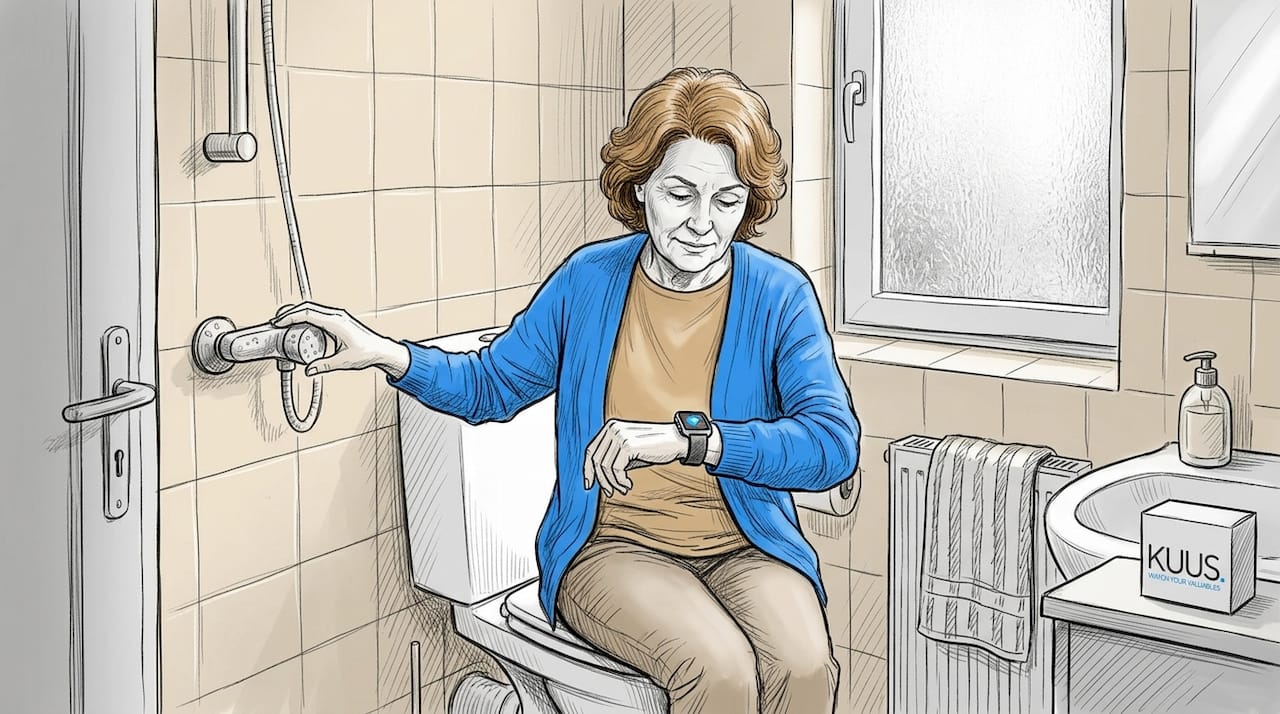
Non-waterproof wearables lead to removal during bathing, causing data gaps and creating situations where seniors, particularly those with dementia, simply forget to put the device back on afterward. This is not a minor inconvenience. A senior who removes a device at 8 a.m. for a shower and does not put it back on until mid-afternoon has spent several hours completely unprotected without anyone knowing.
Waterproof devices reduce this burden by eliminating the removal step entirely. In studies looking at dementia adherence specifically, devices that could be worn through bathing showed meaningfully better rates of continuous use throughout the day. For seniors with early dementia, the act of remembering to remove and then re-wear a device is itself a cognitive task they may not be able to reliably complete.
Here is a side-by-side look at what changes when a waterproof smartwatch replaces a non-waterproof one:
| Feature | Non-waterproof wearable | Waterproof smartwatch |
|---|---|---|
| Worn during shower | No | Yes 💧 |
| Monitoring gap during bathing | Yes, daily | None |
| Dementia adherence | Lower (removal and forgetting) | Higher (stays on continuously) |
| Fall detection during bathing | Not active | Active |
| Caregiver peace of mind | Interrupted | Continuous |
| Device longevity near water | Risk of damage | Protected by rating |
The benefits extend well beyond fall detection. A smartwatch for the elderly that stays on through the whole day also provides more consistent heart rate data, step tracking, and SOS button access throughout every hour. For families checking in remotely, that unbroken data stream is enormously reassuring.
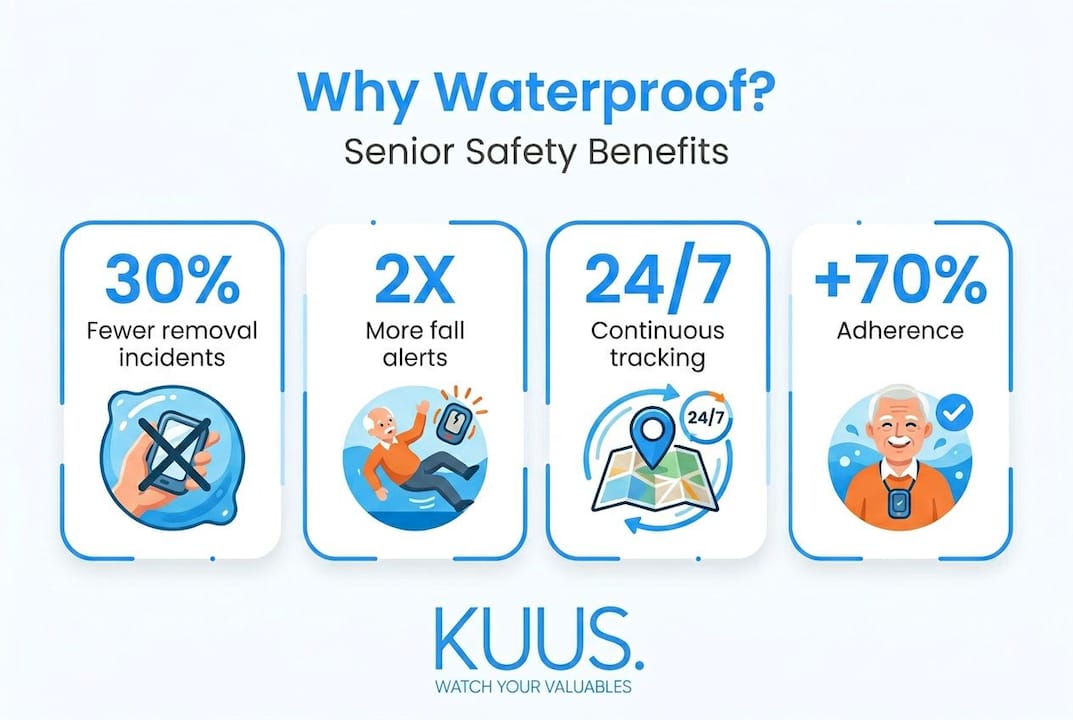
The GPS watch value for seniors also becomes clearer when the device never comes off. A GPS-enabled watch that stays on 24 hours a day provides location data even during high-risk periods, which matters especially for seniors with wandering behavior connected to dementia.
Pro Tip: When selecting a device, look specifically for a minimum IP67 waterproof rating for bathroom and shower use, and verify this rating directly in the product specifications rather than relying on general marketing language.
Choosing a device with verified water protection means consulting a best alarm watch guide that compares models based on real specifications rather than promotional summaries.
Understanding waterproof ratings: What seniors really need
Not all waterproof claims are equal. Two main rating systems appear on smartwatch packaging: the IP (Ingress Protection) scale and the ATM (atmosphere) scale. Understanding the difference prevents costly mistakes.
IP ratings use two numbers. The first refers to dust protection, and the second to water protection. The second digit is what matters most for senior safety devices:
- IP65: Protected against low-pressure water jets. Suitable for splashes and light rain, not shower use.
- IP67: Can be submerged in up to 1 meter of water for 30 minutes. Suitable for showers and brief submersion.
- IP68: Rated for deeper or longer submersion. Suitable for showering and more intense water exposure.
ATM ratings measure resistance to water pressure:
- 3ATM: Splash and rain resistant only. Not suitable for showering.
- 5ATM: Suitable for showering and swimming in pools.
- 10ATM: Suitable for snorkeling and more intense water activities.
For bathroom and shower use specifically, water resistance degrades over time due to seal wear, and real-world dynamic pressures like shower spray often exceed what lab tests simulate. This means a device rated IP67 in the factory may provide less protection after a year of daily use if seals are not maintained.
Here is a practical comparison of which ratings work for different daily situations:
| Activity | Minimum rating needed | Notes |
|---|---|---|
| Hand washing / rain splash | IP65 or 3ATM | Basic splash resistance |
| Daily shower | IP67 or 5ATM | Most common senior need |
| Bath submersion | IP68 or 5ATM | Ensure seal is intact |
| Swimming | IPX8 or 10ATM | Not typical for most seniors |
To help maintain waterproof integrity over time, follow these steps:
- Rinse the watch with clean fresh water after exposure to soap, shampoo, or salt water, as these can degrade seals faster than plain water.
- Avoid pressing buttons or the SOS key while the watch is submerged, since button gaps are a common entry point for water.
- Check the charging port and cover regularly to make sure seals are seated correctly before bathing.
- Avoid exposing the watch to very hot shower steam over 40°C for extended periods, as heat can soften rubber seals.
- Contact the manufacturer if the watch has been dropped from height onto a hard surface before assuming water resistance is still intact.
Pro Tip: Test water resistance yearly by placing the watch under a gentle running tap for 60 seconds. If any moisture appears inside the screen, the seal has degraded and the device needs servicing before relying on it for bathing protection.
The alarm watch features that matter most for seniors go beyond the SOS button. A properly rated, maintained waterproof device is the foundation on which all other safety features depend.
Limitations and alternatives: When waterproofing isn’t enough
Waterproof smartwatches solve the shower gap, but they do not solve every safety challenge. It is important for caregivers and families to understand the real limits of wrist-based devices before placing full confidence in them.
Wrist-based fall detection is less accurate than chest-worn pendants, which sit closer to the body’s center of mass and pick up impact signals more reliably. A wrist-worn sensor may miss falls that do not involve significant arm movement, particularly if a senior falls forward onto their hands or slides down gradually. This does not make wrist devices useless. It means they work best when paired with caregiver check-in protocols rather than used as a standalone solution.
Non-compliance is another genuine challenge. Consider these common real-world scenarios:
- A senior with mid-stage dementia removes the watch because it feels unfamiliar or uncomfortable, regardless of its water protection
- A senior refuses to wear any device, citing discomfort or privacy concerns
- A caregiver installs a device but does not establish a routine for charging, which creates daily gaps when the battery runs out
- A senior removes the watch during bathing out of long-standing habit, even when told it is waterproof
For situations where wearing a device is not reliably possible, passive monitoring offers a meaningful alternative. Passive WiFi monitoring technology uses changes in WiFi signals throughout a home to detect unusual stillness or movement patterns that suggest a fall, and it works in bathrooms without requiring the senior to wear anything at all. For seniors with dementia who actively resist wearables, this type of system can provide a safety baseline that wearables alone cannot guarantee.
“Technology is only as effective as the person using it. For seniors who resist wearables, passive monitoring systems that require no action from the senior are sometimes the most reliable protective layer available.”
Education also plays a role that families often underestimate. Many seniors do not know their watch is waterproof. They formed the habit of removing it before the shower years ago, and no one has explained that the new device is built differently. A simple, calm conversation demonstrating that the watch can stay on during bathing, and why that matters, can shift behavior more effectively than any specification sheet.
The alarm watch interface guide for caregivers emphasizes that usability and comfort are as important as technical specifications. A device that a senior accepts and wears consistently is far more protective than a technically superior device sitting on the nightstand.
GPS smartwatches are safer than relying on phones for location tracking, particularly because phones are left behind far more often. But even GPS-enabled watches need to be worn to work.
Our perspective: What most guides miss about senior safety and waterproof smartwatches
Most buying guides focus almost entirely on specifications. They list IP ratings, battery life, and feature comparisons. That information is useful, but it misses something important: a waterproof smartwatch is not primarily a tech purchase. It is a confidence purchase.
When a senior puts on a waterproof smartwatch and steps into the shower knowing that their family can reach them if something goes wrong, that changes how they feel about living alone. It reduces the quiet anxiety that many older adults carry but rarely mention. It removes the internal calculation of “what if I fall and no one knows?” That shift in confidence is real and it matters for quality of life in ways that no specification chart can capture.
From our experience working with seniors and their families, the biggest mistake is treating device setup as a one-time event. Handing someone a watch and walking away leaves too much to chance. The families who see the best outcomes are the ones who involve the senior in every step: choosing the device together, practicing the SOS button, agreeing on a charging routine, and confirming that the watch stays on during bathing. Routine matters more than specs.
The independent living conversation also shifts when seniors feel genuinely protected rather than monitored. A waterproof smartwatch worn 24 hours a day is not surveillance. It is a safety net that makes independence more sustainable for longer, which is what most seniors and their families actually want.
Pairing the device with caregiver check-in routines, bathroom grab bars, non-slip mats, and honest conversations about fall risk creates a layered safety plan that no single product can replace on its own.
Next steps: Choosing the right waterproof smartwatch for senior safety
Understanding the risks is only half the picture. The next step is finding a device that genuinely matches the daily life of the senior you care about.
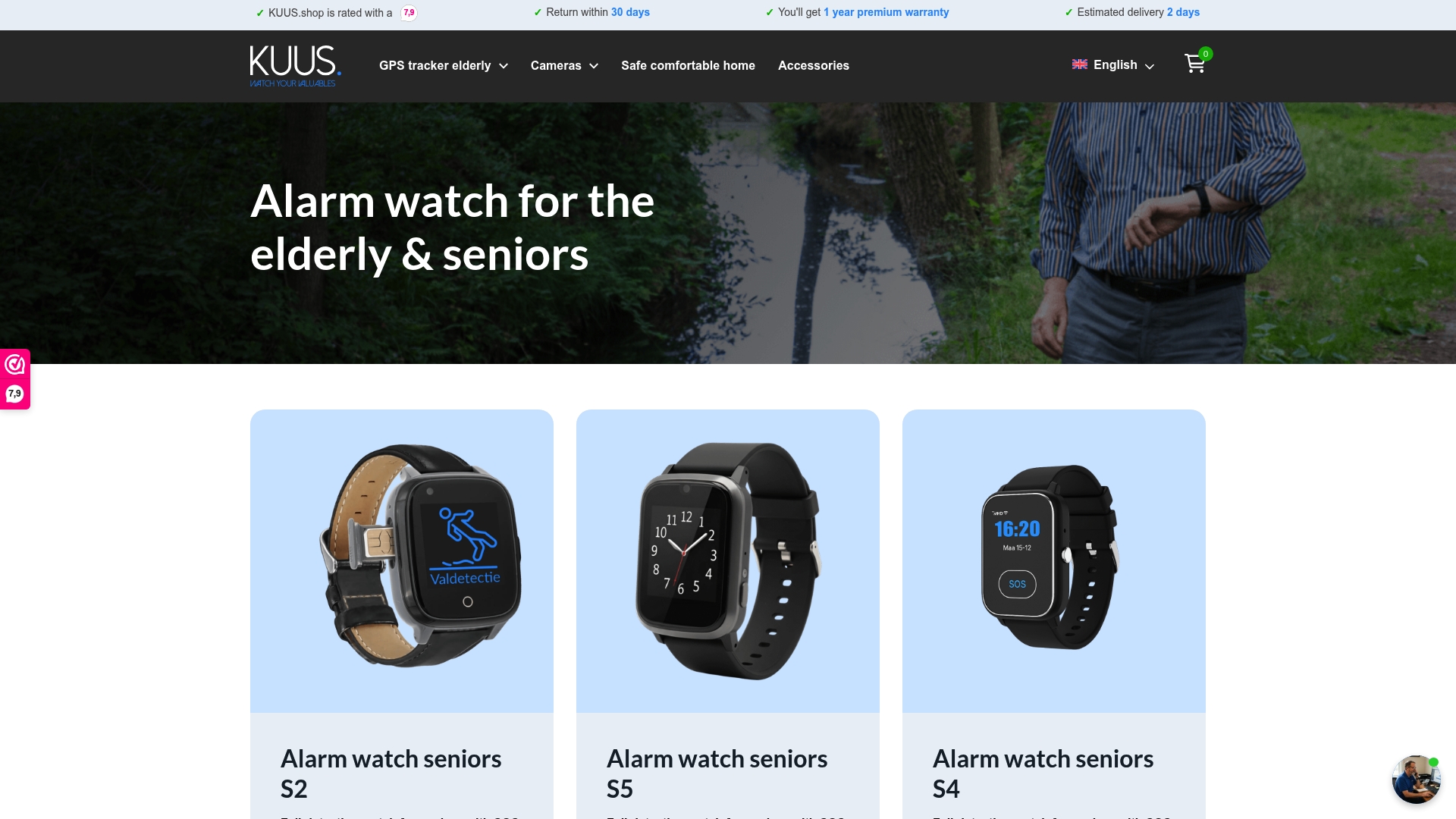
At kuus.shop, you will find a curated range of waterproof safety smartwatches designed specifically for older adults, with large SOS buttons, GPS tracking, fall detection, and two-way calling built in. No monthly subscription is required. If you are starting your search, the GPS tracker for seniors guide is a helpful starting point for understanding which devices combine location tracking with reliable waterproofing. You can also browse the full alarm smartwatch for seniors collection directly, or read the detailed senior smartwatch guide to compare models side by side before making a decision.
Frequently asked questions
What waterproof rating should a senior’s smartwatch have?
For shower and bathroom use, a smartwatch should have at least IP67 or 5ATM/IPX8 for more robust protection. Keep in mind that water resistance degrades over time, so checking seals annually is a smart practice.
How does waterproofing help seniors with dementia?
Waterproof smartwatches remove the daily removal step, which improves adherence in dementia studies by reducing the cognitive burden of remembering to put the device back on after bathing.
Are waterproof smartwatches enough for fall detection?
Not entirely on their own. Wrist fall detection is less accurate than chest-worn pendants, so pairing a waterproof smartwatch with regular caregiver check-ins or additional monitoring gives stronger protection.
What should caregivers do if a senior refuses to wear a smartwatch?
Passive WiFi monitoring can detect falls without requiring the senior to wear anything, making it a practical backup for situations where wearable compliance is not reliable.