



TL;DR:
- Wearing water-resistant alarm watches reduces fall coverage gaps for seniors during bathing routines. IP ratings specify water protection levels, with IP67 suitable for showers but not prolonged immersion. Choosing a device with long battery life, comfort, and automatic fall detection ensures consistent protection and safety.
Most seniors who experience a bathroom fall were not wearing their emergency device at the time. Not because they forgot it. Because they took it off before stepping into the shower. This is the core reason the importance of water-resistant alarm watches cannot be overstated for older adults living independently. A device that comes off during the highest-risk moments of the day is not providing real protection. This article explains how water resistance ratings work, what to look for when comparing watches, and how to choose the right option for your loved one’s specific lifestyle and risk level.
Table of Contents
- Why water resistance is crucial for senior safety
- Understanding water resistance ratings: IP67 and beyond
- Comparing water-resistant alarm watches: features and practical considerations
- Choosing the right water-resistant alarm watch for your needs
- Rethinking water resistance in senior safety: expert insights
- Find the best water-resistant alarm watches for seniors at KUUS
- Frequently asked questions
Key Takeaways
| Point | Details |
|---|---|
| Continuous wear is crucial | Water resistance helps seniors keep alarm watches on during risky bath times, reducing dangerous device-off periods. |
| IP67 means shower safe | IP67 water resistance protects against temporary submersion up to 1 meter for 30 minutes, suitable for shower use but not swimming. |
| Battery life impacts safety | Longer battery life or quick-swap designs prevent the watch from being removed frequently, maintaining emergency coverage. |
| Match rating to use | Select a water-resistant watch with the rating and wear guidance that matches your specific water exposure to avoid false security. |
| Education enhances effectiveness | Caregivers should inform seniors about the limits of water resistance and proper device use during water activities. |
Why water resistance is crucial for senior safety
The bathroom is one of the most dangerous rooms in any home for older adults. Wet floors, slippery tub surfaces, and the need to step over a tub ledge create real fall risks every single day. What makes this worse is that most seniors remove their alarm watch before bathing, which is exactly when they need it most.
This creates what safety experts call a coverage gap: a window of time when the senior is alone, in a high-risk environment, and completely unprotected. If a fall happens in those minutes, no alert goes out. No one knows. And every second before help arrives matters.
The NCOA safety recommendations make clear that consistent device wear is the single most important factor in fall detection effectiveness. A watch that can handle water exposure removes the main reason seniors take it off. That consistency is the whole point.
Key benefits of water-resistant alarm watches for daily safety:
- Seniors can keep the watch on during showering, handwashing, and light rain
- Fall detection stays active during bathroom routines
- SOS alerts remain reachable at the moment they are needed most
- Family members and caregivers have continuous peace of mind
- The device does not need to be remembered when stepping into the shower
Explore the benefits of fall alarm watches to understand why consistent wear matters beyond just water resistance. It affects GPS tracking, two-way call availability, and fall detection reliability throughout the full day.
Pro Tip: If a senior in your family often forgets to put the watch back on after bathing, a water-resistant model eliminates the problem entirely. They simply never take it off.
Understanding water resistance ratings: IP67 and beyond
Not all “waterproof” watches are built the same. The term waterproof is marketing language. What actually matters is the IP rating, which stands for Ingress Protection. This is a standardized classification that tells you exactly what a device can handle.
An IP rating has two digits. The first covers dust protection. The second covers water protection. So IP67 means: fully dust-tight (6), and protected against immersion in up to 1 meter of water for 30 minutes (7).
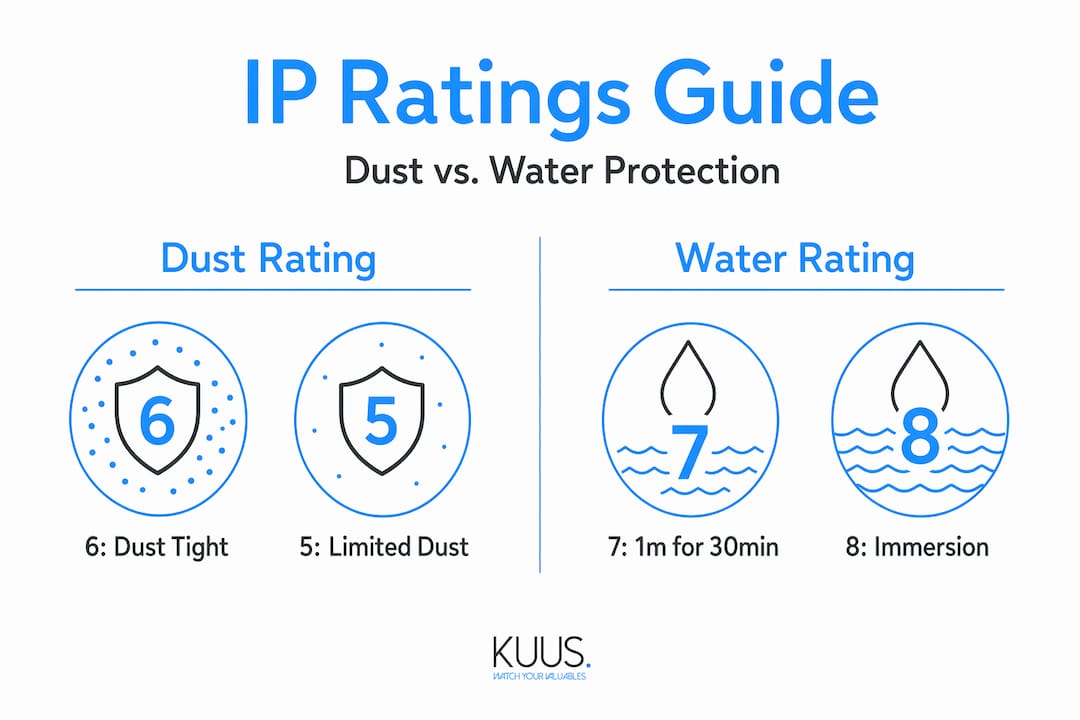
For shower use, IP67 is generally suitable since a shower does not typically produce pressure or depth beyond those limits. However, it is not rated for swimming, which involves prolonged immersion and movement.
Here is how the most common ratings compare in practice:
| IP rating | Dust protection | Water protection | Suitable for |
|---|---|---|---|
| IPX4 | None specified | Splash resistant | Rain, hand splashes |
| IPX6 | None specified | Water jets | Outdoor use, rain |
| IP67 | Fully dust-tight | Immersion up to 1m / 30 min | Showering, handwashing |
| IP68 | Fully dust-tight | Immersion beyond 1m (manufacturer defined) | Deeper water exposure |
One important detail most buyers miss: IP ratings are controlled test conditions, not real-world guarantees. The tests use clean, still water at room temperature. Your shower involves steam, heat, soap, and repeated daily exposure. Over time, those conditions wear on seals and gaskets faster than the standardized test simulates.
What this means practically:
- A watch rated IP67 can handle daily showers, but not a long soak in a hot bath
- Soap and shampoo can degrade rubber seals faster than plain water
- Steam from a very hot shower adds humidity pressure that standard tests do not account for
- Checking the watch’s gaskets periodically extends reliable water protection
Pro Tip: After purchasing a water-resistant alarm watch, check the manufacturer’s guidance on seal maintenance. Some models recommend a professional water resistance check after 12 months of regular shower use.
For a detailed breakdown of how these ratings apply to specific models, the alarm watch water resistance guide walks through current options with their actual protection levels.
Comparing water-resistant alarm watches: features and practical considerations
Water resistance is one feature. But it works together with battery life, comfort, and response systems to determine whether a watch actually protects a senior consistently. Here is how the key features interact.
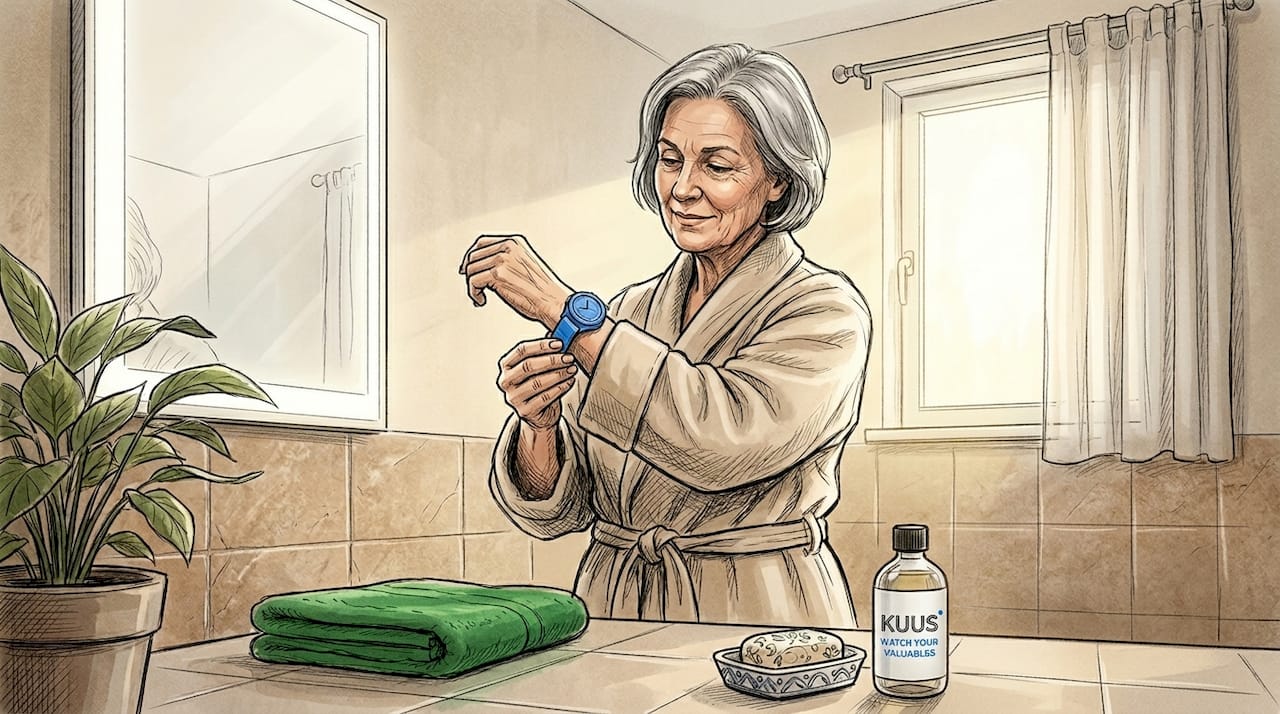
Battery life is a hidden safety variable. Every time a watch needs charging, the senior removes it. That removal creates another coverage gap. A watch requiring daily charging may be off the wrist for an hour or more each day. A watch with a three-day battery reduces that exposure significantly. The Kanega Watch addresses this with a quick-swap battery system, meaning the new battery goes in before the old one is removed, maintaining continuous 24/7 coverage without any gap.
| Feature | What to look for | Why it matters |
|---|---|---|
| Water resistance | IP67 or higher | Allows continuous wear during bathing |
| Battery life | 2+ days per charge | Fewer removal windows |
| Fall detection | Automatic trigger | Alerts even if user cannot press SOS |
| Two-way calling | Built into watch | No need for phone nearby |
| Weight and comfort | Lightweight, adjustable | Seniors wear it consistently |
| GPS tracking | Real-time location | Family can find senior quickly |
Style and comfort are factors that often get dismissed but matter enormously in practice. A watch that feels bulky or looks like a medical device may be left on the nightstand. Seniors are more likely to wear a device that looks and feels like a normal watch. That consistent wear is what makes all the other features count.
Practical tips for maximizing protection:
- Choose a watch that feels comfortable enough to sleep in
- Set a daily charging routine that works around the senior’s schedule
- Look for devices with vibration or audio charging reminders to prevent low-battery gaps
- Review the senior alarm watch features guide to match features to actual daily needs
Pro Tip: Ask your loved one to wear a candidate watch for a full day before committing. If they keep fiddling with it or mention it feels uncomfortable, that is a sign it will not be worn consistently.
Choosing the right water-resistant alarm watch for your needs
Selecting the right watch means matching the device to the person’s actual life. A senior who showers once a day and never swims needs something different from someone who uses a hot tub regularly or takes long baths. Here is a step-by-step approach that families find genuinely useful.
Identify daily water exposure. List every routine that involves water: showers, baths, handwashing, outdoor use in rain. This defines the minimum IP rating you need.
Check the official rating and manufacturer guidance. Marketing terms like “waterproof” mean nothing without the IP number. Verify the manufacturer’s wear guidance for your specific use case, especially for bathing versus swimming.
Evaluate battery life realistically. A watch with a one-day battery requires daily removal. For high fall-risk seniors, that daily gap is a real concern. Prioritize two-day or longer battery life.
Consider fall detection needs. For seniors with a high fall risk, look for automatic fall detection that triggers an alert without requiring a button press. This is especially important if a fall in the bathroom could leave the senior disoriented or unable to reach the SOS button. See how fall detection alarm watches work in practice.
Factor in comfort and wearability. A watch that irritates the wrist or feels heavy will be taken off. Test the band material and weight before deciding.
Account for connectivity. A watch that relies on Bluetooth to a nearby phone loses function if the senior moves rooms. Look for models with a built-in SIM card slot that work independently of a smartphone.
Pro Tip: Involve the senior in the decision. When they choose the watch themselves, they are far more likely to wear it every day without being reminded.
Rethinking water resistance in senior safety: expert insights
Here is something most caregiver resources do not say plainly enough: water resistance is not primarily about protecting the device. It is about protecting the person. The real value is that it removes the reason to take the watch off.
Most coverage failures we hear about do not happen because a device malfunctioned. They happen because the device was sitting on the bathroom counter. The highest-risk moments are brief, often just the few minutes of stepping in and out of a shower, which is exactly when the senior is barefoot on a wet surface without the watch on.
There is also a common misconception worth addressing directly. Families often assume an IP67 rating means the watch is fully protected in any water situation. It does not. As noted earlier, IP ratings reflect controlled conditions, not the combination of daily soap exposure, steam, and temperature changes a shower involves over months of use. The rating is a floor, not a ceiling.
Battery habits matter just as much as water resistance. A caregiver who sets up a great IP68 watch but lets the battery run flat every evening has effectively created the same coverage gap as someone removing the watch to avoid water damage. The two factors must be managed together.
Our recommendation: treat water resistance as a non-negotiable baseline, and then build your device choice around the factors that affect consistent wear. Check the fall alarm watches insights resource for a broader view of how these considerations connect to real-world fall outcomes.
Find the best water-resistant alarm watches for seniors at KUUS
After understanding the importance of water-resistant alarm watches, the natural next step is finding a device that fits your family’s specific needs. KUUS offers a range of reliable alarm watches designed with seniors in mind, built for daily use including water exposure. These are devices that seniors actually wear, because they are comfortable, lightweight, and practical.
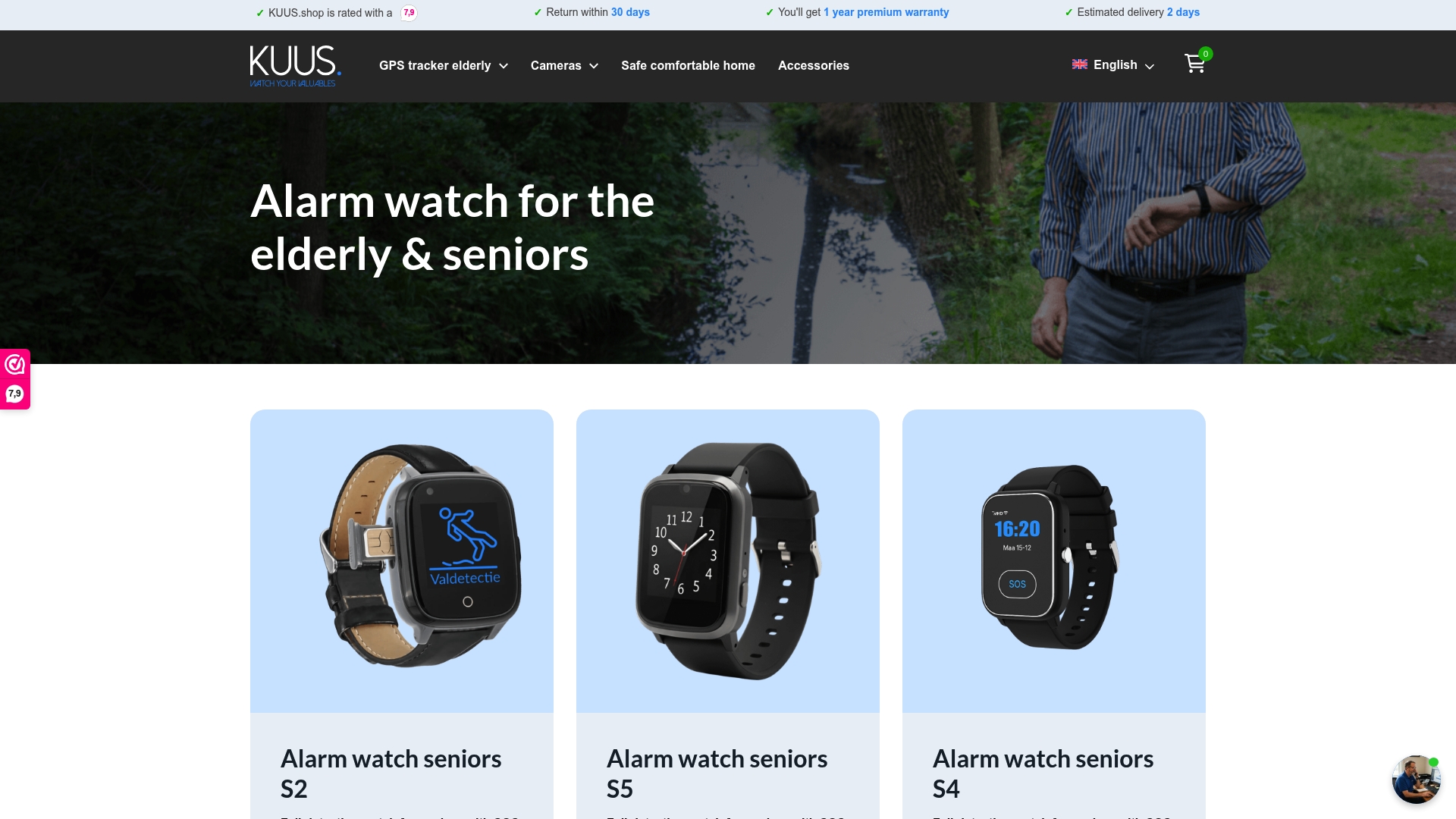
The KUUS S1 seniors alarm watch combines a clear SOS button, GPS tracking, two-way calling, and fall detection in one water-resistant wearable. No monthly subscription fees. No complicated setup. Just protection that works continuously. You can also browse the full best alarm watches guide to compare models by feature, or add a ready-to-use 4G SIM card to get connected immediately.
Frequently asked questions
Are water-resistant alarm watches safe to wear in the shower?
Yes, watches with an IP67 rating can safely be worn in the shower since they withstand immersion up to 1 meter for 30 minutes, but always follow the manufacturer’s specific wear instructions to preserve long-term seal integrity.
Why is water resistance important for seniors using alarm watches?
Water resistance lets seniors keep their alarm watch on during showering or bathing, preventing the coverage gaps that occur when the device is removed and a fall happens before they put it back on.
Can a water-resistant alarm watch be used for swimming?
Most alarm watches with IP67 ratings are not designed for swimming; they handle brief immersion during showers but are not rated for prolonged or active water submersion in a pool or open water.
How does battery life affect water resistance and protection?
If a watch requires frequent charging and must be removed daily, it creates uncovered time windows regardless of its water rating; longer battery life or quick-swap battery systems are the most practical way to maintain truly continuous protection.