



TL;DR:
- Wearable health monitoring provides continuous, real-time data on vital signs and activity, enhancing safety for seniors living independently. These devices detect falls, monitor key health signals, and alert caregivers proactively, often before emergencies occur. Effective use relies on proper device support, communication, and caregiver protocols to maximize their life-saving potential.
Most people think a wearable device is just a glorified step counter. That assumption misses everything that matters. Understanding what is health monitoring in wearables reveals a completely different picture: these small, worn devices continuously track vital signs, detect dangerous events, and send alerts to family members in real time. For older adults living alone, or seniors at risk of falls, that shift from reactive to proactive care is not a convenience. It can be the difference between a close call and a medical emergency.
Table of Contents
- What is health monitoring in wearable devices?
- Core health signals tracked by wearables for seniors
- Advances in wearable health monitoring technology
- Practical use of wearable health monitoring for seniors and caregivers
- Choosing the right wearable health monitor for seniors
- Why many wearable health monitoring devices fall short for seniors without proper support
- Explore KUUS’s alarm watches and health monitoring solutions for seniors
- Frequently asked questions
What is health monitoring in wearable devices?
Wearables do far more than record how many steps someone takes in a day. Health monitoring in wearables is continuous, real-time sensing of physiological states, activity patterns, and sometimes the surrounding environment using miniaturized sensors worn on or integrated into daily items. That definition matters, because “continuous” is the key word here. A doctor visit gives you a single data point. A wearable gives you thousands of data points every hour.
These devices collect data in real life, not in controlled clinic settings. That means the information reflects what is actually happening: how someone sleeps, how their heart behaves during stress, whether they are moving less than usual on a particular day.
How wearables monitor health depends on the sensors built into the device:
- Optical sensors measure heart rate and blood oxygen by shining light through the skin
- Accelerometers detect movement, speed, and direction changes
- Gyroscopes track rotation and body orientation
- Temperature sensors monitor skin surface temperature
- Electrodes capture electrical signals from the heart (ECG)
- Environmental sensors record factors like air quality and UV exposure
This real-time data supports early detection and more proactive health management, especially for seniors managing chronic conditions or living independently.
To understand how this data helps you, let’s take a closer look at the types of health information wearables track.
Core health signals tracked by wearables for seniors
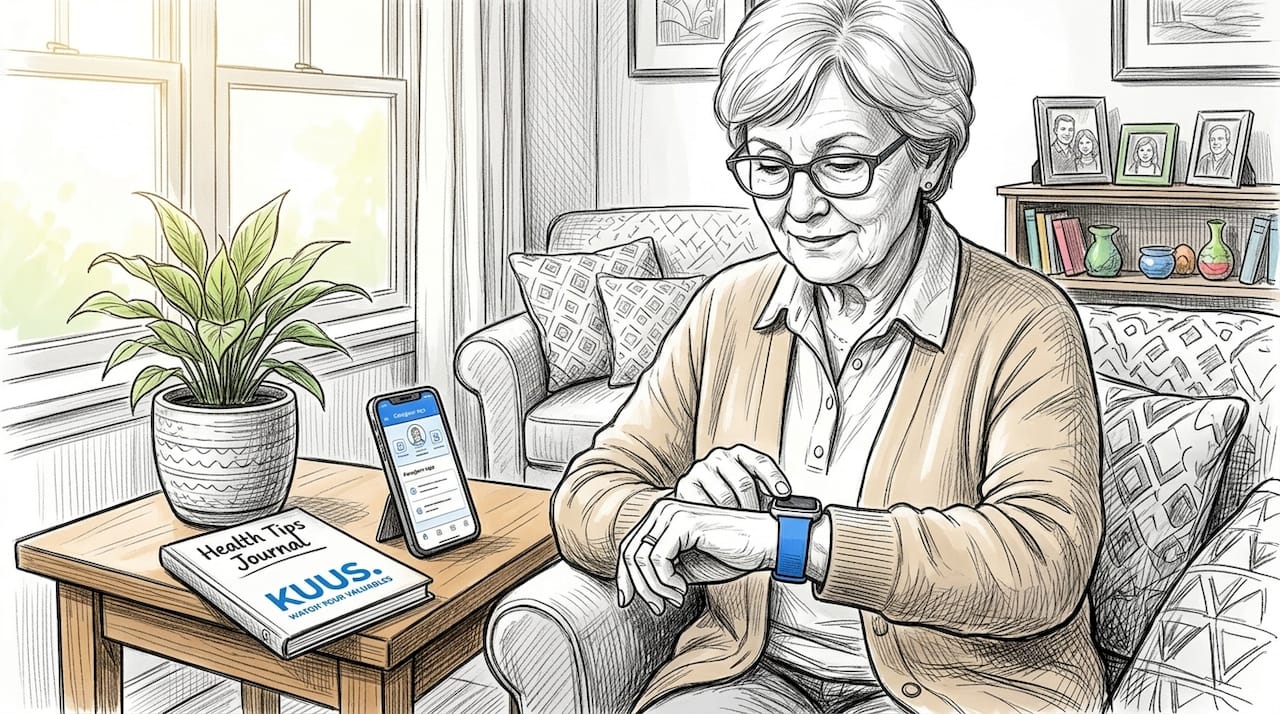
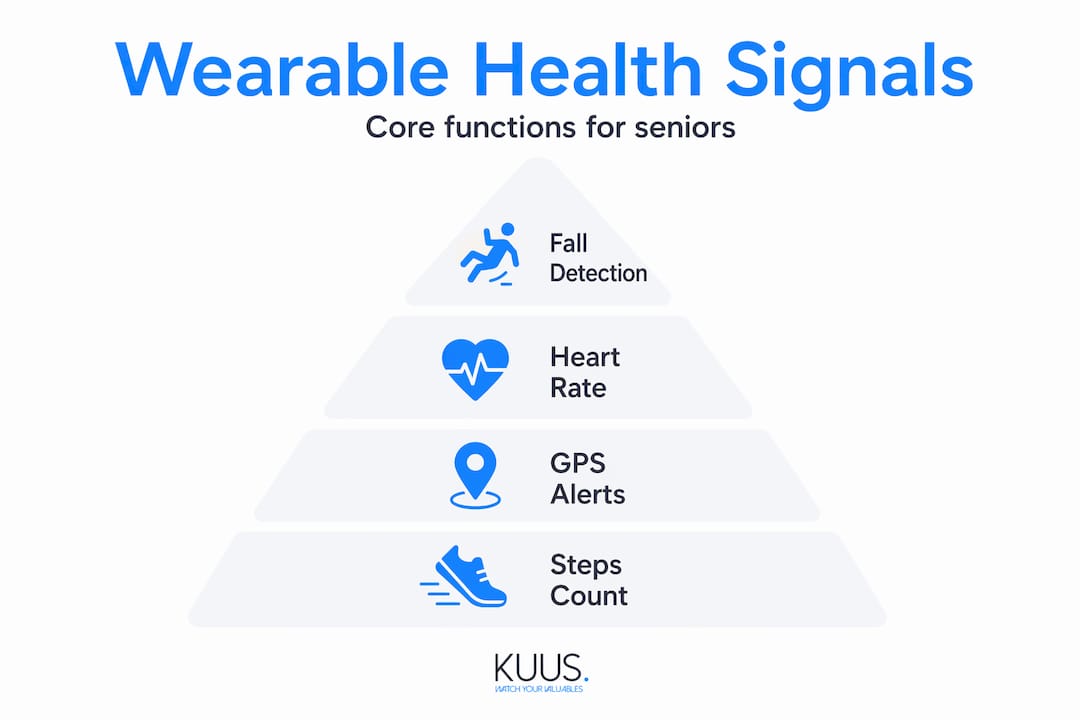
For older adults, health metrics in wearable tech go well beyond general wellness. The signals that matter most relate directly to safety, chronic disease, and quality of daily life. Wearables transmit data streams including heart rate, sleep patterns, blood oxygen, and movement to clinicians or caregivers, helping them adjust care without requiring a clinic visit.
The most important signals for seniors include:
- Heart rate and heart rate variability: Irregular patterns can signal atrial fibrillation, a serious condition common in older adults
- Blood oxygen (SpO2): Low readings may indicate respiratory problems or sleep apnea
- Sleep quality: Fragmented sleep is linked to fall risk and cognitive decline
- Daily movement and activity levels: A sudden drop in activity often signals illness before any other symptom appears
- Gait and balance: Changes in walking pattern can predict fall risk weeks in advance
Fall detection is where wearables become genuinely life-saving for this group. Wearable systems use accelerometers, gyroscopes, and foot-pressure sensors to detect falls and alert caregivers automatically. Here is how a typical fall detection sequence works:
- The accelerometer detects a rapid downward acceleration
- The gyroscope identifies a sudden change in body orientation
- The device checks for an impact signal followed by prolonged stillness
- If the pattern matches a fall, an alert is automatically sent to the caregiver
Understanding fall detection technology for seniors helps families appreciate what the numbers actually mean in practice. For a deeper look at specific devices, the guide on senior alarms with fall detection explains how different product designs handle detection accuracy.
Now that we know what signals wearables track, let’s explore emerging innovations expanding their health monitoring capabilities.
Advances in wearable health monitoring technology
The types of health monitoring devices available today are expanding well beyond heart rate and steps. Scientists are now developing sensors that read the body’s chemistry directly through sweat, without any needles or lab visits.
Wireless, battery-free sweat sensors can monitor biomarkers such as glucose, cortisol, and lactate continuously for up to 21 days. That is significant for seniors managing diabetes or recovering from illness, because cortisol (a stress hormone) and glucose levels can shift before any obvious symptom appears.
Key developments shaping the next generation of wearables include:
- Continuous glucose monitoring through skin patches, avoiding finger-prick tests
- Cortisol tracking to detect chronic stress or adrenal responses
- Lactate monitoring which indicates physical exertion and recovery
- Battery-free operation using energy harvested from body heat or movement
- AI-assisted pattern recognition that flags unusual trends for caregiver review
For seniors and their families, these advances mean more complete health pictures without extra effort. A senior wearing a watch and a small skin patch could have their metabolic health tracked around the clock, flagging concerns to a caregiver before a crisis develops.
Pro Tip: When evaluating newer wearables, ask specifically whether biochemical monitoring features are FDA-cleared or still in consumer wellness territory. The distinction affects how much medical weight you can place on the readings.
Emerging technologies promise powerful health insights, but how do caregivers effectively use wearable data for safety? Let’s find out.
Practical use of wearable health monitoring for seniors and caregivers
Knowing the importance of fitness tracking is one thing. Knowing how to act on it is another. The difference between a wearable that genuinely improves safety and one that gets ignored often comes down to workflow design.
Caregiver workflows work best when wearable alerts feed into a staged escalation path, improving response speed and reducing false alarms. In practice, this means:
- The device detects an event (fall, inactivity, low battery, SOS press)
- A notification reaches the designated caregiver or family member first
- If no response is confirmed within a set time, the alert escalates to emergency services
- Location data (GPS) is shared simultaneously so help can be directed accurately
For seniors with dementia or wandering behavior, GPS-based alerts add another layer. WanderWatch-type devices send notifications to caregivers when a person with dementia leaves a predefined safe zone, enhancing safety and reducing round-the-clock supervision needs.
The table below compares common wearable alert types to help caregivers choose what fits their situation best:
| Alert type | Best for | Response method | Caregiver notification |
|---|---|---|---|
| Fall detection | Seniors with high fall risk | Automatic | Immediate app alert |
| SOS button | Any emergency | Manual press | Call and app alert |
| GPS geofencing | Wandering/dementia | Automatic | App alert with location |
| Inactivity alert | Seniors living alone | Automatic | App notification |
| Heart rate alarm | Cardiac conditions | Automatic | App alert |
Review the full guide on wearable alarm watch features for seniors and the fall alarm technology explained article for more detail on matching device features to specific needs.
Pro Tip: Set up a group notification on your caregiver app so more than one family member receives alerts. A single point of failure in your alert chain is a real safety risk.
Choosing the right wearable health monitor for seniors
Not every device that tracks health is the same, and understanding the distinction can prevent costly mistakes. The importance of fitness tracking is real, but only when the device is appropriate for the user’s actual needs.
FDA guidance distinguishes between wellness products and medical wearables based on their intended use and claims. A wellness tracker reports data for general awareness. A medical wearable makes specific health claims and is held to stricter standards. For seniors managing cardiac conditions or at high fall risk, a device with validated fall detection is important, not optional.
What data do wearables collect is only half the question. Whether the data is accurate, secure, and useful is the other half. Reliable data handling and cybersecurity are required for medical wearables, an important consideration for families tracking health remotely.
Key factors to evaluate before purchasing:
- Sensor accuracy: Is fall detection validated in independent testing?
- Battery life: A device that needs daily charging is less likely to be worn during high-risk moments
- Comfort and fit: Heavy, bulky devices get taken off. Lightweight designs encourage consistent wear
- Ease of use: Large buttons, simple interfaces, and clear displays matter for older users
- Data privacy: Who stores the health data, and is it encrypted?
- No subscription requirement: Monthly fees add friction and risk device abandonment
| Feature | Wellness tracker | Safety-focused wearable |
|---|---|---|
| Fall detection | Rarely | Yes, often automatic |
| SOS alert | No | Yes |
| GPS tracking | Uncommon | Yes |
| Medical-grade accuracy | No | Validated |
| Subscription required | Sometimes | Not always |
| Target user | General adult | Senior, high-risk |
The detailed guide on selecting alarm watches for seniors walks through specific product comparisons to support your decision.
Pro Tip: Always check whether a device has been tested specifically on older adults. Sensor accuracy for fall detection varies significantly between population groups, and a device validated on younger adults may underperform for seniors.
Why many wearable health monitoring devices fall short for seniors without proper support
Here is something most technology guides skip: the wearable itself is rarely the weak link. The weak link is almost always the system around it.
Wearable safety systems fail when the device is not worn during high-risk periods. Device comfort and charging ease are decisive factors in whether an older adult actually keeps a device on. A senior who removes their watch before a shower or overnight because it is uncomfortable is unprotected during two of the highest-risk periods of their day.
Caregivers sometimes make a different mistake. They treat wearable alerts as medical diagnoses. Wearables are decision-support tools and not substitutes for medical evaluation when symptoms worsen. A heart rate spike flagged by a watch should prompt a check-in call, not a self-diagnosis. The data informs; a clinician decides.
Poor communication design is the third failure point. Families set up devices and assume alerts will be handled. Nobody discusses who is primary responder, what to do at 3 a.m., or what constitutes a real emergency versus a false alarm. Without that conversation, alerts get delayed, ignored, or mishandled.
The most effective approach treats the wearable as one piece of a care routine. The device provides signals. A trained, informed caregiver interprets those signals. Clear protocols determine what happens next. When all three elements are in place, wearables deliver on their genuine promise.
Explore our guide on effective use of mobile alarms for seniors for practical protocols you can put in place today.
Explore KUUS’s alarm watches and health monitoring solutions for seniors
If you are ready to put this knowledge into action, KUUS offers a focused range of wearable alarm watches built specifically for older adults. These are not general-purpose smartwatches adapted for seniors. They are designed from the ground up with fall detection, an SOS button, GPS location sharing, and two-way calling, without any monthly subscription fees.
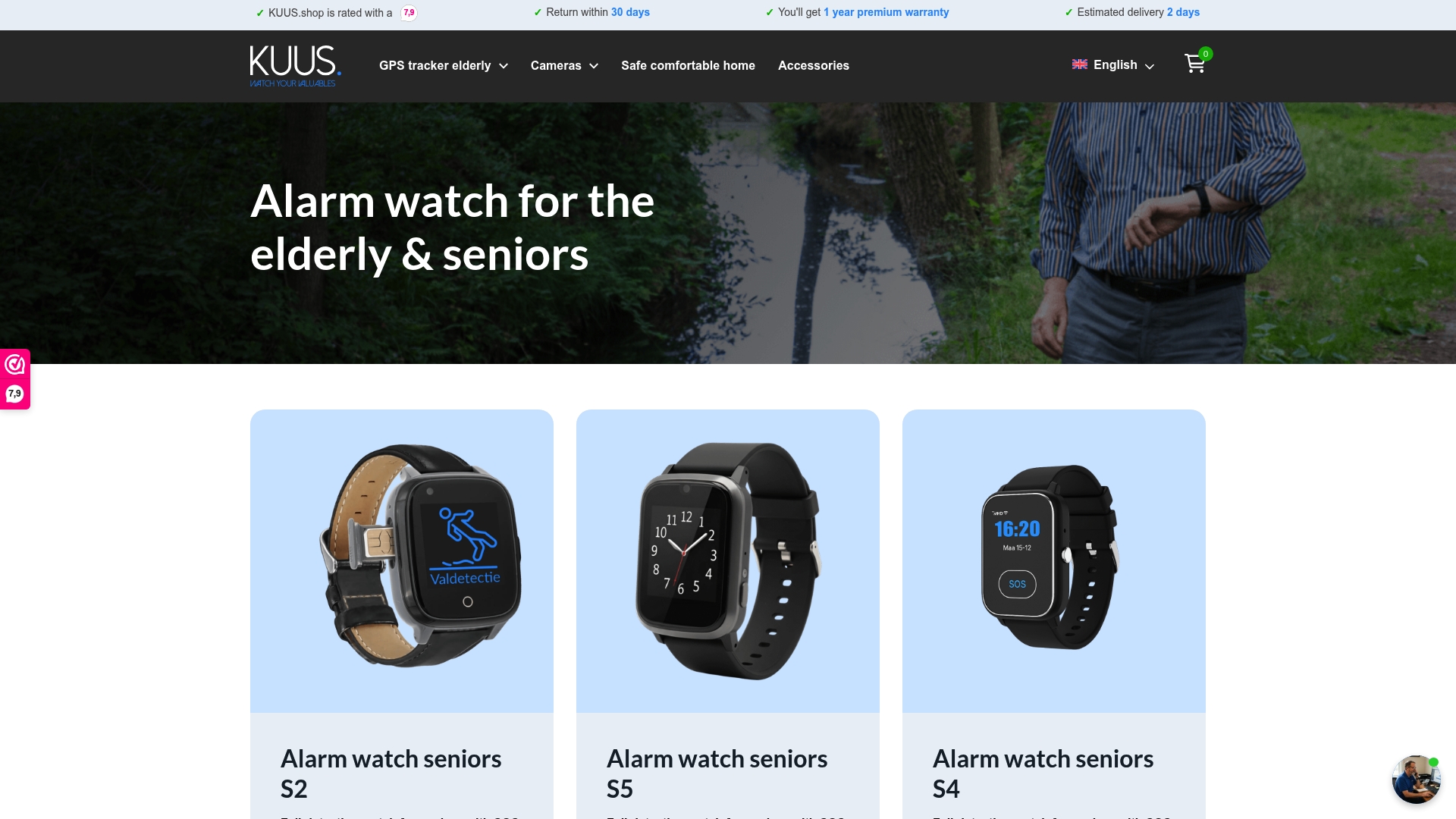
The best alarm watches guide compares available models with clear criteria so caregivers can match device features to individual needs. For families new to wearable safety devices, the guide on fall detection explained covers how the technology works in plain language. All devices use a SIM card for connectivity, and 4G SIM cards for GPS watches are available directly to ensure reliable coverage from day one. Your family member stays safe. You stay informed.
Frequently asked questions
What does health monitoring in wearables mean for seniors?
It means continuously tracking vital signs and movements using small worn devices to support safety and independent living. Wearable health monitoring captures real-time physiological and activity data, not just periodic snapshots.
How do wearable devices detect falls?
They use sensors like accelerometers and gyroscopes to identify rapid movement changes consistent with a fall, then alert caregivers automatically. Accelerometers and gyroscopes work together to distinguish a genuine fall from normal activity.
Can wearable health monitors alert caregivers if a senior wanders away?
Yes. GPS and Bluetooth sensors detect when a senior leaves a defined safe zone and send instant notifications to caregivers. WanderWatch-style systems demonstrate how timely these alerts can be for families managing dementia-related wandering.
Are all wearable health monitors considered medical devices?
No. FDA distinguishes wellness products from medical wearables based on intended use and health claims. Safety-focused devices with validated fall detection typically fall under medical device standards.
What is most important to ensure wearables work effectively for seniors?
Consistent wear is the most critical factor. Devices must be comfortable and easy to charge so seniors actually keep them on. Caregivers also need clear protocols for responding to alerts and should treat wearable data as a support tool, not a medical conclusion.