



TL;DR:
- Emergency alert watches are specialized devices designed to ensure senior safety through fall detection, GPS tracking, and 24/7 professional monitoring. They provide reassurance and independence for high-risk seniors, but cannot replace human care or constant supervision. Choosing the right device involves assessing specific needs, comfort, and ongoing costs, with a focus on pairing technology with regular human connection.
Many people assume any smartwatch can protect a senior in an emergency. That assumption is wrong, and it can put lives at risk. Emergency alert watches are purpose-built safety devices, not lifestyle gadgets. According to the National Council on Aging, an emergency alert watch is a wearable device designed for seniors at risk of falls or with early-stage dementia, allowing quick help through a button press or automatic fall detection, and sharing GPS location with family or a monitoring center. This article walks you through everything you need to know: what these devices are, how they work, what they cost, and how to choose the right one.
Table of Contents
- What is an emergency alert watch?
- Core features and how emergency alert watches work
- Emergency alert watch vs. other devices: What’s best for seniors?
- Limitations, costs, and getting the most from a watch
- Choosing the right emergency alert watch: Practical steps
- A fresh perspective: The hidden value and real limits of emergency alert watches
- Explore emergency alert solutions for seniors
- Frequently asked questions
Key Takeaways
| Point | Details |
|---|---|
| Purpose-built Safety | Emergency alert watches specifically support seniors living independently by enabling quick access to help and peace of mind. |
| Smart Features Matter | Look for models with fall detection, GPS tracking, and professional monitoring for the highest level of support. |
| No One-Size-Fits-All | Evaluate comfort, features, and support level to find the right match for your lifestyle or your loved one’s needs. |
| Combine Tech with Care | Emergency watches work best when paired with regular check-ins, safe homes, and ongoing communication. |
| Know the Limits | No watch is foolproof, so use these devices as one part of a broader safety plan—not a total replacement for hands-on support. |
What is an emergency alert watch?
An emergency alert watch, sometimes called a medical alert watch, is a specialized wearable designed with one goal in mind: keeping seniors safe when something goes wrong. Unlike a consumer smartwatch that tracks steps or sends notifications, these devices are built around emergency response. As NCOA describes, they connect users to a 24/7 monitoring center or family contacts, and share GPS location so help can arrive quickly.
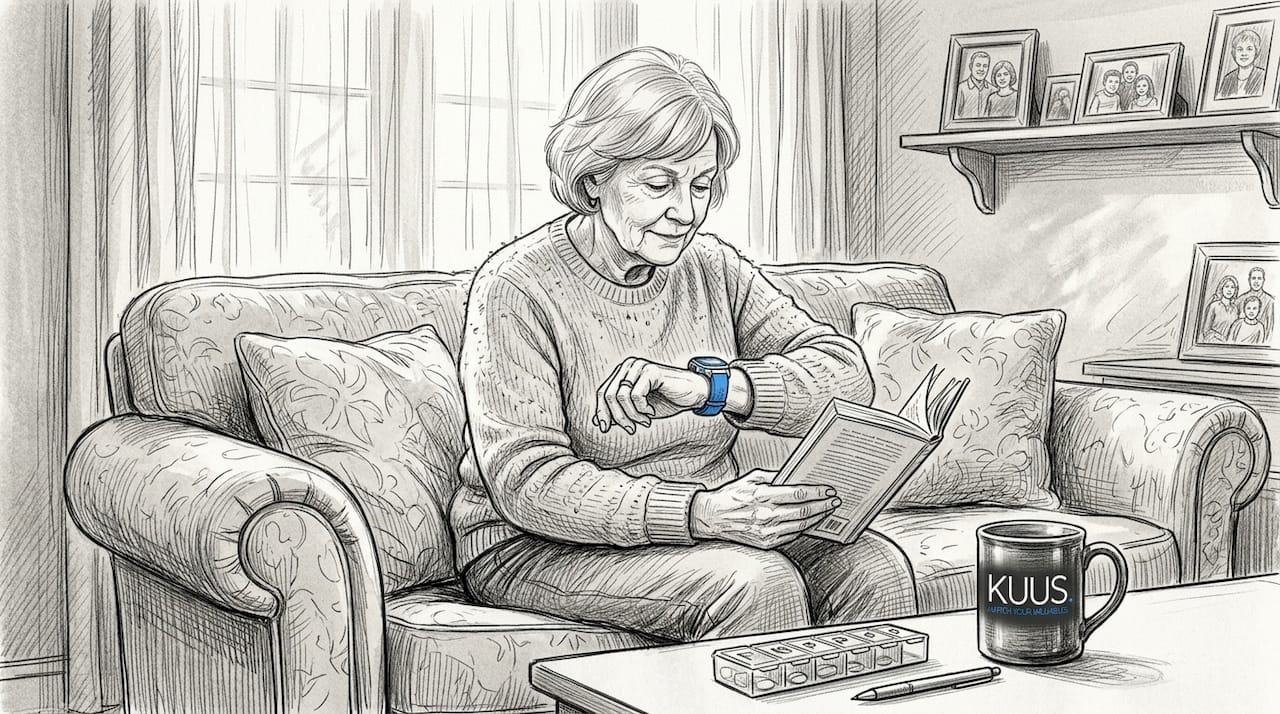
These watches support what care professionals call “aging in place,” which simply means living independently at home as long as possible. For many seniors, that independence matters deeply. The fear of falling and not being found is one of the biggest barriers to staying home alone. An emergency alert watch addresses that fear directly.
“Knowing that help is just a button press away changes everything. It gives seniors the confidence to go about their day, and gives families the peace of mind they need.” This is exactly the kind of reassurance these devices are built to deliver.
Who benefits most from these devices? Several groups stand out clearly:
- Seniors who live alone and are at higher risk of falling
- People with early-stage dementia or wandering behavior
- Older adults recovering from surgery or managing chronic conditions
- Family members and caregivers who want real-time awareness without being intrusive
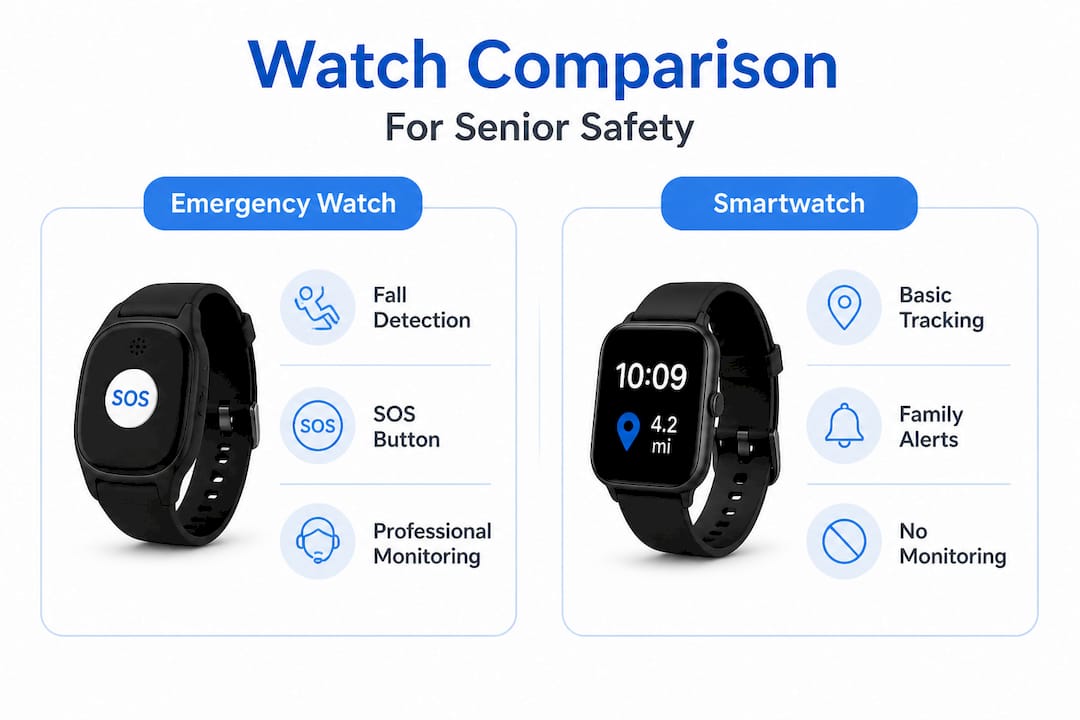
It is also worth understanding how these differ from a regular smartwatch. A consumer smartwatch prioritizes features like fitness tracking, music control, and app notifications. The alarm watch interfaces on emergency alert watches, by contrast, feature large icons, clear buttons, and simple navigation designed for older users with limited tech experience. The essential safety features built into these devices go far beyond anything a standard wearable offers.
Core features and how emergency alert watches work
Understanding how these watches operate in a real emergency helps families make informed decisions. The process is straightforward, but the technology behind it is thoughtfully designed.
Here is how a typical emergency sequence works:
- The senior presses the SOS button, or the watch automatically detects a fall.
- The device sends an alert to either a professional monitoring center or a pre-set list of family contacts.
- GPS coordinates are transmitted so the responder knows exactly where the senior is located.
- A two-way voice call is established through the watch, allowing the senior and responder to speak directly.
- Help is dispatched based on the senior’s needs and location.
The core features that make this possible include:
| Feature | How it works | Why it matters |
|---|---|---|
| SOS button | Manual press triggers emergency alert | Reliable backup when fall detection misses |
| Automatic fall detection | AI sensors detect sudden movement changes | Helps unconscious or disoriented users |
| GPS tracking | Pinpoints real-time location | Faster response, especially outdoors |
| Two-way communication | Built-in speaker and microphone | Allows direct conversation with responders |
| Geofencing | Alerts when user leaves a safe zone | Critical for dementia and wandering risk |
Fall detection deserves special attention because it is often misunderstood. The technology uses AI and machine learning to learn a user’s typical movements and reduce false alarms. It performs well with sudden, hard falls, scoring around 8 to 9 out of 10 in standard tests. However, slow crumples or sitting falls score much lower, around 3 to 4 out of 5. Detection is also more accurate when worn on the chest or as a pendant rather than on the wrist.
How fall detection works in practice depends on placement and the quality of the sensors. Similarly, GPS location tracking accuracy varies between indoor and outdoor environments, with outdoor tracking being significantly more precise.
Pro Tip: If your loved one lives in a multi-floor home or has a history of slow, gradual falls rather than sudden collapses, consider pairing a wrist-worn emergency watch with a chest-worn pendant for broader coverage.
Emergency alert watch vs. other devices: What’s best for seniors?
Choosing between different types of safety devices can feel overwhelming. A clear comparison helps cut through the confusion.
| Device type | Fall detection accuracy | Comfort | Discretion | Professional monitoring |
|---|---|---|---|---|
| Emergency alert watch | Moderate (wrist) | High | High | Optional |
| Medical alert pendant | High (chest) | Moderate | Low | Usually included |
| Regular smartwatch | Low | High | High | Not available |
| Mobile phone app | Low | Moderate | Moderate | Varies |
The NCOA comparison of medical alert devices is clear: dedicated emergency alert watches outperform consumer smartwatches for seniors, especially for high-risk falls and dementia cases. A regular smartwatch might call 911 directly, but that can result in unnecessary emergency responses. A dedicated medical alert system connects first to a trained professional who assesses the situation before dispatching help. That step alone reduces false EMS calls significantly.
Pendants are more accurate for fall detection because chest placement captures sudden movements more reliably. However, many seniors refuse to wear pendants because they feel stigmatizing or medically obvious. Watches look like normal accessories, which dramatically improves daily compliance. A device that gets worn every day beats a more accurate device that sits on the nightstand.
Key considerations when comparing devices:
- Monitored systems connect to a 24/7 professional center. They cost more but provide expert assessment and dispatch, which is especially valuable when a senior lives alone.
- Family-only systems alert designated contacts directly. They work well when family members are reliably available and nearby, and they often cost less per month.
- App-only systems rely entirely on smartphones and can fail if battery runs out or the phone is out of reach.
The device interface comparison between these categories also shows that emergency alert watches are far easier for seniors to operate independently. For a deeper review, the SOS watch comparison guide covers leading models in detail.
Pro Tip: If your parent has early-stage dementia, prioritize a monitored system with geofencing over a family-only watch. Professional operators are trained to handle confusion and can coordinate appropriate responses far more effectively than a startled family member getting an unexpected midnight alert.
Limitations, costs, and getting the most from a watch
No safety device is perfect. Understanding the real limitations of emergency alert watches helps families plan realistically and avoid being caught off guard.
The most important limitation to accept is that fall detection is not 100% reliable. No system catches every fall, particularly slow or seated falls, and no device can replace attentive human care. Building a safety net that includes multiple layers is always smarter than relying on one device alone.
A practical approach to maximizing safety looks like this:
- Home modifications: Remove loose rugs, install grab bars in bathrooms, improve lighting on staircases, and reduce clutter in hallways.
- Regular exercise: Strength and balance training, such as tai chi, have strong evidence for reducing fall risk in older adults.
- Geofencing for dementia: Set virtual boundaries so that alerts trigger automatically when someone with wandering tendencies leaves a safe area.
- Regular device checks: Test the SOS button weekly to confirm it connects properly.
- Charging routines: Build charging into a daily habit, like overnight, to avoid a dead battery during a critical moment.
On the cost side, here is what families should expect:
Typical cost range: Monthly service fees run $20 to $50, and device costs range from $100 to $400 upfront. Always prioritize providers with no long-term contracts, so you are not locked in if needs change.
These numbers are worth comparing carefully. Some providers bundle equipment costs into the monthly fee, while others charge separately. Read the fine print on cancellation policies before committing. The best systems allow month-to-month service so the device can be upgraded or changed as a senior’s needs evolve.
You can find a detailed breakdown of what to look for in fall detection details and a full overview of important watch features to match features to individual needs.
Waterproof design is another practical requirement. Many falls happen in the bathroom, so a watch that cannot be worn in the shower provides a significant gap in protection. Look for devices rated at least IP67 for water resistance. 💧
Choosing the right emergency alert watch: Practical steps
With all this information in hand, making a confident decision becomes much simpler. Here is a practical framework for selecting the right emergency alert watch.
- Assess the senior’s specific risks. Does your loved one have a high fall risk? Memory issues? Do they spend time outdoors or away from home regularly? Answers to these questions shape which features matter most.
- Prioritize fall detection for high-risk individuals. For independent seniors and families, fall detection combined with professional monitoring is the most reliable safety combination.
- Choose monitored over app-only if the senior lives alone. A professional operator can respond even when family members are unavailable or asleep.
- Test comfort and fit before committing. Have the senior wear the watch for a full day. If it is uncomfortable, it will not get worn consistently, which defeats the entire purpose.
- Involve the senior in the decision. Compliance improves dramatically when the person wearing the device feels like they had a say in choosing it.
- Trial the SOS function with family. Do a practice run. Confirm that alerts reach the right contacts and that GPS data shows accurately on the family’s app or monitoring dashboard.
For seniors with memory concerns, look for watches that include medication reminders alongside emergency functions. Devices with medicine reminders and app integration provide a second layer of daily support that makes the investment even more worthwhile.
The benefits of fall alarm watches in elderly care extend beyond emergency response. Many seniors report feeling genuinely more confident walking to the mailbox, cooking in the kitchen, or spending time in the garden when they know help is accessible at any moment. That confidence is not a small thing. It directly supports mental health and quality of life.
A fresh perspective: The hidden value and real limits of emergency alert watches
Technology like this is genuinely valuable. But there is a conversation the industry does not always have openly: a watch cannot replace human presence.
Families sometimes purchase an emergency alert watch and feel they have handled their parent’s safety completely. That false sense of security can actually reduce the frequency of check-in calls, visits, and conversations. The watch becomes a substitute for connection rather than a tool that supports it.
The best outcomes we see consistently involve families who treat the watch as one part of a broader safety plan. Regular phone calls, weekly visits, and an honest ongoing conversation about a senior’s changing needs are irreplaceable. The emergency button benefits are real and meaningful, but they work best when paired with human awareness.
There is also a subtler point worth making: the presence of a safety device changes how seniors feel about their independence. When a senior knows they can call for help instantly, they are more likely to attempt daily activities they might otherwise avoid. That expanded confidence is arguably the greatest benefit these watches provide, and it is entirely invisible in any product spec sheet.
The honest truth is this: no device, regardless of how sophisticated, can fully protect a person who is not also surrounded by caring, attentive people. Emergency alert watches are an excellent tool. They are not a complete solution on their own.
Explore emergency alert solutions for seniors
If this article has helped clarify what emergency alert watches can do for your family, the next step is finding a device that genuinely fits your loved one’s daily life.
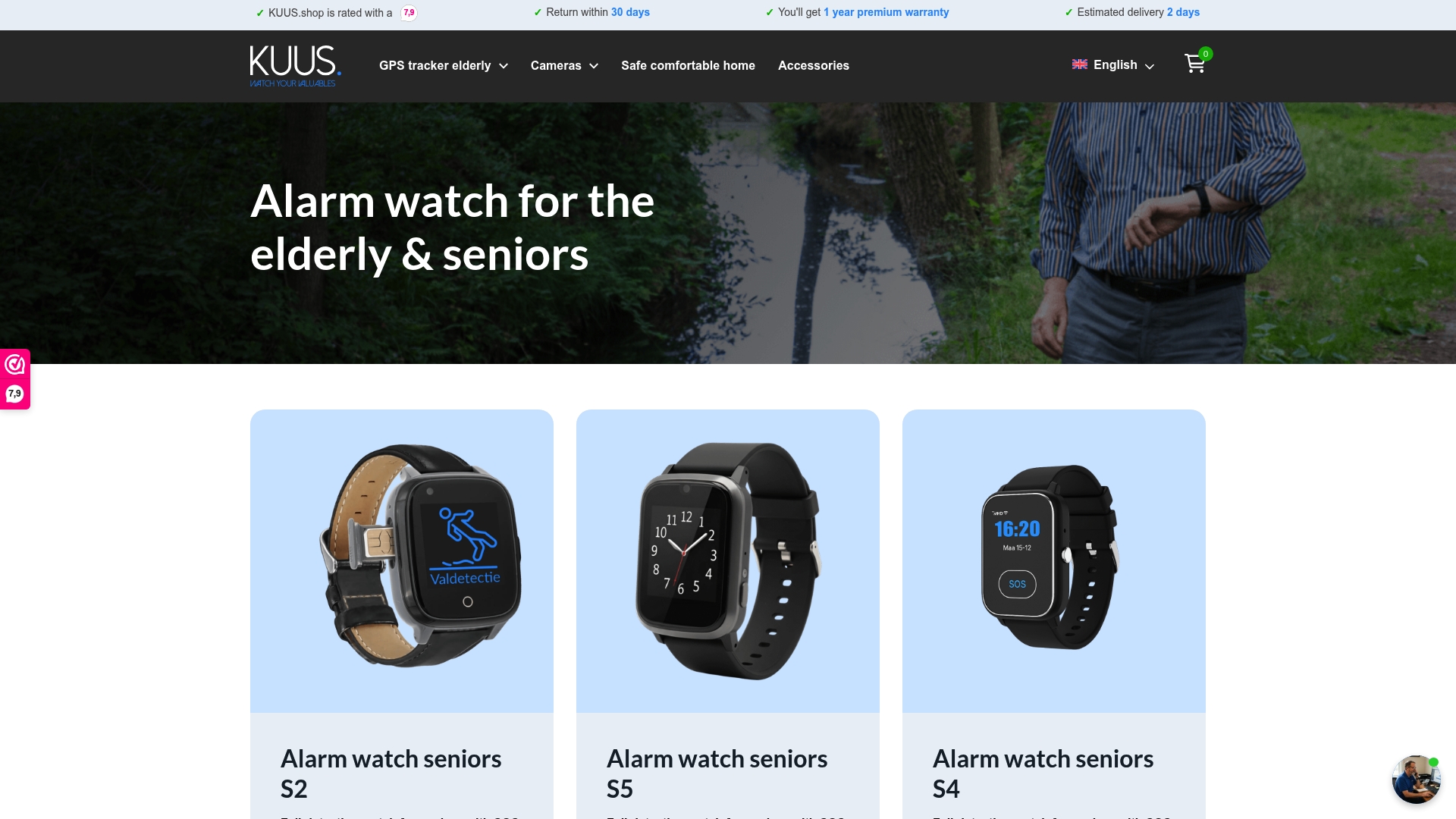
Our selection of purpose-built senior safety watches is designed with exactly these needs in mind. From GPS trackers for seniors without a subscription to devices that combine SOS buttons, GPS, and fall detection in a comfortable daily wearable, there is a practical option for every situation. Understand the real value of a GPS watch for seniors before you decide, and then explore our full range of senior watches to find the right match. Safety and independence belong together.
Frequently asked questions
How does automatic fall detection work in emergency alert watches?
Automatic fall detection uses built-in accelerometer sensors combined with AI to recognize the sudden, sharp movements associated with a fall, and it can send an alert to emergency contacts or a monitoring center without the wearer needing to press anything. Detection accuracy is highest for hard, sudden falls and lower for slow or gradual collapses.
Can an emergency alert watch replace in-person caregiving for seniors?
No. While these watches significantly improve response times and give families real-time awareness, they cannot replace the regular check-ins, conversations, and hands-on support that loved ones and professional caregivers provide.
Are emergency alert watches comfortable for daily wear?
Most modern designs prioritize a lightweight, discreet look that resembles a regular watch, but comfort varies by model and wrist size. Testing fit and comfort before committing is strongly recommended, since a watch that feels uncomfortable will simply not get worn every day.
What are typical costs for an emergency alert watch?
Monthly service fees typically range from $20 to $50, with upfront device costs between $100 and $400. No long-term contracts are the best option, giving families the flexibility to switch or upgrade as needs change over time.