




TL;DR:
- GPS alert systems help caregivers respond quickly to wandering and emergencies.
- They improve senior independence while reducing caregiver stress through real-time location tracking.
- Ethical use requires balancing safety with privacy and ensuring seniors’ consent and comfort.
6 out of 10 dementia patients wander at least once, yet most caregivers underestimate how fast a loved one can leave a safe area. A senior with dementia can travel several blocks in minutes, turning a brief distraction into a crisis. GPS alert systems are changing that reality. They give caregivers instant location updates, automatic fall detection, and emergency SOS access, all without requiring the senior to do anything complicated. This article breaks down exactly how these systems work, what the evidence says about their real-world impact, and what you need to know before choosing one.
Table of Contents
- Understanding GPS alert systems for caregivers
- How GPS alerts reduce risk and stress
- Comparing GPS alert features: What matters most
- Limitations, ethical issues, and real-life pitfalls
- A caregiver’s honest take: What works, what doesn’t
- Explore reliable GPS alert solutions for seniors
- Frequently asked questions
Key Takeaways
| Point | Details |
|---|---|
| Geofencing triggers alerts | GPS devices send alerts when seniors leave designated safe zones, enabling rapid caregiver response. |
| Reduces caregiver stress | Instant alerts for wandering and falls lower anxiety and support independent living for seniors. |
| Compare device features | Choose GPS devices with reliable alerts, easy-to-use wearables, and strong battery life for best results. |
| Ethics and privacy matter | Caregivers should balance safety with senior autonomy, ensuring informed consent and respectful use. |
Understanding GPS alert systems for caregivers
GPS alert systems are wearable devices, usually worn as a watch or pendant, that track a senior’s location in real time and send notifications to caregivers when something unusual happens. Understanding how they work removes the mystery and helps you set realistic expectations.
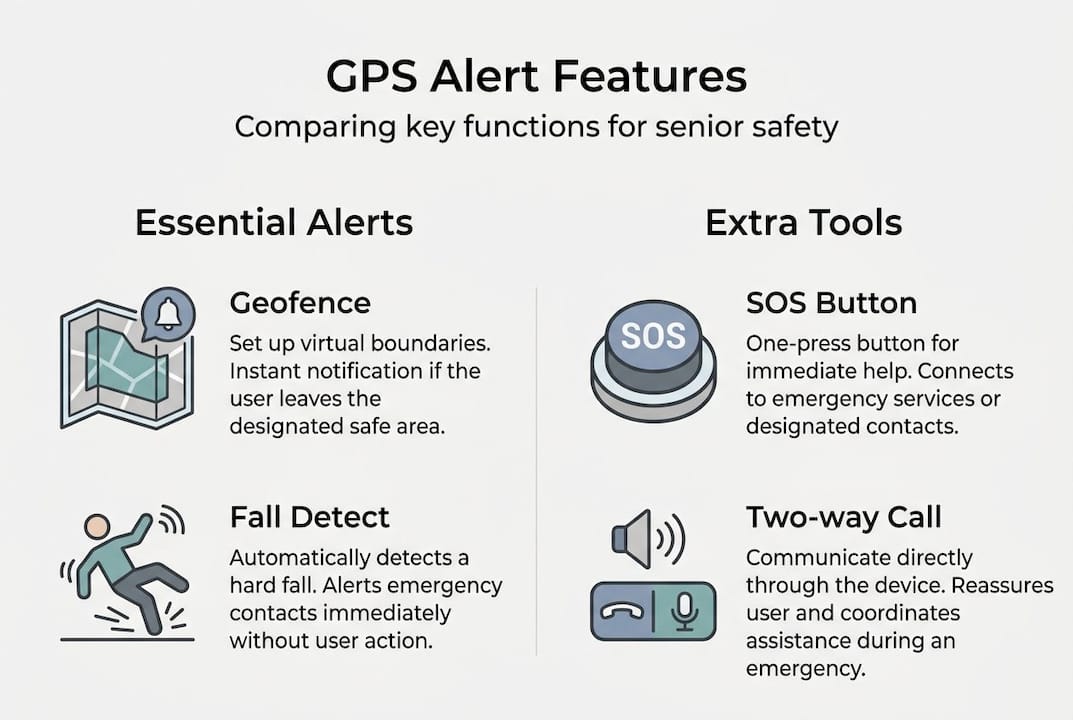
The core technology behind most systems is geofencing. You draw a virtual boundary around a safe zone, such as the home or a familiar neighborhood. When the senior crosses that boundary, GPS alerts trigger instantly and notify you through a smartphone app or text message. Response time drops from hours to minutes.
Beyond geofencing, most quality devices include:
- SOS button: One press connects the senior directly to a caregiver or emergency contact
- Automatic fall detection: Sensors detect a sudden impact and send an alert even if the senior cannot press a button
- Two-way calling: Caregivers can speak directly through the device to calm or guide the senior
- Real-time GPS tracking: Location updates every 30 to 60 seconds outdoors
GPS accuracy outdoors is typically within 15 to 25 feet, which is precise enough to locate someone on a specific street. Indoors, accuracy drops because satellite signals are blocked by walls and ceilings. This is a known limitation worth keeping in mind.
Fall detection is a standout feature. Leading devices reach 98 to 100% accuracy using accelerometers, small sensors that measure sudden changes in motion and orientation. Research on fall detection technology continues to improve these results year over year.
| Alert type | How it triggers | Who gets notified |
|---|---|---|
| Geofence exit | Senior crosses virtual boundary | Caregiver app/phone |
| SOS button | Senior presses button manually | Emergency contacts |
| Fall detection | Accelerometer detects impact | Caregiver app/phone |
| Low battery | Battery drops below threshold | Caregiver app |
For families supporting a loved one with memory loss, a GPS tracker for dementia monitoring combines these features in one wearable device. Understanding GPS tracker use in care settings also helps caregivers set up the right protocols from day one.
How GPS alerts reduce risk and stress
Knowing the features is one thing. Seeing how they translate into daily life is what really matters for caregivers managing ongoing worry and unpredictable situations.
The most immediate benefit is faster response time. When a senior wanders, every minute counts. A geofence alert means you know the moment your loved one leaves a safe area, not an hour later when you notice they are gone. That window of early awareness is often the difference between a quick retrieval and a dangerous situation.
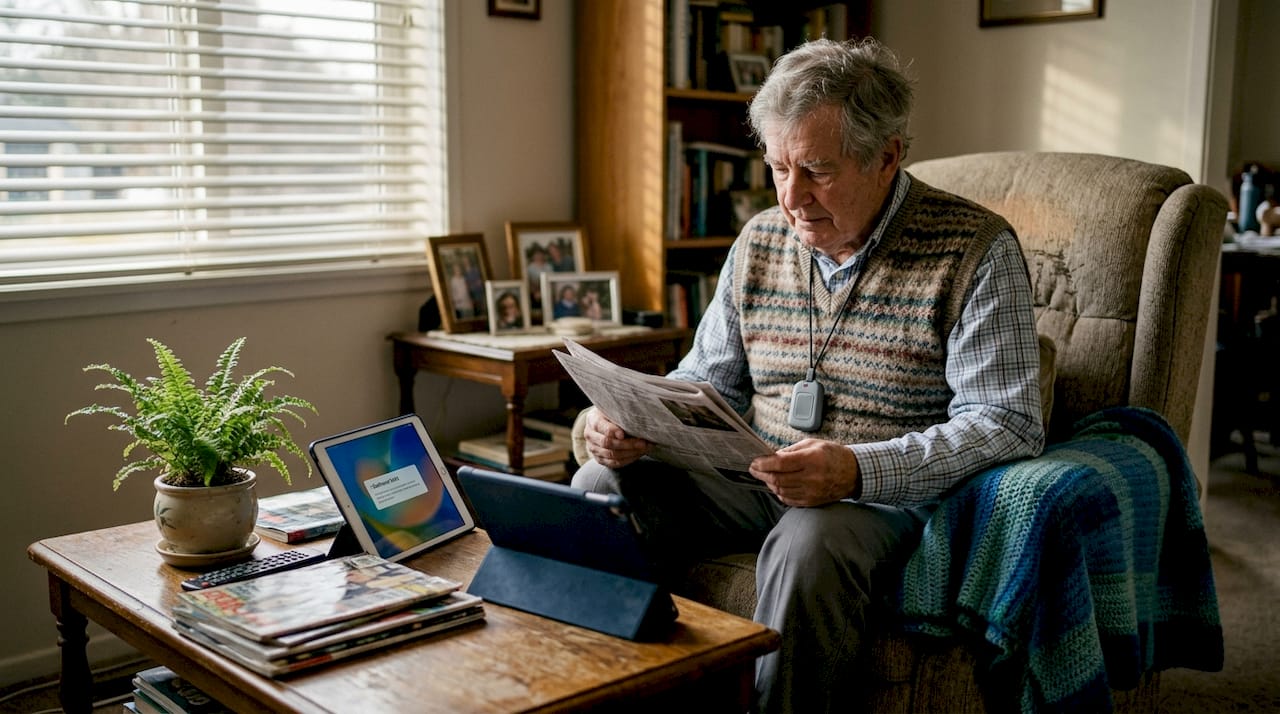
Beyond speed, GPS alerts reduce the constant background anxiety that caregivers carry. You do not have to check in every hour or feel guilty about stepping away for a moment. The device monitors continuously so you do not have to.
A Texas A&M study on GPS devices found a 70% daily wear rate among seniors using GPS wearables, with caregivers reporting high usefulness scores and measurable reductions in stress, particularly among those with high caregiver burden scores. That is a meaningful result in a population where burnout is common.
For seniors, the benefit is greater independence and dignity. Rather than restricting movement out of fear, GPS monitoring allows seniors to move more freely within safe boundaries. They can walk in the garden, visit a neighbor, or sit outside without a caregiver physically present at all times.
Key real-world benefits include:
- Reduced caregiver anxiety during nighttime hours when wandering risk peaks
- Faster emergency response when falls occur in isolated areas
- Improved communication between seniors and family through two-way calling
- Greater senior confidence knowing help is always one button press away
A stress reduction study also found improved communication between caregivers and seniors as a secondary benefit, which is often overlooked in device reviews.
Pro Tip: Set up geofence alerts for nighttime hours specifically. Wandering at night is both more common and more dangerous, and a targeted alert during those hours reduces alarm fatigue during the day.
For a broader look at how these tools support senior safety and independence, the combination of location awareness and emergency response is what makes GPS alerts genuinely useful rather than just reassuring in theory.
Comparing GPS alert features: What matters most
Not all GPS alert devices are equal. The right choice depends on your loved one’s specific needs, daily routine, and comfort with technology. Here is what to focus on.
Multi-feature devices outperform single-function trackers. Devices combining GPS, fall detection, SOS, and two-way calling deliver the most practical value because they cover multiple emergency scenarios in one wearable. A device that only tracks location misses the fall that happens indoors where GPS is unreliable.
Battery life is a practical concern that often gets overlooked. Most GPS devices last 2 to 7 days on a single charge depending on how frequently the device updates location and whether features like two-way calling are used heavily. A device with a two-day battery requires consistent charging habits, which can be challenging for seniors with memory issues.
| Feature | Why it matters | Watch for |
|---|---|---|
| SOS button | Immediate manual emergency alert | Button size and accessibility |
| Fall detection | Automatic alert without user action | False positive rate |
| Geofencing | Boundary alerts for wandering | Minimum geofence size |
| Battery life | Continuous protection | Charging routine complexity |
| Ease of use | Senior adoption and daily wear | Screen size, weight, comfort |
Other trade-offs worth knowing:
- Indoor signal loss means fall detection and SOS become the primary safety net at home
- Some devices have a minimum geofence radius of 300 to 500 feet, which may be too large for small properties
- Seniors with dementia may remove devices they find uncomfortable or unfamiliar
Pro Tip: Choose a device that looks like a regular watch rather than medical equipment. Seniors are significantly more likely to wear devices that do not feel stigmatizing.
For a direct comparison, GPS smartwatches offer advantages over phones for seniors who may forget or lose a phone. You can also learn more about how a senior alarm with fall detection works to understand the technical side before buying. A thorough review of GPS tracking pros and cons is also worth reading before making a final decision.
Limitations, ethical issues, and real-life pitfalls
GPS alerts are genuinely useful tools, but they are not without real drawbacks. Being honest about these limitations helps you use them wisely rather than over-rely on them.
Privacy and autonomy are serious concerns. Tracking a person’s movements without their full understanding raises ethical questions, especially when that person has dementia and may not fully grasp what the device does. Ethical concerns around privacy and consent in GPS monitoring are well documented, and caregivers should approach this thoughtfully rather than treating it as a purely technical decision.
A systematic review of GPS tracking studies found that GPS devices are not a substitute for supervision, and that some seniors actively reject tracking devices. Technology cannot replace human presence and judgment.
Practical limitations include:
- Signal loss indoors reduces location accuracy significantly
- False fall alerts can cause alarm fatigue, leading caregivers to respond more slowly over time
- Devices can be removed, lost, or forgotten to charge
- Minimum geofence sizes may not work for small living spaces or apartment buildings
- Some GPS tracking challenges in independent living relate to cellular coverage gaps in rural areas
Consent in dementia care is particularly nuanced. A senior in early-stage dementia may be able to give informed consent; someone in a later stage may not. Ethical guidelines recommend involving the senior in the conversation as much as possible, explaining the device’s purpose clearly, and revisiting the conversation as the condition progresses.
“Safety and autonomy are not opposites. The goal is to use GPS monitoring as a support tool that expands what a senior can do safely, not as a surveillance system that removes their sense of freedom.”
For caregivers managing GPS tracking for seniors, the most ethical approach combines transparency, regular check-ins, and a genuine effort to understand the senior’s preferences.
A caregiver’s honest take: What works, what doesn’t
Here is something the product brochures rarely say: technology alone does not solve the emotional weight of caregiving. GPS alerts are a powerful tool, but they work best when combined with regular conversation, human check-ins, and a care routine built around the senior’s actual preferences.
Conventional wisdom tends to overstate what devices can do. Mixed evidence on long-term burden reduction shows that stress does decrease initially, but caregivers who rely solely on technology without adjusting their overall care approach often find that anxiety returns. The device catches the emergency; it does not address the underlying worry.
What actually works is combining GPS alerts with low-tech habits: a daily phone call, a familiar neighbor who checks in, a consistent daily routine. User-centered design and caregiver education are the two factors most strongly linked to successful device adoption, not the device’s feature list.
The seniors who benefit most from real-world GPS monitoring are those whose caregivers take time to introduce the device gradually, explain its purpose, and make wearing it feel normal rather than medicalized. That human layer is what makes the technology stick.
Explore reliable GPS alert solutions for seniors
Finding the right GPS alert device takes more than a quick search. You need clear feature comparisons, honest guidance, and products designed specifically for seniors and their caregivers.
At KUUS, we offer wearable safety devices built for daily senior use, with SOS buttons, GPS tracking, fall detection, and two-way calling in one comfortable watch. No monthly subscription costs. You can compare the best alarm watches for seniors side by side, or explore the value of GPS watches for seniors to understand what features matter most for your specific situation. The right device is out there, and the right information makes all the difference.
Frequently asked questions
How accurate are GPS alerts for seniors?
GPS accuracy is within 15 to 25 feet outdoors but becomes less reliable in indoor environments or dense urban areas where satellite signals are blocked.
Can GPS alerts prevent wandering entirely?
GPS is not a substitute for supervision and cannot fully prevent wandering; it significantly reduces risk by enabling faster caregiver response when a senior leaves a safe zone.
Do seniors need to consent to GPS tracking?
Ethical guidelines recommend informed consent whenever possible, balancing the senior’s right to autonomy with the caregiver’s responsibility for safety, especially in dementia care.
How long do device batteries last?
Battery life ranges from 2 to 7 days depending on the device model, location update frequency, and how often features like two-way calling are used.