




TL;DR:
- Safety monitoring helps seniors living alone by ensuring prompt help after falls and emergencies. It supports independence and dignity through wearable devices and simple check-in systems, not invasive surveillance. Properly chosen solutions enable active, safe, and confident aging in place.
Living independently is something most people want to hold onto as long as possible. But the idea that independence means going without any safety net is a misconception that can have serious consequences. Why independent living needs safety monitoring becomes clear the moment you understand the real risks seniors face when living alone, and what happens when those risks go unaddressed. This guide covers the importance of safety monitoring for seniors, how it works in practice, and how you can implement it in a way that protects both safety and dignity.
Table of Contents
- Key Takeaways
- Why independent living needs safety monitoring
- How safety monitoring systems protect without intruding
- Balancing safety with independence
- Setting up a safety net that supports active living
- My perspective on monitoring and dignity
- Stay safe and independent with Kuus
- FAQ
Key Takeaways
| Point | Details |
|---|---|
| Falls are common and dangerous | Nearly 1 in 3 adults 65+ fall each year, with many lying undiscovered for hours without monitoring. |
| Delayed help makes outcomes worse | A 30-minute delay in post-fall treatment doubles the risk of long-term mobility loss. |
| Monitoring does not mean surveillance | Wearable alerts and SOS buttons protect seniors without cameras or privacy concerns. |
| Senior choice matters | Monitoring systems chosen by the senior are more accepted and more effective. |
| Independence increases with safety | A reliable safety net gives seniors the confidence to stay active and live on their own terms. |
Why independent living needs safety monitoring
Many people assume that choosing to live alone means preferring no help at all. That assumption is understandable, but it misses a critical point. The goal of safety monitoring is not to watch over someone. It is to make sure that if something goes wrong, help arrives quickly.
The numbers here are hard to ignore. Nearly 1 in 3 adults aged 65 and older experience a fall each year, and 37% of those falls result in injuries that require medical treatment. That is approximately 14 million falls annually in the United States alone.
What happens after a fall matters just as much as the fall itself. Without monitoring, the average time before a fallen senior is discovered is about 12 hours. That is not a minor inconvenience. Lying on the floor for hours leads to serious complications.
“Time spent immobile after a fall causes dehydration, hypothermia, and muscle breakdown — conditions that are often more dangerous than the injury that caused the fall in the first place.”
The complications from long lies on the floor include pressure sores, rhabdomyolysis (a form of muscle breakdown that can lead to kidney failure), and severe dehydration. Every extra hour without help increases these risks substantially.
The emotional impact is just as real. Many seniors who have fallen once develop what is commonly called “fear of falling.” This fear leads to reduced activity, which weakens muscles and actually increases fall risk further. It is a cycle that monitoring can help interrupt, not by eliminating the risk of falling, but by eliminating the fear that a fall will go unnoticed.
Here is a quick summary of the core risks seniors face without a safety system in place:
- Undiscovered falls with hours or days before anyone checks in
- Serious secondary health complications from lying immobile
- Delayed emergency response increasing hospitalization rates
- Growing anxiety about being alone that limits daily activity
- Caregiver uncertainty and stress when they cannot reach a loved one
The importance of safety monitoring is not just about preventing the worst case scenario. It is about making everyday independent life feel safe enough to actually live.
How safety monitoring systems protect without intruding
There is an important distinction that often gets lost in conversations about monitoring: the difference between surveillance and safety. Cameras raise real privacy concerns and are widely discouraged by both seniors and elder care experts. Fortunately, the most effective monitoring solutions for independent living do not involve cameras at all.
Modern wearable safety devices work by giving the user control. A senior wears a watch or personal alarm button, and if they need help, they press the SOS button. If they fall and cannot press it, fall detection technology can trigger an alert automatically. Two-way audio lets the user speak directly with a family member or caregiver through the device, confirming whether real help is needed.
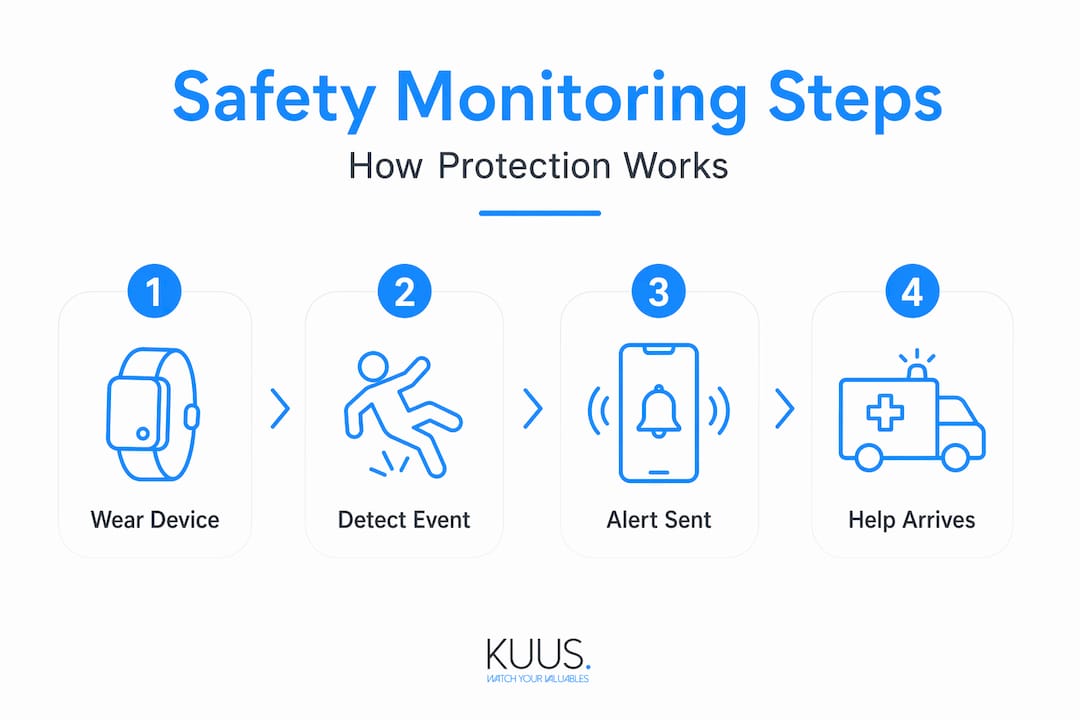
This approach works. Automated fall detection devices with two-way audio reduce emergency confirmation times by 43% and cut false alarm calls by 32%. Faster confirmation means help is dispatched sooner, and faster help leads directly to better health outcomes.
Here is how the main types of monitoring solutions compare:
| Solution type | How it works | Level of intrusiveness | Best for |
|---|---|---|---|
| SOS alarm button | User presses button to alert contacts | Very low | Seniors who want simple control |
| GPS alarm watch | Combines SOS, location sharing, and fall detection | Low | Active seniors and those with memory concerns |
| Daily check-in system | Senior initiates contact at a set time each day | Very low | Those who resist wearing devices |
| Smart home sensors | Detects movement patterns around the home | Moderate | Families who want background monitoring |
Pro Tip: When introducing monitoring to a senior family member, start with the option they find least intrusive. Acceptance improves significantly when seniors feel they chose the system themselves rather than having it imposed on them.
Daily self-initiated check-in systems offer a practical middle ground. The senior checks in each morning by pressing a button or sending a message. If no check-in arrives by a set time, a family member or caregiver is notified. This approach respects autonomy completely while still creating a reliable safety net.
For those who want more proactive protection, newer AI and IoT-enabled systems can detect changes in activity patterns before an incident occurs, moving beyond emergency response toward real prevention.
Balancing safety with independence
The tension between safety and autonomy is the most important conversation families and seniors need to have. Getting this balance right determines whether monitoring actually works.
Successful monitoring systems are those chosen collaboratively with the senior, not installed around them. When a senior feels like they made the decision to use a safety device, they wear it consistently. When they feel monitored without consent, they leave the device on the nightstand.
Here is a practical approach families and caregivers can follow when introducing safety monitoring:
- Start with an honest conversation. Ask the senior what they worry about most. Many will mention falling alone and not being found. Use that shared concern as the starting point, not a list of features on a device.
- Present options, not a decision. Show two or three types of monitoring solutions and explain the differences. Let them choose what feels comfortable.
- Focus on what they gain, not what could go wrong. Frame monitoring as something that lets them do more, travel farther, and stay at home longer, because that is exactly what it does.
- Respect the “no” at first. Many seniors resist initially and come around after more time or after a friend’s fall reminds them of the risks. Keep the door open.
- Involve them in setup. Let the senior choose which family member gets alerts, what the check-in schedule looks like, and whether GPS sharing is active or available only during emergencies.
Pro Tip: Combining physical home modifications with a monitoring device is more effective than either alone. Grab bars in the bathroom, better lighting in hallways, and a non-slip mat in the kitchen reduce fall risk, while the device provides a backup when prevention is not enough.
The goal is for the senior to feel more capable, not more supervised. When monitoring is introduced well, that is exactly the result. Seniors who use safety systems report feeling more confident being home alone and more willing to stay active.
Setting up a safety net that supports active living
Knowing you need monitoring and knowing how to set it up well are two different things. The practical details matter, and getting them right makes the difference between a system that gets used and one that gets ignored.
A few key steps can help seniors and families build a safety net that actually works in everyday life:
- Choose devices suited to the individual. A senior who walks regularly needs GPS location sharing. Someone who rarely leaves home may only need a home-based SOS button. Match the technology to the actual lifestyle.
- Set up a clear contact list. The device or system should notify two or three people in a set order. One primary contact, one backup. Keep this list current.
- Understand local emergency response times. EMS response averages 74 minutes nationally and up to 92.8 minutes in rural areas. If you live outside a city, this makes a personal monitoring device even more critical because the gap between alert and professional help is longer.
- Build the check-in into a daily routine. Pair it with something that already happens each morning, like making coffee or taking medication. Habit stacking makes check-ins effortless.
- Review the setup every few months. Health changes, living situations change, and the right monitoring solution may need to adjust over time.
Monitoring for senior safety works best when it fits naturally into daily life. The less friction involved in using the system, the more consistently it is used. And consistent use is what makes it effective.
Healthy lifestyle habits also reduce fall risk significantly. Regular gentle exercise improves balance and strength. Staying well-hydrated reduces dizziness. Annual medication reviews with a doctor can identify drugs that affect balance. These habits and monitoring technology work together, not separately.
My perspective on monitoring and dignity
From working closely with seniors and their families, I have seen a pattern repeat itself more than I can count: families push hard for monitoring, the senior resists, and the conversation stalls. The families think they failed. In most cases, they did not fail at the goal. They failed at the approach.
In my experience, the biggest mistake caregivers make is framing monitoring as something done for safety rather than something chosen for freedom. That distinction changes everything. I have seen 80-year-olds enthusiastically wearing a GPS alarm watch because they understood it meant they could walk to the park alone again without their children worrying. That is empowerment, not surveillance.
What I have learned is that the daily check-in, done right, is underrated. It takes 30 seconds, it reduces caregiver anxiety significantly, and it gives seniors a sense of agency because they are the ones who initiate it. No camera, no passive tracking, just a simple confirmation that everything is fine.
My honest take: overly intrusive monitoring does not just feel bad. It makes seniors less willing to engage with safety solutions at all, which leaves them less protected than before. Dignity is not a nice-to-have in this conversation. It is the foundation that makes everything else work.
— Kuus
Stay safe and independent with Kuus
Kuus designs wearable safety devices specifically for seniors who want to keep living on their own terms. Every device is built around one simple idea: fast help when it matters, without getting in the way of everyday life.
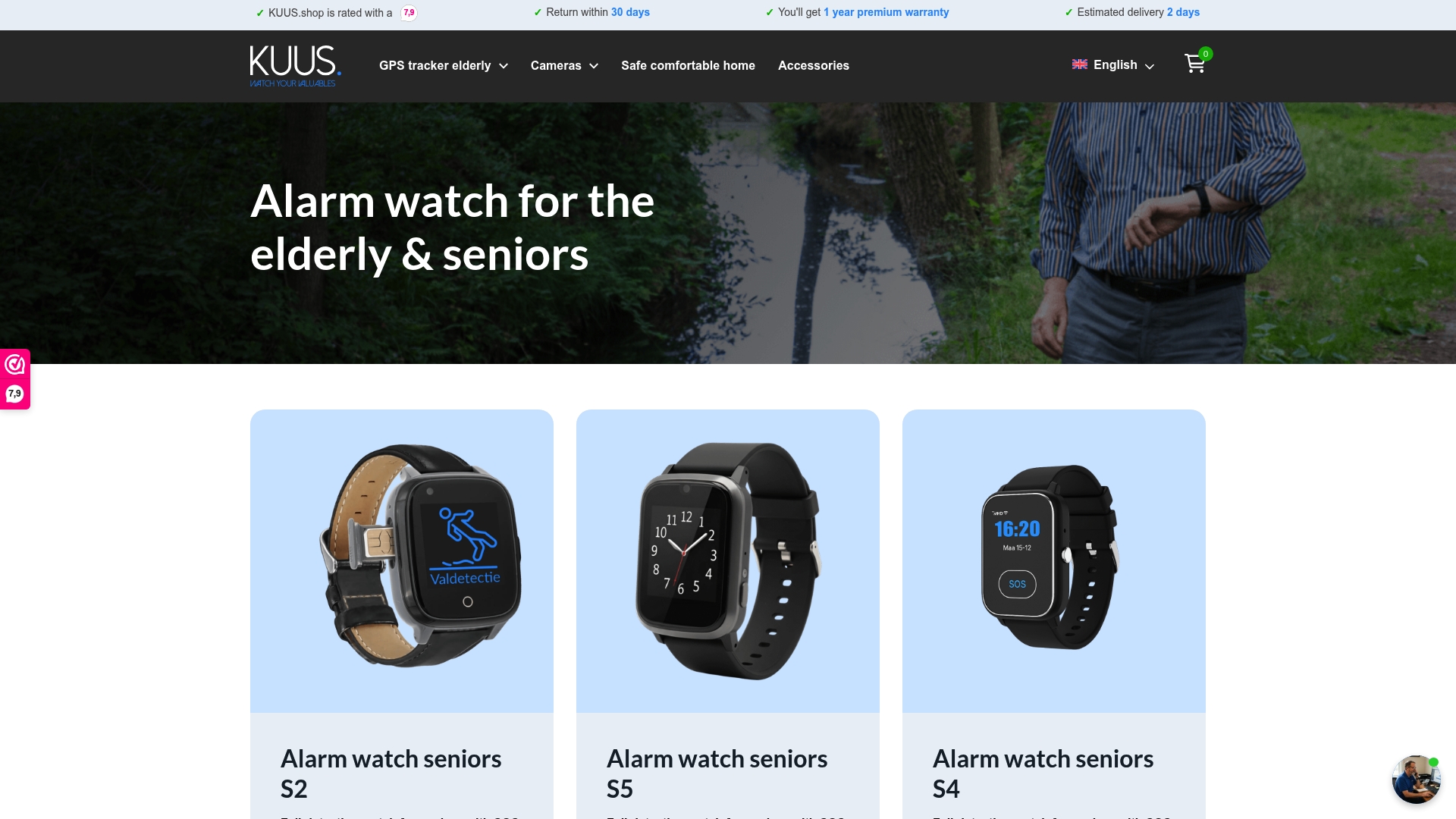
The Kuus GPS alarm watch combines an SOS button, automatic fall detection, real-time GPS location sharing, and two-way calling in a single device. There are no monthly subscription fees, making it a practical and affordable long-term solution. The interface uses large icons and a simple layout, so it is easy to use from day one.
For families, Kuus provides real peace of mind. You can see your loved one’s location at any time, and you will receive an immediate alert if they press SOS or a fall is detected. For seniors, it means staying home longer, moving more freely, and knowing that help is always one button press away.
Learn more about the value of a GPS watch for independent seniors, or explore the full Kuus range to find the right fit for your situation.
FAQ
Why is safety monitoring important for seniors living alone?
Safety monitoring reduces the time between a fall or medical emergency and the arrival of help. Since fall discovery without monitoring averages 12 hours, a monitoring device can be the difference between a full recovery and a serious long-term complication.
Does safety monitoring take away a senior’s independence?
No. When chosen by the senior, monitoring systems actually support independence by giving seniors the confidence to stay at home and stay active. Selective, transparent monitoring chosen collaboratively best preserves dignity and is much more likely to be used consistently.
What is the best type of safety monitoring for seniors?
The best option depends on the individual. Wearable SOS alarm watches with fall detection work well for active seniors, while daily check-in systems suit those who prefer less technology. The key is matching the solution to the person’s habits and comfort level.
How does fall detection work on a safety watch?
A fall detection watch uses built-in sensors to recognize the motion pattern of a fall. If a fall is detected and the user does not respond within a short window, the device automatically sends an alert to family members or caregivers. You can read more about how fall detection works on the Kuus knowledge base.
Are there monitoring options that do not use cameras?
Yes. Wearable devices, SOS buttons, GPS watches, and daily check-in systems all provide effective monitoring for senior safety without any cameras involved. These options protect privacy fully while still providing reliable alerts and fast response when needed.